

You're probably here because you've been looking for something more useful than another gym membership. Maybe you live in Lindenhurst, Babylon, West Babylon, Copiague, North Babylon, Amityville, or nearby, and you want a workout that also teaches real control, real confidence, and real self-defense. That's usually where Brazilian Jiu-Jitsu enters the conversation.
For most beginners, the first confusing thing isn't the armbar or the shrimp escape. It's the uniform. You hear people say “gi,” “no-gi,” “pearl weave,” “A2,” and “IBJJF legal,” and suddenly buying one jacket and one pair of pants feels harder than starting class.
A brazilian jiu jitsu gi is more than a uniform. It's the tool you use to learn grips, posture, pressure, and patience. It also becomes part of the culture of training. The gi connects the first-day white belt to a worldwide community of about 6 million practitioners.
At a good academy, that gear decision gets simpler because an instructor helps you understand what matters and what doesn't. That's one reason instruction quality matters so much. A skilled teacher can make a basic gi work well for a beginner. A poor teacher can make an expensive gi feel like a waste of money.
Your Journey Into Brazilian Jiu Jitsu Starts Here
You drive in from Lindenhurst after work, step through the door at Korfhage BJJ, and notice the same question on a lot of first-day faces. Am I too late to start. Am I too stiff. Do I need the right gear before I belong here.
The short answer is no.

At Korfhage BJJ, we see beginners from Lindenhurst and nearby towns start for all kinds of reasons. One wants a structured way to get back in shape. Another wants practical self-defense. A parent brings in a child, watches class, and realizes they want to train too. Different goals, same first step. Put on a gi, step onto the mat, and begin learning how technique organizes the chaos.
That matters here because the gi is not just part of the dress code. Under the Caio Terra method taught at Korfhage BJJ, it becomes part of how you learn. The jacket and pants give you clear points of contact, almost like handles on a tool. A new student can feel where posture breaks, where balance shifts, and why small grip changes create big results. For someone just starting out, that feedback is useful. It slows the exchange enough for your brain to catch up with your body.
Why the gi matters on day one
A beginner usually worries about the wrong thing first. They ask whether they need an expensive gi, a certain brand, or a color they saw online.
Start simpler.
Your first gi needs to fit, hold up in training, and let you focus on class instead of adjusting your sleeves every round. If it does that, it is doing its job. The goal of your first month is not to collect gear. The goal is to build habits.
Practical rule: Your first gi doesn't need to impress anyone. It needs to fit well, feel durable, and let you train consistently.
Good instruction makes that first purchase much less confusing. If you want a clearer picture of what the beginner path looks like, this guide on how to learn Brazilian Jiu-Jitsu step by step explains how new students build skill over time.
Good teaching shapes the whole experience
The reason many new students in Lindenhurst stay with jiu-jitsu has less to do with natural talent and more to do with how the material is taught. A detail-oriented academy gives you a sequence to follow. First stance and posture. Then grips. Then movement. Then pressure. It works like learning to drive in an empty parking lot before getting on Sunrise Highway. You build control first, then confidence.
That teaching approach is a big part of why Caio Terra's influence matters. His system is known for precision, timing, and clean mechanics. At Korfhage BJJ, that means beginners are not left guessing about what to do with their hands, hips, or weight. They get clear answers, clear reps, and a training environment where a basic gi and a willing attitude are enough to start well.
For a new student, that is the actual beginning. Show up. Wear a clean gi. Learn one detail at a time.
Why The Gi Makes BJJ The Most Effective Martial Art
People sometimes treat the gi like an optional costume. It isn't. In Brazilian Jiu-Jitsu, the gi is part of the problem-solving system. It changes distance, control, pace, and submissions.

The gi gives you handles and consequences
When someone grabs your sleeve, collar, or pant leg, you can't rely on speed alone. You have to solve the grip, manage posture, and create angles. That's one reason gi training feels like chess to so many practitioners. Every grip creates a threat, but also an opportunity.
In practical self-defense terms, that matters because people wear clothing. Hoodies, jackets, work shirts, coats, and uniforms all create grip scenarios. Gi training doesn't copy every real-life situation exactly, but it teaches the habit of dealing with fabric-based control.
The technique choices are different
The uniform also changes what attacks become available. In recorded gi match data, submissions account for 44.4% of all victories across 34,752 matchups, with armbars at 19.1% of finishes and gi chokes from the back at 11.8% according to the Digitsu BJJ stats summary discussed by Nation Athletic. Those numbers show something beginners can feel right away in training. The collar and sleeves aren't decoration. They create technical pathways that don't exist in the same way in no-gi.
A simple example is the omoplata. In that same source, it appears more often in gi than no-gi finishes. That makes sense. Fabric lets you control posture and shoulders more precisely.
The gi doesn't make techniques magical. It makes control more visible, more teachable, and more punishable when your mechanics are off.
Why this matters for smaller or less athletic students
This is also where the gi supports the claim that BJJ is the most effective martial art for many everyday people. It rewards mechanics. If a stronger training partner grabs hard, a technical student can use grip breaks, angle changes, and structured frames to dismantle that pressure.
That's also why good instruction matters so much. A detail-driven method, like the one associated with Caio Terra's style, teaches students to treat every hand placement and every inch of fabric as meaningful. The focus isn't on muscling through. It's on understanding.
For beginners around Lindenhurst, that's important. Most adults starting BJJ aren't full-time athletes. They're parents, tradespeople, office workers, students, first responders, and neighbors trying to become harder to bully and harder to control.
Gi and no-gi are both valuable
No-gi has its place. It's faster, slipperier, and teaches excellent movement. But gi training builds a kind of patience and grip intelligence that many people need first. It forces cleaner posture, cleaner escapes, and cleaner control.
That doesn't mean the gi is better for every goal. It means the gi teaches layers of control that help explain why BJJ remains such a powerful martial art for self-defense and long-term technical growth.
Anatomy Of A BJJ Gi Weaves Materials And Colors
A beginner usually sees a gi as one object. In practice, it's three pieces working together: the jacket, the pants, and the belt. Once you understand how each part functions, shopping gets much easier.
The jacket is where most of the gripping happens. The collar, sleeves, and lapels are central to both offense and defense. The pants need to survive kneeling, guard work, and constant pulling. The belt keeps the jacket closed, but it also marks progress and responsibility.
Understanding fabric weight
The term you'll hear most often is GSM, which means grams per square meter. In plain language, it's a way of describing fabric weight and density. BJJ gis typically range from 350 to 950 GSM, and midweight gis in the 450 to 550 GSM range offer a strong balance for daily training, with 20 to 30 percent greater tear resistance than lightweight gis according to this guide to BJJ gi GSM and weave types.
For someone training on Long Island, that middle range makes sense. It's durable enough for regular classes without feeling like a winter coat. It also handles the shifting weather better than a very heavy gi.
A simple way to look at it is:
- Lightweight gis feel easier to carry and cooler to wear.
- Midweight gis usually feel like the safe everyday choice.
- Heavyweight gis can feel rugged and hard to grip through, but they're warmer and more demanding.
Weaves in plain English
Weave is how the fabric is put together. Beginners often hear terms that sound more complicated than they are.
| Weave Type | Typical GSM | Best For | Feel |
|---|---|---|---|
| Single weave | 350-450 | Hot training days, lighter feel | Thin and breathable |
| Pearl or hybrid weave | 450-550 | Most beginners and daily training | Balanced and sturdy |
| Gold or double weave | 550-950 | Heavy-duty use, tougher feel | Dense and substantial |
A single weave is like a lighter work shirt. A pearl weave feels more structured. A gold or double weave feels more armored.
What I tell beginners: If you don't know what to buy, start in the middle. A midweight gi is easier to live with than an extreme on either end.
If you're comparing gear for both traditional classes and crossover training, this article on a gi for MMA helps clarify where gi-specific training fits.
Colors and what they mean
For most beginners, gi color isn't the most important choice. Fit and durability matter more. Still, color comes up constantly. The widely accepted competition colors are white, blue, and black. White looks classic and shows wear fastest. Blue hides stains a bit better. Black often looks sharp for longer.
Belt color is different. That marks rank, and rank represents time, discipline, and technical development. As a beginner, you don't need to obsess over belts. You need to learn how to move, breathe, frame, shrimp, bridge, and hold posture.
What beginners usually get wrong
New students often overvalue brand and undervalue function. They buy based on looks, patches, or hype. Then they discover the sleeves are too long, the pants are awkward, or the jacket feels like cardboard.
A better approach is simple:
- Pick a gi that fits your current body.
- Stay near midweight if you're unsure.
- Choose a color your academy accepts.
- Make sure it's comfortable enough that you'll wear it.
That's what helps a gi become training equipment instead of closet decoration.
A Practical Guide To BJJ Gi Sizing And Fit
Sizing is where most first-time buyers get stuck. One brand's A2 may feel roomy. Another brand's A2 may feel short in the sleeves. That's normal. The goal isn't to find a magical label. The goal is to find a fit that lets you move well and train safely.

Start with the size family
Most gis use size families such as:
- Adult sizing with A labels
- Female sizing with F labels
- Kids sizing with C labels
Those labels are only a starting point. Body shape matters just as much as height and weight. Some students have broad shoulders and shorter arms. Others are tall and slim. Some kids need room to grow, while some adults prefer a trimmer competition fit.
The three fit checks that matter most
The easiest way to judge a brazilian jiu jitsu gi is to put it on and move in it. Don't just stand there. Extend your arms, bend your knees, squat, sit, and reach.
Focus on these areas:
Sleeves
Sleeve length matters for both training and rule compliance. Under IBJJF guidelines, gi sleeves must not extend more than 5 cm from the wrist bone when the arm is extended, as explained in these IBJJF gi fit guidelines. If sleeves are too long, you give your partner extra fabric to control. If they're too short or too tight, your movement gets restricted.Pants
You want enough length to cover the leg properly without bunching so much that movement feels messy. If the cuffs ride high immediately, they may shrink into a worse fit after washing.Jacket skirt and shoulders
The jacket should sit cleanly on your frame. If it hangs like a bathrobe, it will get in the way. If the shoulders bind when you reach forward, you'll feel it every time you frame or pummel.
A properly fitted gi helps you learn cleaner grips and cleaner escapes because the fabric behaves consistently every class.
What different students should watch for
A younger student may need a little room for growth, but not so much that the gi becomes a tripping hazard. An older adult may care more about shoulder freedom and lighter fabric. A law enforcement student may want extra durability and reinforced stress points because of the nature of their training.
That's why trying on gear with guidance helps. Charts are useful. Eyes on the fit are better.
A simple fitting checklist
Before you buy, ask yourself:
- Can I raise both arms comfortably? If not, the shoulders may be too tight.
- Do the sleeves and pants look close to proper training length? Don't assume they'll “work themselves out.”
- Will this still fit after washing? Cotton can change.
- Can I grip and move without feeling trapped inside it? That's the ultimate test.
For a beginner in Lindenhurst, the easiest route is to bring the gi to class or ask an instructor to look at the fit before you remove tags. A quick adjustment early saves a lot of frustration later.
Gi Care And Essential Mat Etiquette
Once you own a gi, the next lesson starts immediately. Keep it clean. Every single class.

A clean gi isn't just about smell. It's part of safety, respect, and discipline. Your training partners have to trust that when they grip your sleeves and collar, they're training with someone who takes hygiene seriously.
The basic washing routine
Keep it simple and repeatable.
- Wash after every class. Don't leave a sweaty gi in the trunk.
- Use cold water when possible. That helps control shrinkage.
- Air dry if you want to be cautious. Heat can change the fit.
- Check the drawstring and seams. Small issues become big ones quickly.
If your weekly schedule gets packed and you need help staying on top of clean training gear, a local wash and fold service can be useful for busy families and professionals juggling work, school, and class.
Etiquette that starts with the uniform
A clean gi is one piece of mat etiquette. The rest is how you present yourself in it.
- Tie your belt before class starts. Don't wander around half-dressed and distracted.
- Repair tears early. A ripped sleeve isn't a badge of honor.
- Trim your nails. The cleanest gi in the room won't help if your hands and feet are careless.
- Show up ready. Hygiene is part of being a good teammate.
The gi teaches discipline before the round even begins. If you care for your equipment, you're more likely to care about your habits.
Keep your fit consistent
A lot of students accidentally ruin a good gi with bad laundry habits. They buy the right size, then dry it on high heat over and over until the sleeves creep up and the pants tighten.
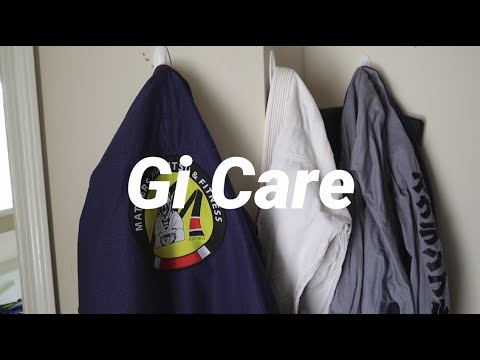
This short video is a useful visual refresher on basic uniform handling and setup:
Respect for partners and the room
Good mat etiquette goes beyond cleanliness. Bowing traditions vary by academy, but respect doesn't. Be on time. Listen when the instructor talks. Don't step on the mat in dirty footwear. Don't throw your gi in a heap and act surprised when it smells bad the next day.
These habits seem small. They aren't. They shape the room. They also shape you.
Your First Gi And First Class At Korfhage BJJ
It is 6:15 on a weekday in Lindenhurst. You finish work, walk into Korfhage BJJ for your first class, and realize the gi is not just clothing. It is the tool you will use to learn grips, posture, pressure, and control from the first warmup to the last round.
That is why your first purchase should be simple. Choose a gi that fits well, feels sturdy, and can handle regular training. A beginner does not need a premium model with every extra feature. You need a uniform that lets you move, learn, and show up consistently.
If tying the belt feels awkward, that is normal. Every white belt deals with it at first. This short guide on how to tie a BJJ belt can take that small worry off your mind before class.
The more important choice is where you train.
A good gi helps. Good instruction shapes everything. Under the Caio Terra method taught at Korfhage BJJ, beginners learn with precision from day one. That matters because Brazilian Jiu-Jitsu can feel like learning a new language at first. The gi gives you handles to work with, but the instructor shows you what those handles mean, how to use them, and when they matter.
For a new student in Lindenhurst, that combination is hard to overstate. A clean, properly fitted gi gets you on the mat ready to practice. Careful coaching turns that practice into real progress. Korfhage BJJ | Caio Terra Academy Long Island offers Brazilian Jiu-Jitsu instruction in Lindenhurst with a $99 unlimited classes trial, a beginner-friendly structure, and programs for adults, kids, seniors, and law enforcement.
Your first gi will eventually wear out. The habits you build in your first class will stay much longer.
Frequently Asked Questions About The BJJ Gi
Can I wear a karate or judo uniform to BJJ?
Sometimes a beginner can get away with using what they already own for a trial class, but you should ask the academy first. A BJJ gi is built for grappling demands and fit expectations that are different from many karate uniforms. Judo uniforms are closer historically, but the cut can still differ.
Should my first gi be cheap or expensive?
Start with value, not status. A beginner usually benefits most from a well-fitting, durable gi in a practical weave. If you train consistently, you'll learn what you like and what you want to change in your next one.
What color gi should I buy first?
White, blue, and black are the safest choices. If you think you may compete later, staying with standard colors makes life easier. If you're only training recreationally, your academy's policy matters most.
Is one gi enough?
One gi can work at the beginning if you stay disciplined about washing it immediately after class. If you train often, a second gi makes life easier. The key issue is hygiene, not collecting gear.
Should the gi feel loose or tight?
Neither extreme is good. You want a fit that's comfortable and mobile without a lot of excess fabric. If it feels like a bathrobe, it's probably too loose. If it restricts your shoulders, hips, or knees, it's too tight.
Does a better gi make you better at Jiu-Jitsu?
No. Better instruction and better habits make you better. A good gi helps because it fits correctly, holds up, and stays consistent in training. But the uniform doesn't replace mat time, attention, or coaching.
Do kids, seniors, and professionals need different gis?
Sometimes, yes. Kids may need room to grow. Seniors may prefer a lighter, more comfortable feel. Law enforcement and other professionals may prioritize durability and movement. The right answer depends on how the person trains and what feels manageable.
If you're ready to stop guessing and start training, Korfhage BJJ | Caio Terra Academy Long Island gives Lindenhurst-area beginners a clear place to begin. Bring your questions, try a class, and get help choosing a gi that fits your body, your goals, and your first steps in Brazilian Jiu-Jitsu.