

On Long Island, a lot of people start the same way. They watch a UFC card at home in Lindenhurst, Babylon, West Babylon, or Copiague, see a fighter shut down a stronger opponent on the ground, and realize the fight changed the moment grappling took over.
That moment usually raises two questions. First, what martial art teaches that kind of control? Second, should you train in a gi if your goal is MMA?
The short answer is yes, but only if you understand what the gi is doing for your development. Gi for mma isn't about pretending an MMA fight includes lapel grips. It's about using the gi as a training tool to sharpen mechanical advantage, posture, timing, control, and decision-making under pressure. Those qualities carry over whether you're training for competition, self-defense, or are seeking a serious martial art in Lindenhurst and nearby towns.
Caio Terra's approach has always mattered here. He's a 12 time IBJJF world champion, and his style is known for precision, efficiency, and fundamentals that hold up under resistance. That's the lens worth using when people debate gi versus no-gi. The better question isn't which uniform wins an internet argument. It's which training method helps you build skills that last.
Your MMA Journey Begins with Brazilian Jiu-Jitsu
A beginner in Amityville or North Babylon usually doesn't walk into a gym saying, "I want to master positional hierarchy." They say something simpler. They want to learn how to handle themselves. They want a real workout. They want to know what to do if a fight gets close, clinched, or grounded.
That's where Brazilian Jiu-Jitsu stands out. BJJ teaches you how to control distance, off-balance another person, escape bad positions, and apply submissions with technique instead of brute force. In MMA, those skills shape what happens once striking turns into grappling. In self-defense, they help when chaos closes the space and clean punches aren't the answer.
For many adults around Lindenhurst and within the surrounding 10 miles, the appeal is practical. BJJ gives you a method for dealing with resistance from a live partner, not a compliant drill partner who always lets the move work. That pressure-testing is why so many people view it as the most effective martial art for ground control and submission fighting.
Why beginners gravitate to BJJ
Three reasons come up again and again:
- It works against resistance. You don't just memorize moves. You practice against someone who doesn't want you to succeed.
- It scales well. A complete beginner can train safely, while advanced students can keep refining details for years.
- It serves multiple goals. One person wants MMA. Another wants self-defense. Another wants fitness and confidence. BJJ supports all three.
BJJ gives beginners a roadmap. You learn what to do on top, what to do on bottom, and how to stay calm while someone is trying to stop you.
If you're still at the stage of figuring out where MMA training starts, this guide on how to get into MMA is a useful next step. It helps connect the excitement of watching fights to a real training path.
Why instruction matters early
A new student can learn good habits fast, or spend months reinforcing bad ones. That's why the coach matters from day one. A skilled instructor doesn't just show an armbar. They teach posture before the armbar, control before the finish, and safety before speed.
That teaching style fits the Caio Terra mindset well. Technical clarity comes first. Flash comes later, if it comes at all.
Understanding the BJJ Gi A Grappler's Toolkit
The gi is the traditional BJJ uniform. It includes a heavy jacket, reinforced pants, and a belt that marks rank. To a beginner, it can look like just a uniform. In practice, it's a training tool that changes how grappling feels.

When you train in a gi, your partner can grip the sleeves, collar, pants, and fabric around the shoulders. You can do the same to them. Those grips create friction and force you to deal with pressure in a slower, more deliberate way than no-gi training.
What the gi teaches that beginners often miss
The gi rewards clean mechanics. If your posture is sloppy, someone will hold you down. If your elbow drifts out of position, someone will control the sleeve and expose an attack. If your balance is weak, a simple grip can break it.
That makes the gi a strong teaching environment for fundamentals such as:
- Posture: keeping your spine aligned and your base stable
- Frames: using structure, not panic, to create space
- Applied body mechanics: moving a person with angles and connection
- Grip awareness: understanding where control begins
A simple example helps. In no-gi, a beginner may slip out of a bad position because their partner can't hold on. In the gi, that same beginner has to use proper escape mechanics because the grips slow everything down. That's frustrating at first, but it's exactly why the learning sticks.
Why the gi fits Caio Terra's method
Caio Terra's game is famous for detail. Small adjustments in angle, pressure, and timing make the difference between struggling and controlling. The gi makes those details visible.
Practical rule: If a technique only works when your partner moves the way you want, you haven't learned the technique yet.
The gi exposes weak habits quickly. That's useful for anyone serious about MMA because fundamentals developed under tougher control often transfer better later. Even when the grips disappear, the understanding of base, timing, and connection remains.
Gi and no-gi aren't the same game
A rash guard and shorts remove most clothing grips. That changes entries, scrambles, takedowns, and escapes. But the core idea of BJJ stays the same. You still need to manage distance, win inside position, and apply pressure with intent.
The gi gives you more handles. Those handles slow the exchange and make hidden mistakes easier to spot.
Gi vs No-Gi Training The BJJ Debate for MMA Fighters
The most common objection to gi for mma is simple. "You don't wear a gi in the cage."
That's true, and it matters. But it's only part of the picture.

No-gi is more directly similar to MMA grappling because there are no jacket or pants grips. It tends to be faster, more scramble-heavy, and more dependent on body locks, head position, wrist control, and wrestling-style transitions. At the same time, gi training often creates a more controlled learning environment that sharpens technical precision.
According to Sanabul's discussion of gi and no-gi for MMA, approximately 90% of MMA fighters find no-gi training more enjoyable, while many elite coaches still recognize the developmental benefits of the gi. The same source notes that systems like 10th Planet BJJ have adopted a gi-free approach to better represent MMA conditions, while many top athletes still favor a hybrid path.
A quick side-by-side view
| Aspect | Gi Training | No-Gi Training |
|---|---|---|
| Pace | Slower, more methodical | Faster, more dynamic |
| Control style | Fabric grips and friction | Body locks, wrist control, head position |
| Learning feel | Strong for precision and patience | Strong for timing in scrambles |
| MMA similarity | Less direct | More direct |
| Common benefit | Technical discipline | Immediate transfer to cage-style grappling |
For anyone in West Islip, Deer Park, or Copiague trying to pick a starting point, this comparison helps. It doesn't tell you one style is always right. It tells you what each style is training.
Why people get confused
Beginners often hear "no-gi is better for MMA" and turn that into "gi has no value for MMA." Those are not the same statement.
No-gi does resemble MMA more closely. But resemblance isn't the only goal in skill development. A tool can be less literal and still be highly effective. Boxers use drills that don't look exactly like a fight. Wrestlers use positional rounds that isolate one slice of a match. BJJ athletes use the gi the same way. It highlights parts of grappling that deserve extra attention.
No-gi often shows you whether your timing is good. The gi often shows you whether your technique is clean.
If you're looking at the grappling side of MMA more closely, this page on mixed martial arts grappling is a solid local resource.
The balanced answer
The most useful answer for serious students is usually this:
- Use no-gi to train speed, clinch reactions, and MMA-like scrambles.
- Use the gi to sharpen structure, control, and problem-solving under stronger grips.
- Blend both if your goal is long-term development instead of quick comfort.
That balanced view lines up well with the realities of modern training. Fighters need direct applicability, but they also need depth.
How Gi Training Builds a Superior Foundation for MMA
The strongest argument for gi for mma isn't tradition. It's transfer.
Historically, gi-trained athletes performed very well in elite no-gi competition. In BJJ Heroes' analysis of ADCC trends, gi athletes made up 36 out of 64 competitors at ADCC in 2015, compared with 28 no-gi specialists, and in direct gi-versus-no-gi matchups that year, gi players posted an 85% win rate. The same analysis notes that this edge narrowed by 2019, showing that specialized no-gi training has grown stronger over time.
Those numbers matter because ADCC is widely treated as the gold standard of no-gi grappling. If gi-trained athletes could dominate there, the lesson is clear. A gi-based skill set can transfer at a very high level.
What actually transfers
The transfer isn't magic. It comes from the habits the gi forces you to build.
A student who trains in the gi learns to respect posture, strip grips, protect inside position, and stay patient when movement gets sticky. In MMA, those habits show up in different forms. The jacket grip disappears, but the sense of pressure, alignment, and control doesn't.
Three carryovers stand out:
- Calm under pressure: The gi slows the pace enough for you to think.
- Tighter positional control: You stop chasing speed and start understanding weight placement.
- Cleaner escapes: You can't rely on sweat and slipperiness to bail you out.
Why the slower pace helps
Fast rounds can hide technical gaps. A beginner might scramble out, pop their head free, and feel like they solved the problem. In reality, they may have escaped because the exchange was loose.
The gi punishes that. It slows the action and makes every mistake more expensive. For MMA training, that's useful because it creates durable habits instead of temporary solutions.
A fighter with strong fundamentals usually looks calmer than everyone else. That calm comes from knowing where the pressure is and what to fix first.
Why hybrid training tends to win long term
Pure no-gi training can work, especially in programs built around MMA. But many athletes benefit from a broader base. The gi develops detail. No-gi develops immediacy. Together, they produce a grappler who can think and move.
The Caio Terra influence is valuable. His approach has never depended on size or chaos. It depends on precision. For adults training on Long Island, whether the goal is amateur MMA, self-defense, or becoming hard to control, that kind of precision tends to age well.
The lesson isn't that gi beats no-gi. It's that a strong technical base often survives changes in rules, clothing, and pace.
How to Choose the Right Gi for Your Training
Most beginners buying their first gi make one of two mistakes. They either get something too heavy because it feels durable, or too loose because they assume baggy means comfortable.
For gi for mma, your best choice is usually lighter and more mobile.

According to BJJ Fanatics Gear's guide to choosing the right gi, a lightweight gi in the 350-450 GSM range is optimal for MMA cross-training. That range, commonly found in single or pearl weaves, offers durability without the extra weight and heat of heavier 450-650+ GSM double weaves. The same guide notes that sleeves reaching the wrists matter because proper fit can improve the efficiency of technique application by 20-30% in drills.
Start with weight and weave
If you're training several times a week in Lindenhurst, Massapequa, or nearby towns, a lighter gi makes day-to-day training easier.
- 350-450 GSM: A strong all-around choice for mobility and comfort
- Single weave: Usually light and straightforward
- Pearl weave: Popular because it balances durability and feel
- Heavier double weave: Better for some preferences, but often more tiring for regular cross-training
A lightweight gi also dries faster, which is practical when you're balancing work, family, and consistent training.
Fit matters more than branding
A good gi should let you move freely without leaving a lot of extra fabric for your training partner to grab. Sleeves should reach the wrists. The jacket should cover the hips. The pants shouldn't bind when you squat or play guard.
Some adults fit standard sizes easily. Others need to check long or short variants. Brand charts differ, so don't guess if you can avoid it.
Coaching note: If your gi fights your movement, you end up thinking about your uniform instead of your technique.
For supporting gear under the gi or during no-gi classes, this page on BJJ compression shorts can help you sort out what works.
A practical buying checklist
Before you buy, run through this list:
- Check the fabric weight. Stay in the lightweight range if MMA cross-training is part of your goal.
- Confirm sleeve length. Wrist-length sleeves are important for proper training function.
- Test the pants. Move, squat, and step as if you're about to drill takedowns or guard passes.
- Think about laundry reality. If your gear won't dry in time, consistency gets harder.
- Pair it with the right footwear habits off the mat. If you're cross-training outside the academy, a complete guide to running and cross-training shoes is a helpful resource for choosing shoes that support conditioning work safely.
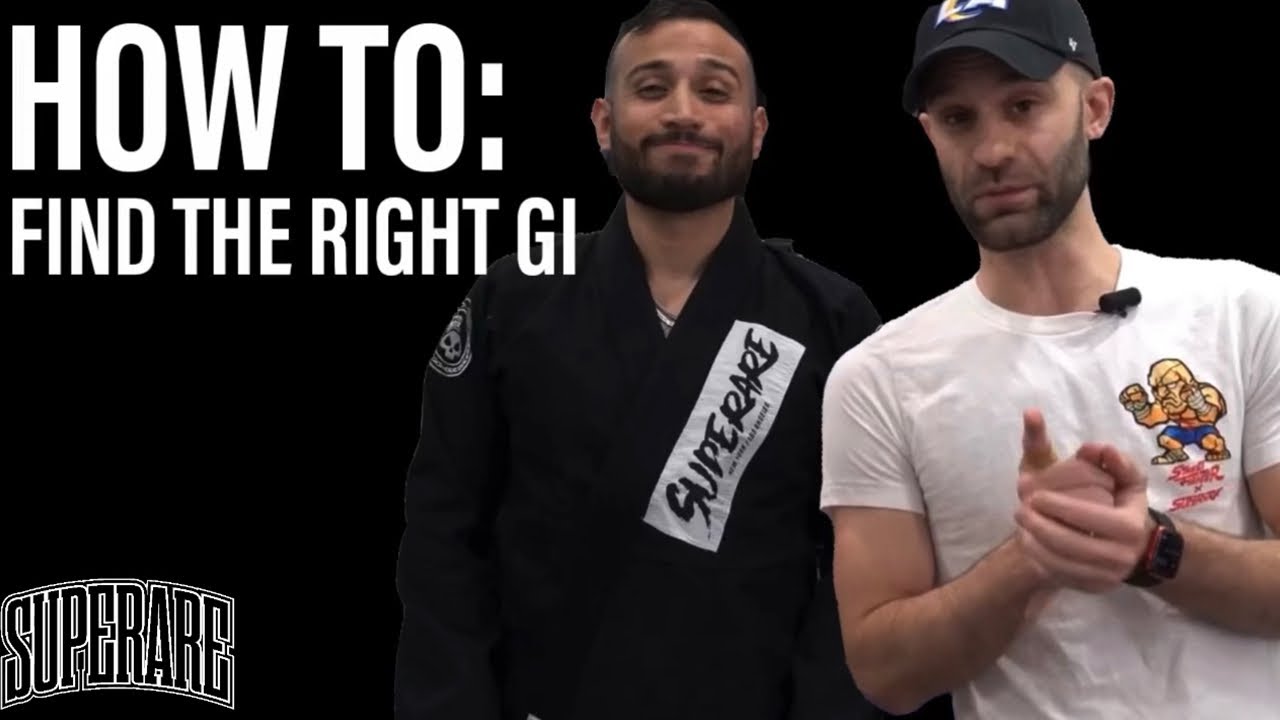
A quick visual can help if you're new to gi fit and setup.
Why Your Instructor Is More Important Than Your Uniform
People spend a lot of time asking whether gi or no-gi is better. They don't spend enough time asking who is teaching them.
A mediocre coach can turn either format into random movement. A skilled coach can use either format to teach principles that apply everywhere. That's why the instructor matters more than the uniform.
Good teaching creates transfer
A strong instructor doesn't teach techniques as isolated tricks. They teach concepts that repeat across positions.
For example, a student may learn how to use a collar grip in the gi. A poor coach leaves the lesson there. A better coach shows the underlying principle. Control the head and shoulder line. Break posture. Limit rotation. Once the student understands that, they can apply the same idea in no-gi with a collar tie, head control, or upper-body connection.
That is how gi training becomes useful for MMA. The transfer happens through teaching.

Why lineage and method matter
Caio Terra's reputation wasn't built on gimmicks. His approach is built on mechanical advantage, timing, efficiency, and understanding why a position works. That's a major reason his methods matter in a local academy setting. Students don't just copy moves. They learn a system.
For adults and parents around Lindenhurst, Farmingdale, and neighboring communities, that changes the whole training experience:
- Beginners get structure instead of guesswork
- Smaller students learn how to use angles and timing
- Competitors build cleaner habits
- Self-defense students learn control before panic
The best instructor in the room isn't the one with the longest list of moves. It's the one who can make the right move understandable under pressure.
Safety, progress, and confidence
Good instruction also shapes the room. Students improve faster in a culture that values control, clear feedback, and technical rounds over ego-driven chaos.
That's especially important for beginners who feel intimidated by MMA training. If the coach can explain when to slow down, when to grip, when to release, and why a detail matters, students stay safer and progress with more confidence. Over time, the debate over gi versus no-gi starts to fade. What matters is that the student is learning grappling in a way that sticks.
Start Your MMA Foundation at Korfhage BJJ in Lindenhurst
If you're serious about MMA, self-defense, or becoming harder to control in any grappling exchange, Brazilian Jiu-Jitsu is the right place to start. It gives you a working answer to one of the hardest parts of a fight. What happens when distance closes and someone forces you to grapple?
The gi has a real place in that process. It slows things down, exposes mistakes, and helps students build the kind of fundamentals that don't disappear when the pace gets fast. No-gi still matters, especially for direct MMA application, but the strongest long-term development often comes from learning both with purpose.
For students in Lindenhurst, Babylon, West Islip, Amityville, Copiague, and other nearby towns within a short drive, the local advantage is access to experienced instruction rooted in a proven system. That's what makes the difference between collecting techniques and actually learning Jiu-Jitsu.
Caio Terra's influence is important here because his method reflects what serious students need most. Precision. Timing. Efficiency. Real fundamentals. Those ideas help a beginner feel less lost, and they help advanced students keep sharpening their game.
If you've been debating whether gi for mma makes sense, the answer is straightforward. It does, when the training is technical, intentional, and guided by a coach who understands how to connect traditional tools to modern application.
If you're in Lindenhurst or anywhere nearby on Long Island and want to build your grappling the right way, Korfhage BJJ | Caio Terra Academy Long Island offers a beginner-friendly path with experienced coaching, a technical curriculum, and a $99 unlimited classes trial so you can experience the training for yourself.