

You're standing in the lobby on the first night, gear bag in hand, trying to figure out what belongs under the gi and what belongs on its own for no-gi. That's where a VHTS rash guard stops being a brand choice and starts being a training choice. In a Lindenhurst academy, the right base layer helps you stay comfortable, keeps sweat under control, and lets you focus on learning positions instead of tugging at fabric.
For a new student, that matters more than many realize. A close-fitting rash guard gives you a clean layer between your skin and the mat, and it supports the kind of movement BJJ asks for, especially when you're shrimping, framing, pummeling, and recovering guard. If you're just getting started, the basics of stepping onto the mats are laid out well in this guide to starting Brazilian Jiu-Jitsu, and the same beginner logic applies here, choose gear that helps you train, not gear that gets in the way.
Practical rule: if a piece of clothing makes you think about it during live rolling, it's already distracting you.
That's why academies like Korfhage BJJ in Lindenhurst care about base-layer choices. Rash guards are not a fashion accessory in this room, they're part of the training system, especially when you're learning in a place where hygiene, comfort, and partner safety matter. The rest comes down to fit, fabric, and how the garment handles real rolling, not just how it looks on a product page.
Why Your First BJJ Class Needs the Right Base Layer
The first class usually exposes every weak point in your gear. You warm up, you sweat faster than you expected, and suddenly a loose shirt is riding up during movement while your attention should be on posture and breathing. A VHTS rash guard solves that basic problem by staying close to the body and acting like a training layer instead of a loose obstacle.
Why the base layer matters in live training
BJJ is built on contact. When two people are scrambling on the mat, fabric that soaks up sweat or shifts around becomes a distraction for both partners. A rash guard helps reduce skin irritation, keeps sweat from clinging to a cotton tee, and gives you a smoother surface under a gi or in no-gi rounds.
That matters in Lindenhurst because beginner classes often mix new students, returning athletes, and people trying no-gi for the first time. A clean base layer signals that you're prepared, and it makes the room better for everyone. The point isn't to look technical, the point is to train in a way that matches the demands of the sport.
A new student doesn't need the fanciest setup. They need a layer that stays put, feels decent after sweating, and doesn't become a hygiene issue.
A VHTS piece fits that role well because it's made to behave like training equipment. You're not buying it to sit in a drawer. You're buying it because it has to survive drilling, positional sparring, and live rounds in a real academy setting.
What to expect before the first session
If you're starting in Lindenhurst or nearby towns, think of the rash guard as the base of your uniform system. Under a gi, it adds comfort and keeps you from rolling in a shirt that bunches up. In no-gi, it becomes the uniform itself, which makes selection more important, not less.
A simple way to think about it is this, the rash guard is to grappling what good shoes are to walking all day. Nobody notices them when they work, but everybody notices when they don't.
What a VHTS Rash Guard Is Actually Made Of

A VHTS rash guard is typically built from a polyester-spandex performance blend, and that combination is there for a reason. Polyester gives the garment structure, durability, and moisture management. Spandex adds stretch, which matters when your body is twisting, framing, bridging, or trying to keep your elbows tight under pressure.
Why the blend works on the mats
A second skin with a job to do. Polyester helps pull sweat away so the shirt doesn't feel heavy and soaked, while spandex lets the fabric move with you instead of fighting against you. That's a better setup than a cotton t-shirt, which tends to hold moisture and feel heavier as the session goes on.
The broader rash guard design didn't appear out of nowhere. The modern history starts in Australian surfing in the 1970s, when surfers wanted protection from wax, sand, and abrasion, and by the mid-1980s the garment had already become a protective base layer for surf and water sports. Today, many rash guards are sold with UPF 50+ ratings that block about 98% of ultraviolet radiation, and the typical build uses 80% to 90% nylon or polyester with 10% to 20% spandex/elastane (SwimOutlet's rash guard guide).
That history matters because it shows how the garment evolved from surf protection into technical apparel for repeated movement. A VHTS piece sits in that same family, but the use case is mat work, not beach wear.
Why this matters in BJJ, not just in theory
A technical fabric helps during guard passing because it won't bunch up as easily when you're changing levels or posting on your hands. It also helps when you're sweating hard in long rounds, because the shirt stays closer to the body. If you want a broader look at how advanced textile design shows up in recovery apparel, the idea is similar to what's discussed in innovative fabric in recovery wear, where performance textiles are chosen for function first.
A good rash guard doesn't try to do everything. It just does the important things well, stretch, manage sweat, and stay together under pressure.
Gi vs No-Gi Training and When a Rash Guard Matters
Gi and no-gi can feel like two different sports on the same mats. In gi class, the uniform itself creates more friction, more gripping options, and a different pace. In no-gi, skin contact matters more, clothing has less structure, and a rash guard becomes part of the actual training system.
Where the rash guard fits in each format
In gi training, a rash guard is usually an underlayer. Some students wear one for comfort, warmth, or hygiene, especially if they don't like the feeling of a gi jacket directly on skin. That makes it useful, but still secondary to the gi itself.
In no-gi, it's standard gear. The uniform is built around close-fitting apparel because loose fabric gets in the way and gives your partner more to grab. If you're sorting out the difference between the two formats, this gi training overview gives a useful frame for understanding why gi clothing is treated differently from no-gi clothing.
The confusion usually comes from people treating rash guards like optional fitness wear. They aren't. In a real Lindenhurst class, a rash guard helps you stay within academy expectations and keeps your training day simple. You don't want to improvise with a cotton tee and hope it works.
Good academy habit: wear the layer that matches the class, not the layer that just happens to be clean.
Why the choice affects your rounds
No-gi brings more sweat, more sliding, and more direct skin contact. That means the shirt has to stay in place and hold up while you're fighting for position. Gi training is a little more forgiving because the jacket carries part of the load, but the underlayer still matters for comfort and hygiene.
The easiest rule is simple. If you're training no-gi, plan on a rash guard. If you're training gi, treat it as a smart underlayer, not an afterthought. That keeps your weekly schedule cleaner and your training bag easier to pack.
Finding the Right Fit for Your Body and Your Style
A good rash guard should feel snug, not strangling. That sounds obvious until you try one on and realize how many products look similar online but behave very differently on a real body. The public product listings for VHTS don't do much to help with body-shape questions, which is exactly why fit deserves its own attention.
What to check before you buy
Start with the shoulders. If you've got broad shoulders, you want enough stretch that the sleeves don't fight your frame when you pummel or reach. Long-torsoed students should pay attention to torso length, because a shirt that's too short turns into a tug-of-war every time you bridge or invert. Women students often need to pay extra attention to bust fit, torso length, and whether the cut stays smooth when they're in guard or mounted pressure.
A useful outside reference point for measuring yourself before ordering is this body measurement guide, because the tape measure tells the truth faster than product photos do. Measure the areas that matter, compare them to the brand's size chart, and think about how the garment will move after several hard rounds.
How it should feel on the first roll
The shirt should hug the torso without cutting into your breathing. Sleeves should stay close enough that they don't flap around, but not so tight that they limit wrist mobility when you grip, frame, or post. If you can't raise your arms comfortably or rotate through grappling positions, the fit is off.

One mistake beginners make is buying for a loose feel because they think comfort means extra room. In grappling, that usually backfires. The shirt starts to move instead of your body moving inside the shirt.
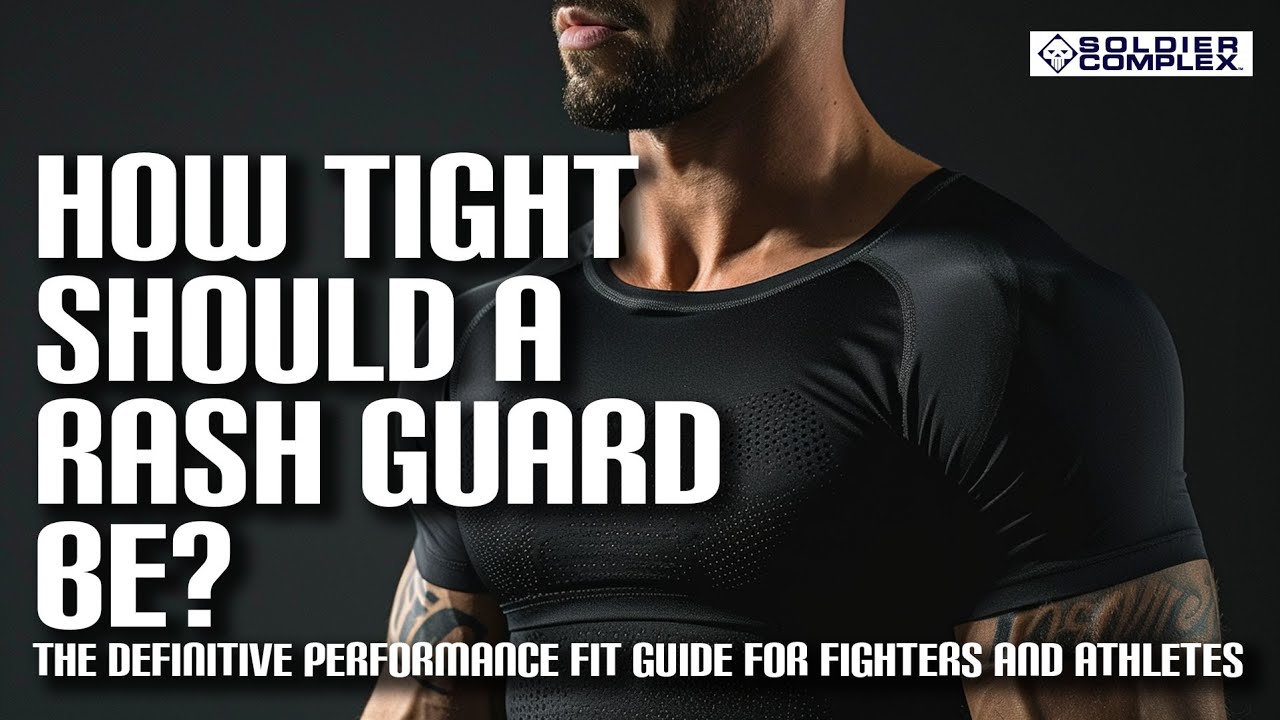
A snug fit should still let you breathe through hard rounds. If it doesn't, go up a size only if the brand's cut clearly runs narrow for your build. The goal is control, not compression for its own sake.
How the Caio Terra Method Shapes Your Gear Choices
Walk into a Lindenhurst academy that teaches the Caio Terra method, and you will notice the room rewards patient, technical work. Students are not just trying to outmuscle each other. They are trying to create small openings, hold position, and repeat the same clean mechanics until those details become usable under pressure. A VHTS rash guard should support that kind of training, because the shirt is part of the tool set, not a style statement.
Caio Terra's approach to jiu-jitsu is technical, repetitive, and highly efficient. He's an IBJJF world champion known for guard work, leg-entanglement systems, and repeating fundamentals until students can apply small mechanical advantages through timing, force application, and structure. That kind of instruction changes how you should think about a rash guard, because the garment needs to stay out of the way while your coach is teaching you how to win with posture, angles, and placement.
Why leverage-based jiu-jitsu changes clothing priorities
When a school teaches technique over brute force, the gear should support movement rather than add bulk. A compression rash guard does that well because it stays close to the body during guard retention, passing, and transitions to submissions. You are not fighting your shirt while you work on frames, leg entries, or the small adjustments that make a position hold.
That fits a school built around the Caio Terra method, because the style rewards precision. For a deeper look at the grappling curriculum, see the mixed martial arts grappling overview. If your coach is asking you to win small positional exchanges, your clothing needs to disappear into the background. A loose top makes scrambles feel cluttered, and that gets in the way when you are trying to learn timing through live rolling.
What quality coaching has to do with gear
A good instructor matters because BJJ is technical, safety-sensitive, and progression-based. Children's organized-activity research from the U.S. Census Bureau's National Survey of Children's Health highlights the value of structure, supervision, and skill-building, and martial arts education literature often treats quality coaching as central to safe technique acquisition and confidence development. In practice, that means the academy should teach more than effort, it should teach mechanics that can be repeated under pressure.
For a Lindenhurst student, that connects directly to clothing choice. If your coach is focused on fundamentals, your rash guard should support that same mindset. It should stay stable during training, move with your body, and stay quiet while you work. That is the same reason a well-chosen VHTS rash guard feels right in a room that values clean repetition.
The best gear doesn't announce itself. It lets the technique speak.
A VHTS rash guard fits that idea because it functions like training equipment, not a trophy. That is the kind of gear choice that suits technical jiu-jitsu, and it supports an effective training experience.
Care and Durability Through Years of Rolling
A rash guard lasts longer when you treat it like training equipment, not like casual athletic wear. Sweat, friction, and repeated washing all take a toll, especially if you train several times a week in Lindenhurst or nearby towns.
A simple care routine that actually works
Wash it in cold water with a mild detergent. That helps protect the elasticity in the fabric and keeps the shirt from breaking down early. Skip fabric softener, because it can leave residue on performance fibers and weaken the feel of the garment over time.
Air drying is the safest habit. If you have to use a dryer, keep the heat low and don't let the shirt bake. High heat is rough on spandex, and once the stretch goes, the compression fit gets sloppy.
Here's the easy version:
- Wash cold: Keep the fabric from getting stressed in the wash.
- Use mild detergent: Clean the shirt without coating performance fibers.
- Avoid fabric softener: It can interfere with the fabric's feel and lifespan.
- Air dry when possible: This protects stretch and shape.
- Rotate your gear: Two rash guards in rotation will last longer than one overworked shirt.
How to spot wear before it becomes a problem
Look for pilling, stretched seams, or fabric that starts feeling thin in high-friction spots. Those are signs the shirt has moved from active use to the end of its useful life. If the collar or sleeves don't recover shape after washing, it's usually time to replace it.
For students who also wash branded or decorated training gear, the same careful approach applies to washing embroidered garments. Performance apparel and decorated apparel both last longer when heat and harsh chemicals stay out of the process.
Common Rash Guard Mistakes Lindenhurst Students Make
A new student at a Lindenhurst academy often learns this lesson the hard way during live rolling. A VHTS rash guard is not a style choice first, it is training gear that has to stay in place when grips, pressure, and sweat start working against you. In a Caio Terra environment, that matters even more, because the whole point is clean movement and efficient body mechanics, not extra fabric getting in the way.
The most common mistake is buying a shirt that is too loose. In grappling, extra room gives your partner more material to catch, and it gives you more clothing to shift and adjust while you should be paying attention to frames, posture, and angles. A shirt that feels roomy in the mirror often becomes annoying halfway through class.
The three habits that cause trouble fast
The second mistake is wearing a cotton t-shirt under a gi. Cotton holds sweat, gets heavy as the round goes on, and can turn a clean class into a wet, dragging session for both you and your partner. If you want a base layer, choose one made for training sweat instead of one made for casual wear.
The third mistake is treating no-gi as if a rash guard does not matter because “it's just class.” Mat burn on the arms, shoulders, or chest usually changes that opinion quickly. It also affects how prepared you look to the room, especially in a school where people are expected to show up ready for contact, movement, and repeated rounds.
A fourth mistake is buying gear for the label instead of the use. New students sometimes chase competition-style designs or a stiff, overbuilt feel, then find out the shirt is harder to wear than it is to train in. The better question is whether the rash guard supports long sessions, holds its shape, and still feels right after repeated washing, the same basic care mindset that applies to washing embroidered garments.
Value rule: the cheapest rash guard is rarely the cheapest by the end of a season if it rides up, stretches out, or needs constant replacement.
That is the trade-off. Buy a shirt that can stay useful through training, not one that only looks good before the first hard round.
Buying Your First VHTS Rash Guard at a Lindenhurst Academy
If you train at a Lindenhurst academy or somewhere within a short drive, the smartest move is to buy based on how the shirt feels in actual class, not on product photos. A VHTS rash guard makes sense if you want a technical, close-fitting layer that supports no-gi work and works under a gi without adding bulk.
The most useful first purchase has three traits, a fit that stays put, fabric that feels smooth under pressure, and care instructions you're willing to follow. If you're brand new, use a trial class to test whether the neckline, sleeve length, and torso coverage feel right during warm-ups and sparring. Korfhage BJJ's $99 unlimited trial is a practical way to do that before committing to a full gear rotation.
For class schedules and current training details, the academy's site at bjjlongisland.com is the best place to check before you show up. That matters more than reading ten gear reviews, because the mats tell you whether a shirt works for your body.
Bring the shirt, roll in it, and notice whether you forget about it. That's the standard you want.
If you're ready to train in a room that values structure and beginner-friendly instruction, Korfhage BJJ | Caio Terra Academy Long Island is worth a visit. You'll get a clear path for choosing the right rash guard, trying it on the mats, and learning how technical Brazilian Jiu-Jitsu feels in live training.