

If you're a parent in Lindenhurst, West Babylon, Copiague, North Lindenhurst, or Babylon, you've probably had this thought: my 5-year-old has a ton of energy, needs more confidence, and would benefit from something structured. The hard part is choosing the right activity.
A lot of programs promise discipline, focus, and fitness. Very few fit the way a 5-year-old learns.
That’s why so many local parents end up looking at jiu-jitsu for 5 year olds. Done well, Brazilian Jiu-Jitsu gives young kids movement, boundaries, problem-solving, and social growth in the same hour. It also does it in a way that matches their stage of development. They don’t need to be tough. They don’t need to be athletic. They need a good class, a patient coach, and a place where learning feels fun.
Why Brazilian Jiu-Jitsu Is the Smartest Martial Art for Your Child
For a 5-year-old, the smartest martial art isn’t the one that looks the toughest. It’s the one that teaches control, balance, awareness, and calm decision-making.
That’s what Brazilian Jiu-Jitsu does better than striking-based styles for very young children. BJJ teaches kids how to use position, body mechanics, and timing instead of punches or kicks. A child learns how to hold, escape, turn, base, and move with purpose. For a small body and a still-developing nervous system, that matters.

Why non-striking matters at age five
At five, most kids are still learning how to regulate frustration, follow directions in sequence, and understand personal space. BJJ meets them there. The central lesson isn’t “hit harder.” It’s “slow down, use technique, and solve the problem.”
That difference shows up in the research. A 2023 study of 113 children over five months found that both BJJ and MMA improved self-control and pro-social behavior, but the BJJ group had a decrease in aggression, while the MMA group experienced an increase. The article discussing that study also notes BJJ’s non-striking approach as a strong fit for young children’s emotional development (study summary on BJJ and aggression in kids).
Practical rule: If an activity teaches a 5-year-old to calm down, listen, and use control instead of force, it’s usually a better long-term fit.
What this looks like in real life
A parent often worries that martial arts will make a child more aggressive. With BJJ, that’s usually based on a misunderstanding of what happens in class. Kids aren’t learning to trade strikes. They’re learning things like how to sit with balance, how to move their hips, how to stay safe on the ground, and how to work with a partner.
For families around Lindenhurst, that’s a big reason BJJ stands out from many youth activities. It gives children a real martial art, but the lessons underneath it are the part that matters most:
- Technique over strength so smaller kids can succeed
- Control over chaos so movement has structure
- Respect for partners because nobody learns alone
- Calm under pressure instead of emotional outbursts
Why BJJ fits young beginners so well
Five is a foundation age. Kids this age do best when instruction is simple, repetitive, playful, and physical. BJJ naturally supports that. The basic movements are easy to scale down, and the game-like nature of grappling keeps children engaged without pushing them into the emotional intensity that comes with striking.
That’s why, for many local parents comparing options, Brazilian Jiu-Jitsu ends up being the clear choice. It isn’t about raising a fighter. It’s about helping a young child become coordinated, confident, and more in control of themselves.
How BJJ Builds Your Child's Developmental Superpowers
A lot can change in a few weeks. A five-year-old who used to crash into the couch now plants their hands and turns with control. A child who melted down when a game got hard starts taking a breath and trying again. Around Lindenhurst, parents often notice those changes before their child can explain them.
That pattern makes sense. Brazilian Jiu-Jitsu develops the body, the brain, and emotional control at the same time. For young kids, that combination matters because growth at this age is connected. Better balance can support confidence. Better listening can support safer movement. Better self-control can make every other activity go more smoothly.

Physical development through movement that has a purpose
Five-year-olds learn best by doing. BJJ gives them meaningful movement instead of random motion.
In class, a child practices shrimping, bridging, rolling, posting, turning, and building a strong base. Those movements work like the early building blocks of athleticism. They help a child learn where their body is in space, how to shift weight, and how to stay balanced while another person is moving too. Earlier in the article, we noted research showing that structured martial arts training can improve coordination and agility in young children.
That matters for both active kids and cautious kids. A child who already loves climbing and tumbling gets more control. A child who seems awkward or hesitant gets repeated, guided practice in a safe setting. If you want to reinforce those patterns at home, simple motor skills activities for preschoolers pair well with what a child is learning on the mat.
Cognitive growth through problem-solving they can feel
Parents sometimes expect martial arts to be mostly physical. Good BJJ for five-year-olds is also a steady lesson in cause and effect.
A coach shows one small problem. Maybe your child is pinned under a partner and needs to turn their hips. Maybe they need to remember where their hands go before they stand up. They try it, feel what happens, make a correction, and try again. That sequence builds attention, memory, and flexible thinking in a way that feels more like play than schoolwork.
For a young child, the mental side of BJJ often looks like:
- Following two or three steps in order
- Matching the right movement to the right situation
- Staying with a task even when the first try fails
- Listening, watching, and then acting
It is one reason many families who read about the broader benefits of martial arts for kids end up taking a closer look at BJJ specifically.
A classroom worksheet trains thinking in one way. Grappling trains thinking with the whole body involved.
Social and emotional growth that carries into daily life
This is often the part parents care about most.
At five, children are still learning how to take turns, respect space, recover from frustration, and stay calm when something feels hard. BJJ gives them repeated practice with all of those skills. They have to work with a partner. They have to pause and listen. They have to lose small battles without feeling defeated. Over time, that creates steadier reactions and more confidence.
A strong kids program also teaches emotional control in a very concrete way. Your child learns that success does not come from being wild or overpowering. It comes from posture, timing, patience, and using the right response. That lesson reaches well beyond the academy.
For Lindenhurst families, the local piece matters too. A nearby program built on the Caio Terra curriculum gives children access to world-class teaching principles without the guesswork of a generic recreational class. At Korfhage BJJ, that means young students are not just staying busy after school. They are practicing movement, focus, and resilience in a structured system designed to grow with them.
A Peek Inside a Kids BJJ Class at Korfhage Academy
Most parents feel better once they know what a class looks like. The picture in their head is usually more intense than the class itself.
A well-run 5-year-old class looks closer to guided movement training mixed with games than to anything you’d see in an adult match.

The first few minutes
A young child usually starts with a bow-in, a quick check-in, and a warm-up that feels playful. Instead of long conditioning sets, they might do animal walks, rolls, balance drills, hip escapes, and movement races across the mat.
This part matters more than parents realize. The tactile, full-body motions used in BJJ, including shrimping and bridging, provide strong proprioceptive and vestibular input that helps improve gross motor skills and body awareness, especially for children with coordination challenges (occupational therapy perspective on BJJ and child development).
The technique portion
After warm-ups, the coach narrows the room’s attention to one simple idea. For a 5-year-old, that might be standing up with good base, escaping from underneath with hip movement, or learning where hands and knees go in a stable position.
This is where instruction style matters. A strong kids coach doesn’t dump details on children. They reduce the move to one or two clear actions, then repeat it with a partner. If a child forgets, the coach resets the task in plain language and keeps the pace moving.
For families near Lindenhurst, that’s also where the Caio Terra curriculum has real value. Caio Terra is a 12-time IBJJF world champion, and his teaching approach is known for technical precision, efficient body mechanics, and solving positions step by step. In a kids class, that doesn’t mean complexity. It means the coach teaches clean fundamentals in a way a young child can absorb.
The game-based learning phase
Near the middle or end of class, kids often play positional games. One child tries to keep a safe position. The other tries to escape. The rounds are short, the instructions are specific, and the coach stays close.
That structure teaches effort without turning class into a scramble. It also helps shy children participate because the goal is clear.
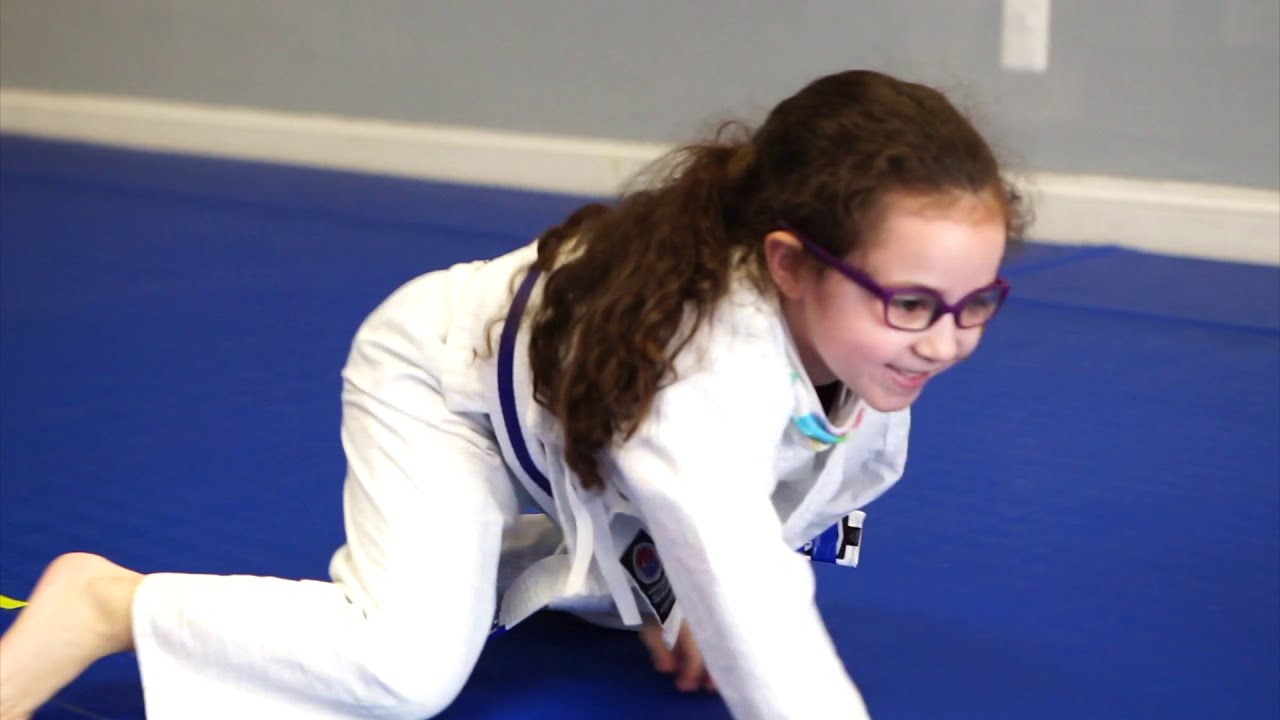
Here’s an example of what many parents notice in a video walk-through of a youth class:
What a parent usually notices by the end
The last few minutes are often the most revealing. Kids line up, listen, and leave with more calm than they walked in with.
That’s because the class gives them a sequence their body understands:
- Move with purpose
- Listen for a simple task
- Try it with a partner
- Reset and repeat
For a 5-year-old, that structure is gold. It feels fun, but it’s doing real developmental work underneath.
Why Your Child's Coach Matters More Than Anything
At five years old, your child isn’t choosing a martial art in the abstract. They’re responding to a room, a voice, a pace, and a teaching style.
That’s why the coach matters more than the logo on the wall, the medals in a case, or the class schedule.
A kids coach has to teach before they instruct
A great youth BJJ coach is an educator first. They know how to get down to a child’s level, give one clear cue, and keep the room organized without making it feel harsh.
That balance is harder than generally perceived. If the coach is too loose, the class gets chaotic. If the coach is too rigid, five-year-olds shut down. The right coach is calm, clear, upbeat, and consistent.
Look for someone who can do these things well:
- Simplify complex movements into one-step tasks
- Correct gently without embarrassing a child
- Hold boundaries so the mat stays safe
- Keep lessons moving so attention doesn’t drift
A child will forget the name of a technique. They won’t forget how a coach made them feel in class.
High-level BJJ matters, but only if it translates
Parents often assume a decorated competitor automatically becomes a strong kids instructor. Sometimes that’s true. Sometimes it isn’t.
High-level knowledge only helps if the coach can turn it into age-appropriate teaching. That’s where the Caio Terra method is useful. Caio Terra’s approach to jiu-jitsu is built around technical efficiency, mechanical advantage, and understanding why a movement works. Those ideas translate well to children because they reward precision over force.
For a 5-year-old, the lesson becomes simple. You don’t need to be the biggest kid in the room. You need to learn where to put your body, when to move, and how to stay calm.
What local parents should pay attention to
When you visit a school in Lindenhurst or a nearby town, watch the instructor more than the students. Kids will always wiggle, forget, and test limits. That’s normal.
The key is whether the coach can guide that energy productively. A good one keeps the room safe, keeps the children engaged, and makes each child feel seen. That combination is what turns BJJ from “another activity” into something that shapes character.
Signs of a Top-Quality Kids Program Near Lindenhurst
A parent from Lindenhurst walks into two kids martial arts classes in the same week. In both rooms, children are wearing gis and learning jiu-jitsu. The difference shows up fast. In one class, the energy feels scattered and the lesson changes every few minutes. In the other, the room feels calm, busy, and purposeful. For a 5-year-old, that difference matters more than a sales pitch or a polished lobby.
Young children do best in a program that feels predictable, safe, and easy to follow. A strong kids class works like a good kindergarten classroom. There is movement, fun, and personality, but there is also order. The child knows where to stand, what to do next, and who is guiding them.
What to check during a visit
Start by watching the room before you listen to the tour.
Is the mat clean? Are kids grouped in a way that makes sense for age and size? Does class begin with a routine instead of a scramble? Those details show whether the program was built for children or adapted from an adult class schedule.
Then look for signs of real structure:
- A clear start-to-finish routine that helps kids settle in
- Short instruction segments that match a 5-year-old’s attention span
- Purposeful games that teach balance, movement, or control
- Close supervision during partner drills
- Simple expectations children can understand and repeat
Fun matters here, but fun by itself is not the standard. The right kind of fun teaches something. A game of balance should build base. A movement race should teach hip motion. A partner drill should practice control, not create chaos.
Ask about the curriculum, not just the schedule
A good school should be able to explain what beginners learn first and why that order makes sense.
For younger children, the early curriculum should usually focus on body awareness, posture, balance, safe movement on the ground, and a few simple control and escape patterns. That progression matters. You would not hand a 5-year-old a chapter book before teaching the alphabet. Jiu-jitsu works the same way. First comes movement. Then comes understanding. Then comes skill.
A simple weekly model might look like this:
| Week | Positional Focus | Key Technique/Game | Life Skill Theme |
|---|---|---|---|
| Week 1 | Base and balance | Standing strong game | Listening |
| Week 2 | Ground movement | Shrimping race | Persistence |
| Week 3 | Safe top control | Knee placement drill | Self-control |
| Week 4 | Simple escape | Bridge and turn game | Problem-solving |
If you are comparing schools near Lindenhurst, ask to see how their kids classes are organized over time. Families who want a concrete local example can review this youth jiu-jitsu program near Lindenhurst and compare it against what they see elsewhere.
Signs that a program will hold up over time
The first class should feel welcoming. The better test is whether the program makes sense in month two and month six.
Look for a school that tracks progress in a way children can understand, keeps expectations consistent from class to class, and gives parents a clear picture of what their child is working on. That is where the Caio Terra influence stands out for many families on Long Island. The curriculum is known for technical clarity and efficient movement, which fits young children well because it rewards timing and body position over strength.
One local example is Korfhage BJJ | Caio Terra Academy Long Island. The important point is not the name alone. It is that a Lindenhurst-area family can find a nearby program with a structured kids curriculum, age-appropriate teaching, and a direct connection to a respected technical system instead of a generic one-size-fits-all class.
When you visit, ask yourself one plain question. Does this class look like a place where a 5-year-old can learn steadily, feel secure, and want to come back next week? If the answer is yes, you are probably looking at a high-quality program.
Preparing for Your First Class and Joining Our Family
A first class doesn’t need to be a big production. For most 5-year-olds, the goal is simple. Walk in feeling safe, have a good experience, and leave wanting to come back.
What to bring
Keep it basic:
- Comfortable clothes your child can move in
- A water bottle with their name on it
- Easy slip-on shoes for off the mat
- A positive tone on the ride over
Try not to build the class up as a test. Kids do better when parents frame it as, “You’re going to try something new and fun.”
What your child should expect
The main rules are simple. Listen to the coach. Keep hands to yourself unless the drill calls for a partner. Be kind. If something feels confusing, ask for help.
If you want to understand how progress is recognized over time, this guide to the kids jiu-jitsu belt system gives parents a helpful overview.
The best first class is not the one where your child does everything perfectly. It’s the one where they feel comfortable enough to try again next week.
Why families stay
Parents usually start for one reason. Maybe confidence, coordination, or focus. They stay because the right class gives their child a place where effort matters, respect is normal, and growth is visible.
For families in Lindenhurst and the surrounding area, that kind of environment can become a real anchor in the week. That’s what you want from an activity at five. Not pressure. Not hype. A strong routine your child can grow into.
Parent Questions About Starting Jiu-Jitsu on Long Island
Is BJJ safe for a 5-year-old?
Yes, if the class is built for that age and supervised well. A proper young kids class focuses on movement, balance, simple positions, and partner awareness. It should not feel like an adult class scaled down.
The safest programs use clear rules, close coaching, and controlled games rather than chaotic sparring.
What if my child is shy?
Shy kids often do very well in BJJ because the structure helps them. They know where to stand, what to do, and how to participate. They don’t have to be loud to succeed.
A good coach won’t force a shy child into the spotlight. They’ll help them join at a steady pace and build trust first.
What if my child isn’t athletic?
That’s common, and it’s not a problem. BJJ is one of the few activities where “not athletic yet” is a normal starting point. Young beginners improve by repeating simple movements and learning how their body works.
Some of the children who benefit most are the ones who need more coordination, more body awareness, or more confidence.
Will jiu-jitsu make my child more aggressive?
This is one of the biggest misconceptions parents have. In a quality BJJ program, children learn boundaries, control, and respect for training partners. The whole structure pushes them toward calm behavior, not reckless behavior.
How does the kids belt system work?
For young children, belts are usually less about status and more about progress. They give kids a visible way to understand that effort, consistency, and attitude matter.
If your child starts at five, think of belts as a roadmap. They help a child see that learning happens step by step.

How do we get started with a trial class in Lindenhurst?
Keep it easy. Reach out, ask about the youngest age group, and book a trial when your child is rested and fed. When you visit, watch the coach, the structure, and how the staff speaks to children.
If you’re looking for jiu-jitsu for 5 year olds on Long Island, the right next step is to visit a local academy, ask good questions, and let your child experience the mat in person.
If you're ready to see whether BJJ is the right fit for your child, Korfhage BJJ | Caio Terra Academy Long Island offers a practical starting point for Lindenhurst-area families, including a $99 unlimited classes trial and kids programs designed for beginners.