

If you're a bigger guy in Lindenhurst, Babylon, Copiague, West Babylon, or Amityville, you've probably had the same thought at least once. You want a martial art that works, but you don't want a style built around flashy kicks, endless bouncing, or movements your knees and back already know they won't enjoy.
That's exactly where heavyweight jiu jitsu makes sense.
Brazilian Jiu Jitsu gives larger adults something most martial arts don't. It gives you a system that rewards mechanical advantage, timing, structure, and control. If you're already strong, great. If you're not in shape yet, that's fine too. The point is that BJJ doesn't ask you to move like a lightweight striker. It teaches you how to use your body intelligently.
For people around Lindenhurst, that matters. A lot of adults here are balancing work, family, stress, old injuries, and the honest reality that they want practical self-defense and a better level of fitness, not a fantasy version of fighting. Heavyweight jiu jitsu fits that life when it's taught correctly.
Why Brazilian Jiu Jitsu Is the Ultimate Martial Art for Any Size
A lot of larger beginners hesitate for the same reason. They assume martial arts will either be too fast, too impact-heavy, or too dependent on flexibility they haven't had in years. That hesitation makes sense. Such individuals aren't looking to become acrobats. They're looking for something useful.
Brazilian Jiu Jitsu stands apart because it solves the problem in the right order. It teaches control first. It teaches distance, pressure, posture, escape, and submission. In a real confrontation, those skills matter more than looking athletic.
The proof isn't theoretical
The cleanest historical example is still one of the best. In UFC 1 in 1993, Royce Gracie at 175 lbs defeated Art Jimmerson at 196 lbs, Ken Shamrock at 205 lbs, and Gerard Gordeau at 220+ lbs by submission to win the tournament, which helped show how BJJ's principles work against larger opponents in real fighting contexts, as noted in the Brazilian Jiu Jitsu history overview on Wikipedia.
That matters for one simple reason. If a smaller, technical grappler can handle bigger opponents by applying physical principles, a bigger student who masters those same principles becomes a serious problem to deal with.
For adults exploring martial arts techniques on Long Island, that's the part worth understanding early. BJJ isn't effective because it ignores size. It's effective because it teaches you how to make size matter in the right way.
Practical rule: Strength helps. Technique decides whether that strength becomes useful or wasted.
Why larger beginners often do well
Heavy beginners usually come in with a few natural assets:
- Top pressure: Even before their technique is polished, they can make positions uncomfortable.
- Base and balance: It often takes more effort to move them once they learn how to widen their structure.
- Grip presence: When a larger student learns where to place hands, elbows, chest, and hips, every position becomes harder to escape.
But raw physical advantages only matter when an instructor teaches you how to apply them without exposing your own mistakes. That's why coaching matters so much in BJJ. A good instructor stops a heavyweight from turning every exchange into a bench press contest and starts building an actual game.
What makes BJJ the right fit locally
In Lindenhurst and the nearby South Shore towns, most adults don't need a sport built for spectacle. They need one that builds confidence, improves conditioning, and gives them a real answer for close-range situations. BJJ does that better than almost anything else because it lives in the range where fights get messy.
A good heavyweight game isn't wild. It's structured. And that's why Brazilian Jiu Jitsu remains such a strong option for beginners of any size.
Defining Heavyweight Jiu Jitsu A Different Game
Heavyweight jiu jitsu isn't just regular jiu jitsu performed by bigger athletes. It has its own tempo, its own strategic priorities, and its own mistakes that show up fast if you train the wrong way.
The first step is understanding what "heavyweight" means in competition. Under IBJJF standards, the male heavyweight division caps at 208 lbs (94.3 kg), super heavy goes up to 215 lbs (97.5 kg), and ultra heavy has no maximum, while female divisions include heavy at 163 to 175 lbs and super heavy at 175 lbs plus, according to this IBJJF division overview from Infinitude Fight.
Weight class tells you less than style
Two people can both fall into the heavyweight range and play completely different games. One might move like a pressure passer who wants mount and chest-to-chest control. Another might sit guard, attack sleeves and collars, and use long frames. Weight class tells you the body type. It doesn't tell you the strategy.
Heavyweight jiu jitsu starts to look different because of a few realities:
- Movement is more expensive. Bigger athletes pay more for unnecessary scrambles.
- Mistakes carry more weight. Bad posture, lazy head position, and slow hip movement get punished harder.
- Control becomes more valuable. If you can settle and pin properly, opponents feel it immediately.
That changes decision-making. A lightweight may recover from chaos by moving faster. A heavyweight usually does better by preventing chaos in the first place.
Technique still comes first
That point has been part of BJJ from the beginning. Hélio Gracie's famous match against Masahiko Kimura in 1951 remains one of the clearest historical reminders that the art was shaped around solving the problem of size and pressure, not pretending those things don't exist.
For heavyweights, that lesson cuts both ways. Yes, your body can create pressure. No, pressure by itself isn't technique.
Bigger students improve fastest when they stop asking, "How do I overpower this position?" and start asking, "Where should my weight go so the position works without effort?"
The real shift a heavyweight needs to make
A lot of big beginners come in trying to move like lighter competitors. They chase speed, force quick submissions, and burn energy fighting every grip exchange. That usually works against other new students for a while. Then they hit someone calmer and more technical, and the whole approach falls apart.
The better path looks like this:
| Focus | What works | What doesn't |
|---|---|---|
| Pace | Controlled tempo, fewer wasted movements | Constant exploding and resetting |
| Pressure | Directed through chest, hips, shoulder line | Leaning with no balance |
| Passing | Tight routes that deny space | Loose movement with exposed limbs |
| Submissions | Attacks after clean control | Reaching early and losing position |
Heavyweight jiu jitsu becomes dangerous when size supports mechanics. That's the difference. You're not learning to hide your body type. You're learning to make it part of a technical system.
The Heavyweight Advantage Core Strategies for Dominance
The best heavyweight jiu jitsu isn't built on bullying. It's built on three things that work together. Pressure, positional control, and patience. When those are taught correctly, a larger practitioner becomes difficult to sweep, difficult to escape, and exhausting to fight.
That's where elite principles matter. Caio Terra is widely known for a technical approach that values precision over attributes. That idea applies directly to heavyweight jiu jitsu. A big athlete doesn't need a separate version of technique. He needs the same mechanics sharpened until his weight lands in the right place at the right time.

Pressure is placement, not just bodyweight
Big students often think pressure means lying on someone and being heavy. That's only part of it. Real pressure comes from alignment. Your hips, chest, head position, and crossface all have to point your mass through a narrow area the opponent can't easily frame against.
When that alignment is right, your opponent feels trapped before you even attack.
Heavyweights also benefit under the rules when they commit to control. As explained in this BJJ point system breakdown and heavyweight strategy discussion, passing the guard scores 3 points, and a heavyweight who establishes side control with strong mass and a high-friction gi can make that position much harder to escape, which directly supports a control-first style.
That scoring reality matters in both sport and self-defense. The athlete who settles cleanly usually dictates what happens next.
Positional dominance wins the long game
A good heavyweight game is built around stable checkpoints. Half guard top. Side control. Mount. Back control when it presents itself. You don't need to chase everything. You need to make each position expensive for your partner to escape.
For many larger students, that means developing:
- A reliable head-and-arm connection: This kills a lot of movement before it starts.
- Heavy hips with active toes: Pressure stays alive when your feet help drive your weight.
- Disciplined hand placement: Good heavyweights don't leave arms dangling for underhooks and reversals.
If you train both grappling and takedown entries, wrestling and jiu jitsu integration on Long Island can be a major advantage because larger athletes often do well when they can choose whether a match starts standing pressure-first or settles into top control quickly.
The mistake isn't being slow. The mistake is being loose.
Patience turns pressure into submissions
A lot of heavyweights lose dominant positions because they rush the finish. They feel an Americana, a Kimura, or a choke starting to open, then they force it before the opponent is securely pinned. Good opponents use that impatience to recover guard or scramble out.
Caio Terra's influence shows up here in a simple way. Details first. Submission second.
That means the sequence usually looks like this:
- Flatten the hips or shoulders.
- Remove frames.
- Pin the head or near arm.
- Advance position if needed.
- Attack only when the escape routes are already narrowed.
That approach feels less exciting for beginners, but it works far more often. Heavyweight jiu jitsu becomes brutal when every submission feels inevitable because the control came first.
Essential Techniques for the Heavyweight Arsenal
A heavyweight doesn't need the biggest move list in the room. He needs dependable tools that work under pressure, hold up against resistance, and connect naturally to a control-based game.
The best techniques for larger practitioners usually share one trait. They don't rely on speed bursts or unusual flexibility. They reward balance, shoulder pressure, good angles, and steady hand fighting.

Pressure passing that closes space
For a larger grappler, pressure passing is usually a better long-term investment than trying to dance around the legs. The over-under pass and double-under pass are classic examples.
With the over-under pass, one arm controls over a leg, the other threads under the opposite leg, and your shoulder drives into the hips or torso as you walk around the guard. The move works well for heavyweights because it compresses the bottom player and removes the open space they need to invert, re-guard, or scramble.
The double-under pass has a different feel. You scoop both legs, stack carefully, and force the opponent's knees toward their chest while keeping your posture disciplined. A heavier athlete can make this miserable when he keeps his head safe and drives from the legs instead of yanking with the arms.
What doesn't work is trying to pass while your elbows float away from your ribs. Big guys get arm-dragged and off-balanced that way all the time.
What to think about during the pass
- Head position: Keep it connected and safe. A loose head invites guillotines and frames.
- Knees off the floor when driving: That keeps your weight active.
- Patience around the hips: Don't rush to clear the legs before you've pinned them.
Mount and knee-on-belly as control tools
A strong heavyweight mount isn't just about sitting high and hoping the person underneath gives up. It's about making your partner carry your weight through the right pressure points while you stay balanced enough to attack.
Mount becomes effective when your knees pinch, your hands post only when needed, and your hips follow their bridging attempts instead of resisting them stiffly. New big students often lose mount because they try to freeze in place. Good mount moves with the opponent while keeping them pinned.
Knee-on-belly is another major weapon for larger athletes. It forces reactions, opens elbows, and creates room for collar attacks, arm locks, and transitions back to side control if the person turns.
A practical way to look at it:
| Position | Why it suits heavyweights | Common error |
|---|---|---|
| Mount | Lets bodyweight and balance wear the opponent down | Sitting too high without control |
| Knee-on-belly | Creates pressure and reactions fast | Posting loosely and getting rolled |
| Side control | Natural home base for chest pressure | Lying flat without head control |
Coaching note: Heavyweight control improves fast when you stop thinking about "holding" and start thinking about "pinning lines of movement."
High-percentage upper-body submissions
The heavyweight arsenal usually shines with submissions that come off top control.
The Americana works well when the opponent's shoulders are already pinned and their elbow line is exposed. It isn't flashy, but it teaches an important lesson. Submission mechanics should be small and controlled. Big athletes often miss this by trying to rip the finish with their arms.
The Kimura is one of the best all-around attacks for a bigger grappler because it can function as a submission, a control tie, or a way to force transitions. From side control, half guard top, or north-south style exchanges, it gives heavyweights a strong handle on the upper body.
The paper-cutter choke fits pressure players especially well. The setup rewards chest weight, lapel control, and proper shoulder line pressure. When done well, it feels like the opponent runs into the choke while trying to breathe.
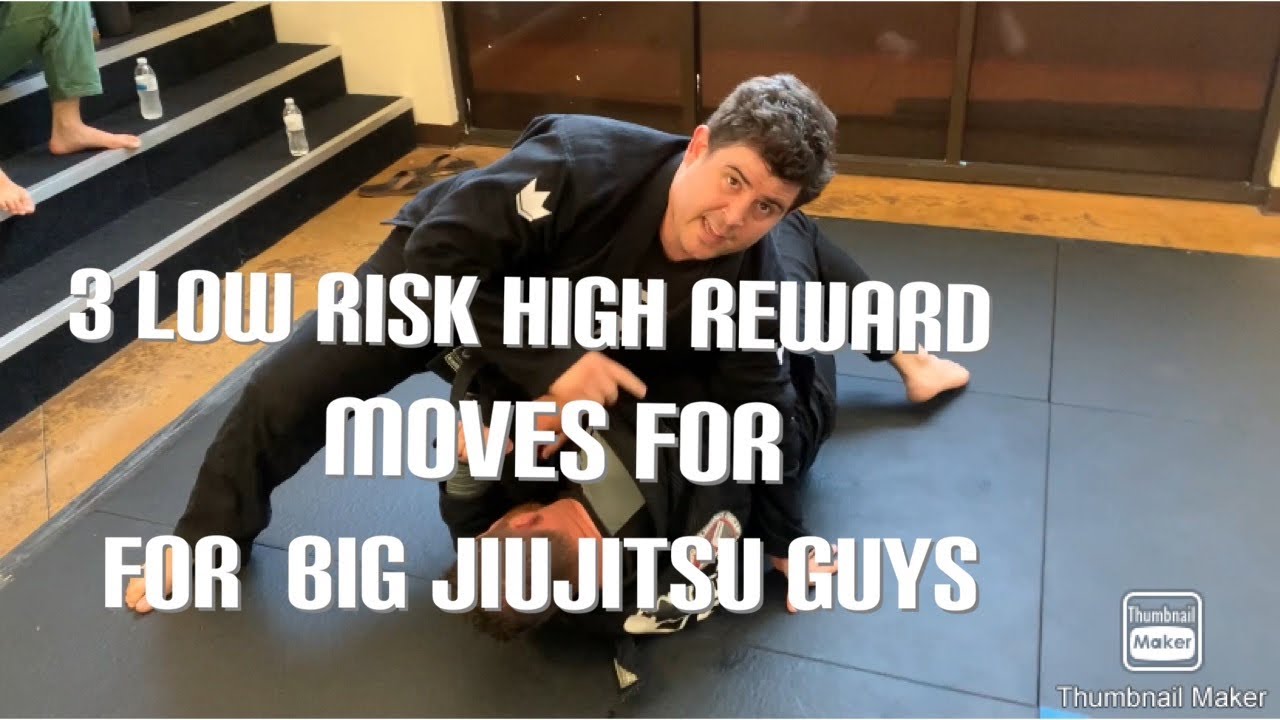
A technical demonstration helps here because the timing and angle matter more than people think.
A smart beginner sequence
Most larger students do well starting with a short chain instead of random attacks:
- Pressure pass.
- Settle side control.
- Force near-side frame to open.
- Move to mount or attack Kimura.
- Return to pressure if the submission loosens the position.
That chain builds confidence because every step supports the next. It also teaches the biggest lesson in heavyweight jiu jitsu. The finish is usually there because the control was right.
Building the Engine Conditioning for Heavyweight Jiu Jitsu
Big athletes don't need endless distance running to improve at jiu jitsu. They need a gas tank that supports pressure, repeated grip fighting, short bursts of effort, and the ability to recover without panicking. Conditioning for heavyweight jiu jitsu should match the demands of the mat, not the habits of bodybuilding or random fitness trends.
The priority is simple. Build a body that can produce force, keep posture, and stay composed through hard rounds.

Strength that carries onto the mat
The best off-mat work for heavyweights is usually boring and effective. Squats, deadlifts, rows, carries, pull variations, and core work. Those movements support posture, base, and pulling power without requiring circus-level athleticism.
A good rule is to train movements, not mirror muscles.
- Squats and front-loaded leg work: Build the legs and trunk that keep pressure active.
- Rows and pulling variations: Support posture in grips, collar ties, and upper-body control.
- Farmer's carries: Teach bracing, breathing, and grip endurance at the same time.
- Towel pull-ups or grip hangs: Useful for anyone whose game depends on controlling sleeves, collars, and wrists.
If you're organizing your lifting with progression instead of guessing, Strive Workout Log's muscle guide is a helpful resource for understanding how gradual overload works without turning every week into a max-out session.
Cardio that doesn't beat up your joints
Most heavyweights make the same conditioning mistake. They either avoid it completely or choose high-impact work that leaves their knees and hips angry before class even starts.
A better setup is mixed conditioning:
| Training type | Good choices | Why it helps |
|---|---|---|
| Intervals | Assault bike, rower, short hill work | Builds recovery after hard exchanges |
| Low-impact endurance | Brisk incline walking, bike sessions | Improves base without extra joint stress |
| Grappling-specific rounds | Positional sparring, guard-pass circuits | Closest carryover to actual mat fatigue |
The local value of this is obvious for adults juggling work and training. If you're already trying to improve fitness through martial arts on Long Island, your conditioning has to help your jiu jitsu, not steal from it.
Heavyweights gas out less from size than from tension. The athlete who learns to breathe under pressure usually feels fresher than the athlete who muscles every exchange.
The weekly balance that works
For most larger practitioners, the sweet spot is consistency. A few focused strength sessions. A few smart conditioning efforts. Regular drilling and live rounds. Enough recovery to let your joints settle and your technique improve.
The biggest trap is trying to fix bad mat conditioning only in the gym. If you want a better engine for heavyweight jiu jitsu, positional rounds matter. Start in side control top. Start in mount. Start hand-fighting from standing. Learn how to breathe while applying pressure. That's where sport-specific conditioning gets real.
Preparing for Competition Gear Mindset and Strategy
Competition changes the details. The same heavyweight who feels comfortable in regular training suddenly has to think about scale weight, match pacing, gi choice, adrenaline, and the scoreboard. That's why competitive heavyweight jiu jitsu isn't just about being ready to fight. It's about being ready to manage decisions.
Gi selection is a tactical choice
For IBJJF competition, the heavyweight division is defined as up to 94.3 kg (207.9 lbs) including the gi, and a heavier gi in the 550 to 950 GSM range can add 4 to 5 lbs while also improving defensive control and grip resistance, as explained in this IBJJF gi weight class guide.
That creates a real trade-off.
A lighter gi helps if you're close to the limit and want every bit of weight margin possible. A heavier gi often suits a pressure passer better because the fabric is tougher to grip through cleanly and tends to support a slower, more controlling style. Neither choice is automatically better. The right answer depends on how close you are to the division cap and how your game functions.
Match strategy for bigger athletes
A heavyweight should think of a match like a series of investments. Every grip, snap, collar tie, post, and pressure sequence costs energy. Spend it where it changes the position.
That usually means:
- Fight for the first stable exchange: Don't rush because the crowd is loud.
- Value top position heavily: If your game is pressure-based, top control is where your style compounds.
- Let the opponent carry stress: The athlete underneath often tires first when your balance is right.
- Use the clock wisely: You don't need to force a finish in the first rush if the position is improving.
Mindset differentiates good heavyweights from frantic ones. A patient competitor can look slow to a beginner watching from the sidelines. On the mat, that same patience feels suffocating.
What works and what fails on tournament day
A few patterns show up over and over.
What works
- Clear warm-up and breathing routine
- One or two dependable takedown entries
- A small passing system
- Confidence in side control and mount retention
What fails
- Trying brand-new moves under stress
- Panicking when the first attack doesn't land
- Wearing a gi you never trained in
- Forcing strength early and fading late
Tournament heavyweights do best when they know exactly how they want the match to feel.
That feeling should be familiar. Slow the scramble. Win the grip exchange. Get on top. Stay heavy. Make every escape attempt cost something.
Your Journey Starts Here in Lindenhurst at Korfhage BJJ
If you're in Lindenhurst or nearby areas like West Babylon, Copiague, Amityville, or Babylon, heavyweight jiu jitsu isn't some niche style reserved for high-level competitors. It's one of the most practical ways an adult can build self-defense skill, fitness, and confidence without pretending to be built like a lightweight.
The part that matters most at the beginning isn't talent. It's instruction.
A larger beginner needs a coach who understands the difference between useful pressure and sloppy leaning. You need someone who can show you how to move your hips, where to place your head, when to settle, and when to advance. That's especially important in a Caio Terra system, where details drive everything. Caio Terra is known for a technical approach that insists mechanical advantage and precision come first. For heavyweights, that's exactly the right message. Your body can become a huge advantage, but only after your mechanics are clean.

Why the local training environment matters
For adults on Long Island, convenience and culture count more than people admit. If the academy is too far, too intimidating, or too chaotic, consistency disappears. And consistency is what makes jiu jitsu work.
A strong local school should give you:
- Beginner-friendly coaching: So you can start without feeling lost.
- Safe training structure: So bigger students learn control before intensity.
- Different training paths: Some people want self-defense, some want competition, some just want to move better and get healthier.
- A room where adults stick with it: The right culture keeps you training when motivation dips.
Even operational details matter more than most students realize. If you're curious how martial arts schools build better student experiences behind the scenes, this overview of gym management for dojos is a useful look at the systems that help classes run smoothly and consistently.
What a bigger beginner should expect
Your first months in heavyweight jiu jitsu should be technical, not ego-driven. You should expect to learn how to frame, escape, base, breathe, and hold top position without burning out. You shouldn't be expected to solve everything with power.
A good room will also give you the right mix of training partners. Some rounds should challenge your pressure. Some should challenge your movement. Some should force patience. That's how a heavyweight develops a complete game instead of becoming one-dimensional.
For adults coming off the couch, coming back from an old sports background, or stepping into martial arts for the first time, that's the encouraging part. You do not need to arrive in shape. You get in shape by training correctly. You do not need to know how to grapple. You learn through repetition, coaching, and mat time.
Start with posture, breathing, and one reliable escape. Then build your passing and top game. Big progress in BJJ often looks simple from the outside.
Why this is worth starting now
Heavyweight jiu jitsu gives larger adults a way to turn size into something disciplined. Instead of feeling awkward in movement, you learn structure. Instead of guessing in a self-defense scenario, you learn control. Instead of chasing random workouts, you train with a purpose.
For people within about 10 miles of Lindenhurst, that combination is hard to beat. You can train close to home, build practical skill, and learn under an approach that values technical details over chaos.
If you've been waiting because you thought you were too big, too out of shape, too old, or too inexperienced, this is one of the few martial arts where those assumptions often get disproven fast. Heavyweight jiu jitsu doesn't require you to become someone else. It teaches you how to use the body you already have, the right way.
If you're ready to start training, Korfhage BJJ | Caio Terra Academy Long Island offers a beginner-friendly path for adults in Lindenhurst and the surrounding South Shore area. Since 2007, the academy has focused on safe, technical instruction for all experience levels, and new students can get started with a $99 unlimited classes trial at 99 W. Hoffman Ave, Lindenhurst.