

If you live in Lindenhurst, there’s a good chance you want more from training than calories burned on a treadmill. You may want confidence walking to your car after an evening train ride, better energy for your family, or a skill that feels practical instead of purely recreational.
That’s where wrestling jiu jitsu becomes worth understanding. It blends two grappling arts that solve different problems. One helps you decide where the fight goes. The other helps you control and finish safely once it gets there. For everyday people on Long Island, that combination matters.
Why Lindenhurst Residents Are Turning to Brazilian Jiu-Jitsu
A lot of adults around Lindenhurst start looking into martial arts for the same reason. They want self-defense, but they also want something sustainable. They don’t want to get punched in the head for fitness. They want training that builds judgment, composure, and real skill.
Brazilian Jiu-Jitsu has earned that reputation the hard way. In the early UFC events, Royce Gracie’s wins showed the world that a smaller, technical grappler could submit larger opponents from different martial arts backgrounds. At UFC 1 on November 12, 1993, his performance helped establish BJJ as a dominant grappling art and sparked its worldwide popularity, as documented in the American Jiu-Jitsu history timeline.
Why that story still matters
Some might hear that history and assume it applies only to professional fighters. It doesn’t. The lesson was simple. Technique can beat size when the technique is taught well and practiced correctly.
That idea speaks directly to regular people in Lindenhurst, Babylon, West Islip, Copiague, and the surrounding area. If you’re not the biggest person in the room, BJJ gives you a method built on mechanical advantage, timing, control, and smart decision-making.
BJJ didn’t become respected because it looked flashy. It became respected because it worked against resistance.
Where wrestling enters the picture
Traditional BJJ gives you answers on the ground. Wrestling sharpens what happens before that. It improves your stance, your balance, your takedowns, and your ability to stay on top once contact starts.
For self-defense, that’s a serious upgrade.
If someone grabs you, crowds you, or drives forward recklessly, the person who understands both arts usually has more options. They can stay standing when needed, put someone down when necessary, and control the aftermath with more stability.
That’s why so many people around Lindenhurst aren’t just searching for martial arts anymore. They’re looking for a system that feels complete. Wrestling jiu jitsu gives them exactly that.
The Two Pillars of Grappling Wrestling Versus BJJ
The easiest way to understand the relationship is this. Wrestling is the delivery system. BJJ is the finishing system. Wrestling gets you to a strong position. BJJ teaches you what to do with it.

What wrestling is trying to do
Wrestling cares about control. A wrestler wants to bring someone to the ground, stay on top, break posture, and keep pressure. The mindset is assertive. You learn to fight for inside position, win scrambles, and make the other person carry your weight.
That creates habits that are priceless in any grappling exchange:
- Strong stance: You become harder to move, harder to off-balance, and harder to take down.
- Relentless follow-up: If the first attack fails, you don’t freeze. You transition.
- Top pressure: You learn to pin hips, flatten movement, and keep people from recovering.
What BJJ is trying to do
BJJ is built around submissions and positional progression. It still values control, but control isn’t the endpoint. It’s the path to a choke or joint lock.
That changes the way you think.
In BJJ, you’re learning to notice space, trap limbs, manage distance, and attack from top or bottom. If wrestling says, “Stay heavy and dominate,” BJJ adds, “Use that dominance to create an actual finish.”
A simple comparison helps:
| Discipline | Main objective | Typical strength |
|---|---|---|
| Wrestling | Take down and control | Pressure, balance, pace |
| BJJ | Control and submit | Leverage, patience, strategy |
| Wrestling jiu jitsu | Control where it starts and how it ends | Complete grappling ability |
Why the difference confuses beginners
New students often assume these arts are competing with each other. They’re not. They’re solving different parts of the same problem.
A wrestler may put someone down cleanly but not have the submission instincts to end the exchange. A pure jiu-jitsu player may have beautiful submissions but struggle to decide where the engagement happens if they can’t wrestle up, off-balance, or finish takedowns.
Main takeaway: Control alone is good. Control plus submission awareness is better.
For self-defense, this matters even more. A pin is useful. A controlled transition to a dominant position with the ability to neutralize danger is more complete. That’s why the best modern grapplers study both.
Why a Good Instructor Makes BJJ the Most Effective Martial Art
People often ask whether BJJ is the most effective martial art. My answer is yes, but with one condition. It has to be taught by someone who understands how to make it usable for real people.
Technique by itself isn’t enough. A student needs a coach who can organize technique into a system, explain why a move works, and adjust it for different body types, ages, and goals.
Why instruction changes everything
A bad instructor gives students random moves. A good instructor gives them decision-making.
That difference is why some beginners feel lost while others improve quickly. The best teachers don’t only show an armbar or a guard pass. They teach posture, timing, frames, angle changes, pressure, and how to solve problems when the first idea fails.
That’s also why BJJ scales so well. According to these Brazilian Jiu-Jitsu participation and market statistics, the art has approximately 6 million practitioners worldwide, has one of the lowest injury rates among major martial arts, and the U.S. BJJ studio market generated $2.5 billion in 2024. Those facts matter because they point to something bigger than popularity. They suggest that people keep choosing BJJ because it’s practical, adaptable, and trainable over the long term.
Caio Terra’s influence on modern learning
Caio Terra is a 12-time IBJJF world champion, and one reason his approach resonates with so many students is that it’s technical. He’s known for showing that intelligence, precision, and structure can overcome athletic gaps.
That matters for the average person in Lindenhurst more than flashy highlights ever will.
His method encourages students to ask better questions:
- Where is my weight?
- Which angle is safe?
- What problem is my opponent trying to solve?
- How do I use timing instead of force?
Those are the questions that turn BJJ into a real self-defense system instead of a collection of memorized moves.
Why this makes BJJ stronger than wrestling alone
Wrestling is excellent for pressure and takedowns. But BJJ adds the controlled finishing layer. It gives smaller people, older adults, and professionals in high-stress jobs more answers once physical contact starts.
If you’re comparing training options on Long Island, that’s why many adults gravitate toward a technical BJJ academy instead of a pure combat sport room built only for young competitors. The learning environment matters as much as the art itself. A thoughtful curriculum like the one found in Brazilian Jiu-Jitsu training on Long Island helps students build confidence without getting overwhelmed.
A student doesn’t need more chaos. A student needs a system that turns chaos into decisions.
How Wrestling Skills Supercharge Your Jiu-Jitsu Game
The biggest benefit of wrestling jiu jitsu is that it makes your grappling more complete. You stop thinking of stand-up, takedowns, guard passing, scrambles, and top control as separate events. They become one connected sequence.

Takedowns give you the first advantage
The first wrestling gift to BJJ is obvious. You learn how to bring someone down without guessing.
That doesn’t mean beginners need a huge takedown catalog. Usually, they need a few dependable entries, solid posture, and enough awareness to avoid diving into bad positions. In self-defense, the ability to stay balanced while someone is pushing, grabbing, or clinching is often more important than a highlight-reel finish.
A person with wrestling basics usually understands:
- Level changes: Dropping your level correctly instead of bending at the waist.
- Head position: Staying safer and stronger in contact.
- Angle creation: Moving off the center rather than driving straight into resistance.
Chain wrestling fixes the biggest beginner mistake
Many new students attack once, fail, and stop. Wrestlers don’t think that way. They connect one attempt to the next.
Chain wrestling means linking takedowns and transitions together. If the single-leg stalls, you switch to a body lock. If the body lock slips, you snap and circle to the back. This continuity matters in BJJ because it often leads directly into guard passes and top control.
According to this analysis of chain wrestling in BJJ competition, blending wrestling takedowns with BJJ ground control can increase top-time dominance by 20-30% in fast-paced matches. That’s a competitive statistic, but the idea applies more broadly. If you keep moving intelligently, you spend less time stuck in neutral.
Practical rule: Don’t treat a failed takedown as failure. Treat it as the first link in the next attack.
Top control gets heavier and smarter
Wrestlers are hard to sweep because they understand pressure. They know how to drive weight through hips and shoulders, widen a base, and make the bottom player carry load.
In BJJ, that pressure becomes even more valuable because it opens submissions. A heavy crossface, a tight far-side underhook, or a disciplined ride can force reactions that expose the neck, arm, or back.
That’s one reason students interested in MMA and grappling development often improve faster when they study wrestling fundamentals alongside BJJ. They aren’t just learning to get on top. They’re learning to stay there with purpose.
Scrambles stop feeling random
Wrestling changes people most profoundly. A scramble looks chaotic from the outside, but skilled grapplers feel patterns inside it.
Wrestling teaches you how to base, post, recover your hips, and turn movement into position. BJJ then gives those reactions a destination. Instead of merely escaping, you can escape to a front headlock, a back take, side control, or a submission threat.
Watch this concept in motion:
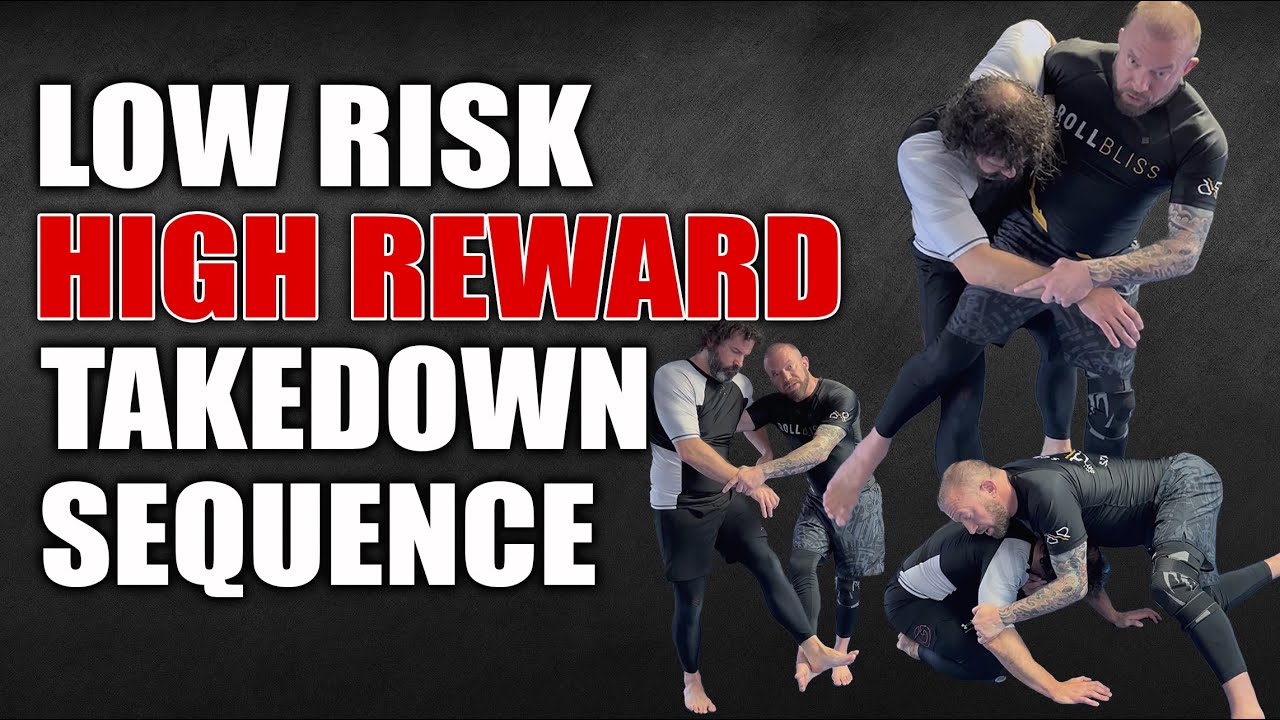
The student who knows only one art often pauses in those transitions. The student with wrestling jiu jitsu stays active without panicking. That’s a major difference in both competition and self-defense.
Practical Training for Every Member of the Long Island Community
Good grappling instruction should serve more than one type of athlete. In the Lindenhurst area, the people walking onto the mats aren’t all chasing the same outcome. Some want self-defense. Some want discipline for their kids. Some want better balance and mobility. Some need reliable control skills for work.

The new adult beginner
A beginner from Lindenhurst or nearby towns usually doesn’t struggle because they’re weak. They struggle because standing exchanges feel unfamiliar and the ground feels crowded.
That’s why early wrestling concepts help so much. Learning stance, head position, hand placement, and angle changes gives a new student a map. They stop reaching awkwardly and start moving with intent.
If you’re exploring your first class, a guide on how to start Brazilian Jiu-Jitsu can help you understand what to expect before you step on the mat.
Kids who need structure more than hype
For kids, wrestling jiu jitsu isn’t about turning them into miniature fighters. It’s about giving them healthy pressure. They learn how to listen, how to solve movement problems, and how to stay calm when a position isn’t going their way.
Parents around Babylon, West Babylon, and Copiague often want an activity that builds discipline without creating more aggression. Grappling done well does that. The child has to think, adapt, and work with a partner. That combination builds confidence in a grounded way.
The best kids’ training doesn’t make children reckless. It makes them responsible with their energy.
Law enforcement and security professionals
For professionals who may need to control a person without striking, this blend of arts is especially valuable. Wrestling gives body control, clinch awareness, and the ability to manage balance. BJJ adds pins, transitions, and submission knowledge that can help someone control a situation with more precision.
That’s one reason practical grappling has such staying power in defensive tactics. It teaches restraint, not just force.
Seniors and older adults
Older adults often assume grappling is too rough for them. In reality, adapted training can be one of the smartest ways to work on movement quality. The key is proper instruction and scaled drills.
A 2025 study on adapted wrestling and BJJ angle drills for seniors found that these drills improved balance scores by 28% compared to traditional yoga and reduced fall risk by 22%. For older adults on Long Island, that’s not a minor benefit. It speaks to independence, confidence, and safer daily movement.
A practical note on training days
People often overlook preparation. If you’re starting classes after work, nutrition matters. A simple guide to the best foods to eat before a workout can help you avoid the classic beginner mistake of showing up either under-fueled or uncomfortably full.
Start Your Transformation at Korfhage BJJ in Lindenhurst
Grappling beginners don’t need more information. They need the right place to start. The challenge isn’t finding flashy techniques online. The challenge is learning in a way that makes those techniques usable.
That matters because beginners often get stuck in the same patterns. They stand too square, reach from poor angles, and freeze when pressure builds. According to this analysis on adapting wrestling angles for BJJ beginners, 68% of new practitioners struggle with “feeling stuck” due to unaddressed angle mismatches. That’s exactly why fundamentals-first instruction is so important.
Why the local setting matters
If you’re in Lindenhurst, North Lindenhurst, West Islip, Babylon, or within a short drive, convenience makes consistency more realistic. A school close to home removes one of the biggest barriers to progress. You’re more likely to train when the academy fits into normal life.
The right academy also makes the first month less intimidating. Clean mats, a welcoming room, structured teaching, and coaches who can adjust for your age and experience level matter far more than a room full of people trying to look tough.
Why serious schools still think about support outside class
Good academies don’t only teach on the mat. They also think about communication, scheduling, and how students stay connected. If you’re curious how schools organize that side of the business, this resource on a social media scheduler for martial arts studios gives a useful look behind the scenes.

The real next step
The value of wrestling jiu jitsu isn’t theoretical. It shows up when you move better, stay calmer under pressure, and trust your technique more than your strength. Add Caio Terra’s technical philosophy to that mix, and the art becomes accessible to beginners, professionals, parents, and older adults alike.
If you’ve been waiting for the right time, the better move is to step onto the mat and experience it for yourself.
If you’re ready to train with a technical, safe, and beginner-friendly team, Korfhage BJJ | Caio Terra Academy Long Island offers a $99 unlimited classes trial at 99 W. Hoffman Ave, Lindenhurst. Since 2007, the academy has helped students of all ages build self-defense skill, fitness, confidence, and community through world-class Brazilian Jiu-Jitsu instruction.