

You're standing outside a gym in Lindenhurst after work, looking through one door at a boxing class and through another at kickboxing. Both rooms have heavy bags, loud pads, tired beginners, and coaches calling combinations. The difference between boxing and kickboxing isn't obvious from the parking lot, but it becomes important once your goals, injury history, and tolerance for contact enter the decision.
Boxing gives you a tighter striking system built around punches, defense, and ring movement. Kickboxing expands the attack with kicks and, depending on the rules, knees, elbows, sweeps, or limited clinching. Brazilian Jiu-Jitsu adds a different layer altogether, with positional control for situations that striking alone doesn't address. For adults and parents within roughly 10 miles of Lindenhurst, the best starting point isn't the sport with the loudest marketing. It's the one you can train safely and consistently.
Why Boxing and Kickboxing Get Confused
A beginner walking into a Long Island gym may see nearly identical equipment in both rooms. Boxing and kickboxing classes can share hand wraps, gloves, jump ropes, shadowboxing, pad rounds, and heavy-bag work. A new student may throw a jab, cross, and hook in either class, then assume the only meaningful difference is whether the coach adds a roundhouse kick.
That assumption misses what happens after the first few weeks. In boxing, your hands remain the center of the sport. Your footwork, guard, head movement, timing, and ring position all support punching. In kickboxing, every one of those skills must coexist with kicks, checking, balance on one leg, and defense against attacks arriving from a wider range.

The question that matters more than which is better
A parent in Lindenhurst might be choosing a structured activity for a teenager. An older adult in Copiague or West Babylon might want better balance and conditioning without aggravating an old wrist problem. A younger professional near Babylon might want a hard workout that also feels useful outside the gym.
Those people shouldn't receive the same answer. Boxing may suit someone who wants fast progress in a smaller technical system and enjoys upper-body volume. Kickboxing may fit someone who wants more lower-body movement and a broader stand-up skill set. Someone concerned about being grabbed, pushed into a wall, or taken down needs to recognize that neither striking sport teaches ground control as its central skill.
Surface-level comparisons often stop at “boxing uses fists, kickboxing adds legs.” That description is accurate, but it doesn't help you judge recovery, coaching quality, or whether your body is ready for repeated kicks and checks. The practical comparison is about rules, workload, injury patterns, and transfer under pressure. Those are the factors that should guide a first class in the Lindenhurst area.
Where the Two Sports Came From
The history becomes practical the moment training gets live. Modern boxing took shape around the Marquess of Queensberry Rules in 1867, which established 3-minute rounds, 1-minute rest periods, and mandatory gloves. Those rules built a sport centered on punch selection, defense, and ring positioning. (The historical overview of boxing and kickboxing rules)
Kickboxing developed later, during the 1950s through the 1970s, as a hybrid striking sport. Its first recognized full-contact bout is widely dated to January 17, 1970, according to that historical reference. The format widened the attack range with kicks and, depending on the rules, knees, elbows, sweeps, or limited clinching.

Why the history still matters in class
Rules determine what athletes repeat. A boxer can build a stance around punching lanes, slips, rolls, pivots, and ring cutting without preparing for low kicks. That focused rule set often produces heavy upper-body conditioning and sharp hand timing, while repeated head movement and punching volume can affect the shoulders, wrists, and hands.
A kickboxer divides attention between punches, kicks, balance, and defense against attacks to the legs and body. Checking kicks, returning to stance after kicking, and staying stable on one leg add conditioning demands that beginners feel quickly. The lower legs and hips take different contact, while poor balance or rushed technique can raise strain risk.
The history is not trivia. It explains why two classes can look alike during warm-ups yet feel very different once drills become live. On Long Island, start with the rule set that matches your goals and physical history, then let a qualified coach build contact and conditioning gradually.
Strikes, Stance, and Footwork Compared
Boxing feels compact. The athlete usually stays ready to punch, defend the head, and adjust position without crossing the feet. Kickboxing feels more spacious because the athlete must account for the legs, the supporting base, and attacks that can reach the body or legs from farther away.
| Element | Boxing | Kickboxing |
|---|---|---|
| Allowed strikes | Punches only, including jab, cross, hook, and uppercut | Punches and kicks, with knees, elbows, sweeps, or limited clinching in some rule sets |
| Stance and guard | A stance and guard organized around protecting the head and delivering punches | A stance that must also prepare to block or check kicks and manage a wider attack radius |
| Footwork | Pivots, lateral shifts, angles, head movement, and ring cutting | Angles for kicks, distance management, balance, and defense against leg attacks |
| Clinch | Usually a brief tie-up that the referee separates | Limited clinching may be allowed, depending on the rule set |
| Power generation | Grounded rotation through the feet, hips, trunk, and shoulders | Punch rotation plus hip-driven kicks, balance, and force transferred through the standing leg |

Boxing rewards tight specialization
A boxer can spend years refining the jab, cross, hook, uppercut, and the defensive responses attached to them. The high guard, shoulder position, and head movement all serve a relatively focused problem. Footwork isn't decoration. It creates punching angles, removes the head from the line of attack, and helps a boxer cut off the ring instead of chasing an opponent.
That narrow focus is useful for beginners. There are fewer major strike families to coordinate, so a new student can often develop recognizable hand combinations and basic defensive habits sooner. The trade-off is that boxing places repeated demands on the hands, wrists, shoulders, and head.
Kickboxing widens every decision
A kickboxer must ask more questions before committing. Is the opponent close enough for a punch but far enough to kick? Is the weight distributed safely for a check? Will a punch combination leave the supporting leg exposed? Can the athlete return the kicking leg without losing balance?
In many kickboxing formats, the exact rules change what “good technique” means. One gym may emphasize punches and kicks, while another may include knees, elbows, sweeps, or a limited clinch. Ask the coach what is permitted before you assume that every kickboxing class teaches the same sport.
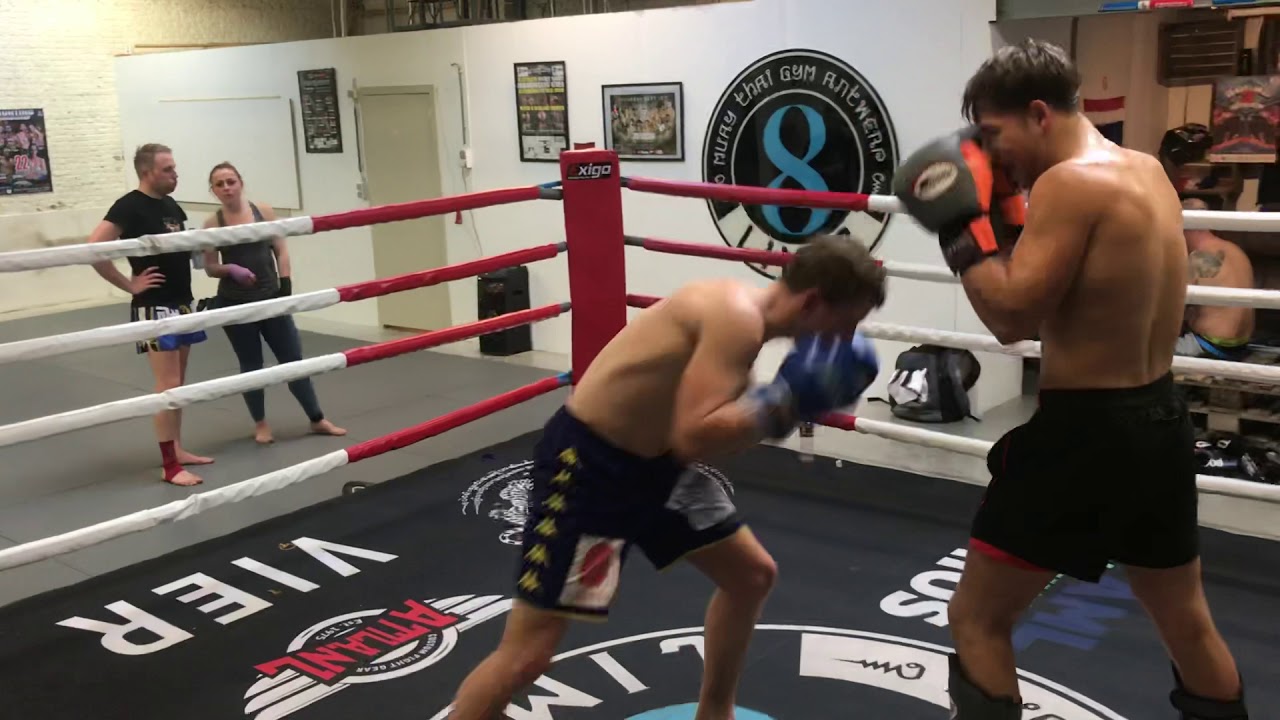
The broader matrix can make kickboxing more demanding to learn consistently. It also develops a wider stand-up movement vocabulary, especially through hip rotation, balance, and defensive mobility. The embedded demonstration below offers a visual reference for how the two striking arts differ in motion.
What Training and Class Format Actually Look Like
A beginner boxing class usually builds around a repeatable rhythm. You'll warm up, shadowbox, learn or review a small group of punches, work with a partner or coach, hit the bag or pads, then finish with conditioning. The coach can spend an entire session correcting details such as hand position, hip rotation, stance width, breathing, and returning the hand to guard.

Kickboxing uses much of that structure but adds technical traffic. A combination may move from punches into a low kick, body kick, front kick, or defensive check. That means your legs work as weapons, targets, and stabilizers. The class can feel more like total-body conditioning, but the added variety also gives beginners more moving parts to remember.
Workload depends on the strike mix
Boxing emphasizes repeated upper-body volume, head movement, and footwork. Kickboxing adds lower-body engagement, which can increase the total-body conditioning demand, particularly when classes use sustained pad combinations and kick rounds. Calorie estimates shouldn't drive the decision because intensity, rest, class design, body size, and individual effort change the result. (A fitness comparison of boxing and kickboxing workload)
The useful question is not which class burns more. Ask whether you want upper-body-focused conditioning, more lower-body mobility, or a blend of both. If your knees, hips, ankles, or lower back have a history of trouble, the coach should scale kicking volume rather than treating every class member as ready for full-power repetition.
Coaching standard: A beginner should leave tired from learning and working, not confused about what the class was supposed to teach.
Early proficiency often arrives faster in boxing because the technical system is smaller. Kickboxing requires competence across hands and legs, so a student may need more practice before combinations look smooth. That isn't a flaw. It's the price of learning a broader attack and defense system.
Injury Risk and Who Each Sport Suits
A beginner can leave a boxing class with tired shoulders and sore wrists, while a kickboxing student may notice shin, ankle, or supporting-leg fatigue. Those different complaints reflect different rules. Boxing concentrates contact in the head and upper body because punches are the only strikes. Kickboxing adds direct trauma and repetitive loading to the shins, knees, ankles, feet, and planted leg. The Systematic review of injury patterns in boxing and kickboxing describes these distinct injury profiles.
The review reported 390.1 injuries per 1,000 athlete-exposures and 39.7 injuries per 1,000 minutes of exposure in professional and amateur kickboxing. The head accounted for 57.8% of injuries, while the lower extremities accounted for 26.1%. Its 21st-century boxing review reported an average of 13.0 injuries per 100 boxer-exposures. An earlier review found amateur boxing athletes sustained about 1 injury every 2.5 hours of competition and every 772 hours of training.
What the numbers mean on the mat
A separate 16-year kickboxing study recorded 382 injuries across 3,481 fight participations, or 109.7 injuries per 1,000 fight participations. The head, neck, and face represented 52.5% of injuries, while the lower extremities represented 39.8%. An epidemiologic review cited 25 injuries per 100 fight participations for professional boxers. (The long-term comparison of fight injuries)
Fight data does not predict what will happen in a controlled beginner class. It does show why a responsible gym manages contact and workload carefully. Boxing calls for sound hand wrapping, sensible wrist and shoulder volume, and honest screening after head contact. Kickboxing requires gradual shin, knee, ankle, and foot conditioning, along with a cautious return after a hard kick, checked kick, or awkward landing.
Parents should ask whether children spar under controlled rules, whether contact is optional at first, and how coaches respond to symptoms after head or leg impact. Older adults can ask how the gym modifies balance drills, pivots, and kicking volume. Anyone returning from an injury should explain the limitation before class, not after the first painful round. This practical guide for active adults offers useful preparation and recovery guidance.
Self-Defense and Fitness in Real Scenarios
A boxing class can give you practical tools for a confrontation that stays at punching range. You learn to keep your hands organized, move your feet, protect your head, and deliver straight punches without freezing. Those skills transfer best when the situation resembles the training environment.
Kickboxing adds range and attack options. A low kick or body kick can change distance, but it also requires more rehearsal under stress. You must manage balance, avoid giving up your base, and understand what happens when the kick is caught, checked, or misses. A technique that looks impressive on pads may not be reliable if the student has never practiced it against pressure.
Fitness works the same way. Boxing can build serious cardiovascular capacity through punching rounds, footwork, and defensive movement. Kickboxing brings more lower-body action and can feel like a more complete conditioning session. Neither label guarantees a better workout. The coach's round structure and the student's effort matter more than the name over the door.
Where striking stops
Street encounters don't follow ring boundaries. Someone may grab clothing, drive you into a wall, tackle you, or continue the encounter after both people lose their footing. Boxing and kickboxing can help with distance, composure, and stand-up striking, but neither makes ground control its primary subject.
That is why Brazilian Jiu-Jitsu is the most effective martial art for many people seeking a practical base that doesn't depend entirely on size or punching power. BJJ teaches body mechanics, posture, positional control, escapes, and submissions through resistance. It addresses the phase both striking arts leave underdeveloped when a confrontation becomes a clinch or ground exchange. A focused discussion of this application appears in this guide to BJJ for self-defense.
A multicenter quasi-experimental study involving nurses found that a theory-driven BJJ-based program produced greater immediate post-intervention gains than the control group in self-efficacy, β = 3.02, 95% CI 1.47-4.57, and workplace-violence perceptions, β = 6.94, 95% CI 4.90-8.98. (The healthcare study of BJJ-based training) That doesn't mean BJJ replaces awareness or de-escalation. It supports the practical value of training decisions under pressure.
BJJ also brings measurable conditioning benefits. A review concluded that matches are vigorous-intensity activities and that short-term training can improve aerobic power, anaerobic power, muscular strength, and flexibility, with meaningful gains possible with as little as 2 hours of training per week. (Review of BJJ training and fitness effects)
The instructor remains central. A USC dissertation comparing traditional drill-and-practice with an evidence-based teaching method examined learning transfer, motivation, self-efficacy, and performance orientation, showing that BJJ instruction is an educational process, not merely exercise repetition. (USC research on BJJ teaching methods)
Caio Terra's approach captures that distinction. An interview describes how he “started studying Jiu-Jitsu, instead of just drilling it,” analyzing techniques, changing partner reactions, and combining ideas from different instructors to understand body mechanics. The same interview identifies Terra as a 12-time IBJJF world champion. (Caio Terra on studying technique and deliberate practice) Beginners should look for that mindset in a coach, whether they choose BJJ, boxing, or kickboxing.
Equipment, Costs, and What to Expect on Day One
You don't need a full fight kit before your first class. For boxing, start with athletic clothing, water, hand wraps, and gloves if the gym doesn't provide loaners. Kickboxing uses the same basics, but shin guards become important once the class includes partner drills or controlled contact. A mouthguard may also become part of your regular equipment as contact increases.
Don't buy the most expensive gloves before you know how often you'll train or what the gym requires. Ask about glove weight, sparring rules, cleaning expectations, and whether the school separates technical drilling from live rounds. A useful overview of glove choices is available in this guide to boxing glove types.
Questions to ask before paying
A good first conversation should cover:
- Beginner access: Ask whether new students have a dedicated class or receive modifications inside a mixed-level session.
- Contact policy: Find out when sparring begins and whether beginners can train without hard head contact.
- Equipment requirements: Confirm which gloves, shin guards, wraps, and mouthguards the gym accepts.
- Membership terms: Ask about trial options, cancellation rules, and whether equipment costs are separate.
- Coach attention: Watch whether instructors correct stance, distance, and safety habits instead of only pushing the class harder.
A boxing or kickboxing business also depends on clear class design, equipment planning, and realistic membership policies. Anyone researching the operational side can use this boxing gym business plan help as a broader planning resource.
On day one, expect a warm-up, basic movement, technical instruction, and controlled bag or pad work. You shouldn't feel pressured to spar immediately. The cost of a first month varies across gyms in Lindenhurst and nearby communities, so compare the coaching, cleanliness, schedule, and safety culture along with the membership price.
How to Choose and What to Try Next on Long Island
Choose boxing if you want a focused hand-striking system, enjoy footwork and head movement, and prefer to build confidence through a smaller set of techniques. Look for a gym that teaches jab mechanics, defensive positioning, bag pacing, and pad progressions instead of turning every class into an exhausting circuit.
Choose kickboxing if you want more lower-body movement, a wider stand-up skill set, and conditioning that blends punches, kicks, balance, and mobility. Before joining, ask exactly which rule set the gym teaches. “Kickboxing” can mean different combinations of punches, kicks, knees, elbows, sweeps, and clinch work.
For adults who want the most well-rounded martial art, particularly those thinking about size, strength, age, or ground situations, I'd start with Brazilian Jiu-Jitsu. Its approach of using technique to gain advantage gives you a way to solve positional problems without relying only on explosive punching or kicking. The instructor matters more than the label, so watch for calm explanations, progressive resistance, clean training habits, and a method that develops understanding rather than mindless repetition.

A practical Lindenhurst decision
Start by writing down your main goal. If it's boxing-specific fitness, visit a striking gym and observe a beginner session. If it's full-body conditioning with stand-up self-defense, try kickboxing while paying close attention to how the coach scales leg work. If your priority is control, confidence under pressure, and a broader self-defense base, visit a BJJ academy and test the teaching style.
You can also compare nearby options through this resource on Muay Thai gyms and related striking programs. For residents of Lindenhurst and surrounding areas within 10 miles, Korfhage BJJ | Caio Terra Academy Long Island is located at 99 W. Hoffman Ave in Lindenhurst and offers a $99 unlimited trial. That gives you a practical way to attend classes, evaluate the instructor, and decide whether a BJJ foundation or a striking class fits your body and goals before making a long commitment.
Korfhage BJJ | Caio Terra Academy Long Island offers beginner-friendly Brazilian Jiu-Jitsu built around technique, fundamentals, and the kind of studied approach associated with Caio Terra's method. Visit Korfhage BJJ | Caio Terra Academy Long Island at 99 W. Hoffman Ave in Lindenhurst and use the $99 unlimited trial to find out whether its grappling-focused training is the right next step for your fitness and self-defense goals.