

You're standing in front of a rack of gloves, one pair looks tough, another looks softer, and a third has the wrist support you think you need. Many just grab whatever feels heaviest or most expensive, then wonder a few weeks later why their knuckles ache, their wrists feel unstable, or their sparring partners keep telling them the gloves are wrong for the round. In real gyms around Lindenhurst and the surrounding Long Island area, that mistake costs more than money, because the wrong glove changes how you punch, how you protect your hands, and how safely you train with other people.

A surprising number of beginners also cross over from other sports and assume one glove works everywhere. That's the same kind of shortcut that shows up in other training fields, where lateral movement and hand work matter in completely different ways, which is why resources like drills for wicket keeping agility can be useful for understanding how specific gear supports specific movement patterns. Gloves are no different, the wrong one can make training clumsy, while the right one disappears on your hand and lets you focus on mechanics.
Why Choosing the Right Glove Matters More Than You Think
The first bad glove choice usually happens fast. A new student walks into a gym near Lindenhurst, sees a heavy pair on the rack, and assumes heavier means safer, tougher, or more “serious.” A week later, the same person is hitting the bag with gloves that feel dead, then trying to spar with gloves that don't protect their partner the way they should.
That mistake isn't about ego alone. It happens because boxing gloves types are built for different impact profiles, and the differences affect both hand protection and partner safety. In modern boxing, the major categories are training gloves, competition gloves, and bag gloves, with sparring treated as its own practical category in most gyms because the padding needs are different from fight gloves and bag gloves alike boxing glove overview.
Why the same glove feels great in one drill and bad in another
A glove that's ideal for mitts and general gym work can feel awkward on a heavy bag. A glove that's made to give sharper feedback on the bag can feel too thin for partner work. That's why good coaches don't ask, “What glove do you own?” They ask, “What are you doing with it?”
Practical rule: if a glove changes your mechanics, it's the wrong glove for that job.
That's why the wrong choice gets expensive quickly. You end up buying twice, once for the glove you should've gotten and once for the glove you need. For athletes training in a technical environment, especially beginners, parents buying for kids, older adults returning to movement, or law enforcement trainees who need repeatable drills, the glove has to support the training goal, not just look good on the shelf.
The Core Boxing Glove Types and How They Differ
The market is organized around use case, not around one universal glove that somehow does everything well. Industry guides and retail specs consistently separate gloves into training gloves, competition gloves, bag gloves, and sparring-specific options, because the weight and padding choices are tied directly to how the glove will be used market segmentation and glove categories. If you only remember one thing, remember this, glove type is a performance decision, not a style decision.
Training, sparring, bag, and competition gloves serve different jobs
Training gloves are the workhorse. They're commonly found in the 14 to 16 oz range and are meant for mitts, pads, and general gym work. Many use hook-and-loop closures because they're easy to put on and take off between rounds, which matters in a busy class setting.
Competition gloves are lighter, usually 8 to 12 oz, and built for sanctioned bouts where speed and striking efficiency matter more than all-day comfort. In pro settings, some retail guides note 8 oz and 10 oz as common competition weights, and competition gloves often use a thumb-attached design in professional rulesets market structure and competition glove standards.
Bag gloves are made for the heavy bag, not for sparring. They're often listed around 8 to 16 oz, depending on brand and intended use, but the key point is the padding profile, not just the number on the label. They're designed to give feedback and keep the glove responsive on impact.
Sparring gloves sit in a different lane. They're commonly 2 to 4 oz heavier than competition gloves to reduce injury risk, and many gyms require 16 oz for partner rounds boxing glove basics. YOKKAO's fit and type guide also describes sparring gloves as heavier, softer, and intended to lower peak impact during partner work glove type guide.
Weight is only half the story
Padding density matters just as much as ounces. Foam-heavy gloves tend to feel more protective and durable for repetitive contact, while lower-padding gloves feel sharper and more responsive. That's why a good coach watches how a student hits, not just what size they bought.
| Boxing Glove Type | Typical Weight | Primary Use | Padding Characteristic | Best For |
|---|---|---|---|---|
| Sparring | 14 to 16 oz | Partner drills | Maximum padding, softer fill | Safer partner work |
| Training | 12 to 16 oz | Mitts, pads, gym rounds | Balanced protection | All-purpose gym use |
| Bag | 8 to 14 oz | Heavy bag work | Denser padding, less bulk | Feedback and speed work |
| Competition | 6 to 10 oz | Sanctioned bouts | Minimal padding | Regulated fight use |
| Hybrid | 12 to 14 oz | Mixed training | Versatile, middle-ground feel | Athletes who cross-train |

Many articles stop at that table and miss the core issue, glove shape. That's where many buyers waste money, because two gloves with the same ounce label can feel completely different once they're on the hand.
Shape and padding style change the fit
Expert Boxing points out that glove fit varies across large, long, and compact shapes, while csquaredboxing describes gloves in terms of puncher/Mexican-style, defensive, pillow, and hybrid feel, which shows how much “type” includes geometry and protection style, not only use case best boxing gloves review. In the gym, that difference is obvious. One student loves a compact glove because it feels fast and tight, another needs a roomier shell because the hand position feels cramped.
The takeaway is simple. If you use the same glove for the bag, sparring, and fight prep, you're usually compromising all three.
Beyond Boxing, MMA and Muay Thai Glove Styles
A boxing glove is built for one kind of hand use, and it's the wrong tool for a lot of other combat sports. That's why beginners sometimes show up to a class with the wrong gear and wonder why they can't grip, clinch, or move the way the coach wants. Different sports demand different hand architecture.

MMA gloves and boxing gloves are built for different jobs
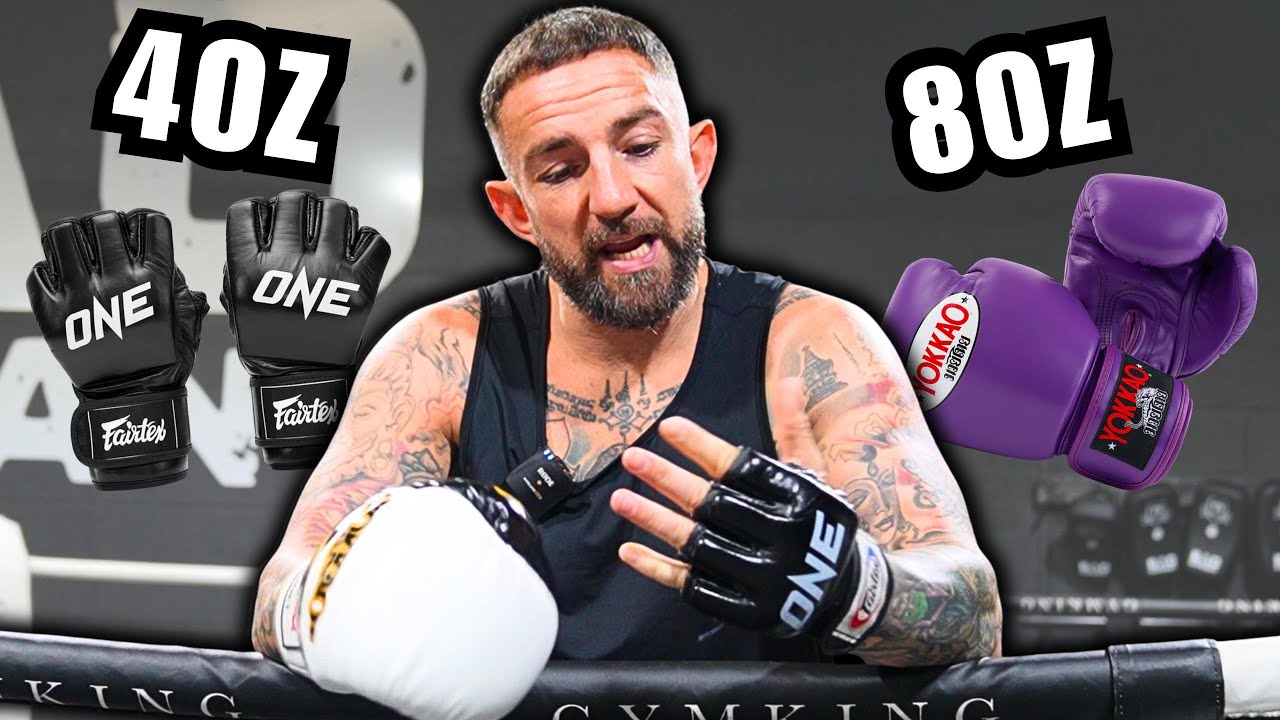
MMA gloves are open-fingered and dramatically lighter, often in the 4 to 7 oz range, so the athlete can grapple and work in the clinch while still having some striking protection. That design makes sense in MMA, where hand fighting, control, and transitions matter constantly. It also means MMA gloves are a poor choice for full-contact boxing sparring, because they don't distribute impact the way boxing gloves do.
Muay Thai gloves stay closer to boxing glove architecture, but they usually have a flatter palm profile and more flexible wrist support to accommodate clinch gripping and the demands of striking in a different range. Boxing gloves, by contrast, prioritize a closed hand shape, shock absorption, and wrist control for repetitive punching.
If you're comparing striking sports, the right gear matters as much as the ruleset. A useful external reference for safety-minded buyers is the MMA background check resource, especially for parents or new students evaluating a program where striking and grappling are both in the mix. And if your goal is to understand how boxing gear fits into a broader combat-sports path, this Long Island guide on how to get into MMA is a helpful starting point.
Don't cross the streams on purpose
Boxing gloves make grappling awkward because they lock the hand into a punching position. MMA gloves can leave you underprotected for boxing drills because the padding is too thin for repeated punch volume. That's why a good gym won't let people improvise equipment choices for every class.
A useful way to think about it is this, boxing gloves protect the hand for punching, MMA gloves preserve function for mixed fighting. Those goals overlap, but they're not the same.
If you're training in Lindenhurst or nearby towns and your program is cross-disciplinary, the safest approach is to buy for the class you attend most often, not the class you think looks coolest on video. For more context on how mixed training affects gear decisions, this detailed look at gi for MMA shows how equipment choice follows training intent, not fashion.
Glove Philosophy Meets Grappling
In Brazilian Jiu-Jitsu, the best athletes don't waste movement. They control space, preserve balance, and use precise details to create results that look simple only after years of drilling. That same mindset applies to glove choice, because the best glove is the one that supports your hand, your wrist, and your specific training goal without excess bulk.
Caio Terra, a 12-time IBJJF world champion, is known for a highly technical style built on efficiency, guard work, repetition, and small positional details. That matters here because technical training rewards the same discipline that good glove fitting does. You're looking for the minimum necessary gear that still protects what needs protecting.
Why BJJ people should care about glove design
At academies like Korfhage BJJ in Lindenhurst, the training culture leans toward precision and fundamentals rather than brute force. That environment produces better judgment about gear, because students quickly learn that awkward equipment interferes with learning. A glove that pinches the knuckles, rolls the wrist, or feels dead in the hand can become a distraction in any striking cross-training session.
The broader lesson is that glove selection should follow alignment, not ego. If your wrist collapses inside the glove, the glove is not helping you. If the padding is so thick that you can't feel your target on bag work, it may be overbuilt for the drill you're trying to improve.
Practical rule: choose the glove that lets your hands stay organized under pressure, not the glove that only feels protective when you're standing still.
That's where Caio Terra's technical approach is relevant beyond BJJ. Precision, repetition, and small adjustments beat sloppy force, whether you're setting up a sweep or learning how to make a glove fit your hand correctly. The same logic also applies to how a serious academy thinks about martial arts for older adults, because joint-friendly training and good equipment go hand in hand.
Audience-Specific Guidance for Beginners, Kids, Law Enforcement, and Older Adults
The right glove depends on who's wearing it and what the session is supposed to do. I've seen beginners buy fight-style gloves because they look sleek, then realize they're miserable for regular training. I've also seen parents pick gloves that look “serious” for kids, only to learn that the fit is all wrong and the child can't keep a proper fist.

Beginners need comfort first
Beginners should start with 14 to 16 oz all-purpose training gloves, ideally with hook-and-loop closures so they can get in and out of class without fuss. The extra padding supports learning because it reduces the punishment that usually comes from imperfect technique. It also gives new students room to work on wrapping, hand position, and wrist alignment without feeling rushed.
Kids need fit, not adult styling
Parents looking at youth programs in Lindenhurst should focus on proper sizing and secure closure. Kids don't need oversized gloves that “they'll grow into,” because a sloppy fit makes the fist unstable and can discourage a young athlete before the basics even stick. The glove should feel snug, controlled, and age-appropriate.
Law enforcement and security trainees need repeatability
Law enforcement trainees and security professionals need gloves that hold up under repetitive striking drills and defensive-tactics work. Strong wrist support matters here because the training often includes controlled resistance, impact repetition, and frequent reset cycles. Durability matters too, since these gloves will see far more use than a casual fitness pair.
Older adults should protect joints and stay consistent
Older adults and seniors often do better with 12 to 14 oz training gloves that cut down on unnecessary joint stress while still giving meaningful protection. That lighter middle ground helps people stay consistent without feeling beaten up after every session. For anyone exploring striking later in life, fit and comfort become essential, and the local guide on martial arts for older adults offers a useful lens for choosing equipment that supports long-term training.
The wrong glove for a new student usually gets blamed on the student, when the real problem is the gear.
For every one of these groups, the principle stays the same. Match the glove to the body and the job, not to the image on the packaging.
Practical Buying Tips and Long-Term Glove Care
Good gloves don't stay good by accident. A pair can feel excellent in the store and fall apart quickly if the fit is wrong or the care routine is sloppy. That's why buying and maintenance deserve the same attention as the glove type itself.
What to check before you hand over your money
Start by measuring your hand circumference and trying gloves on with your hand wraps in place. Wraps change the fit significantly, and a glove that seems roomy without wraps can feel tight once your hands are properly protected. That's where many returns start.
Look closely at the thumb design too. A secure thumb attachment helps reduce thumb injury risk during impact, especially when the fist isn't perfectly aligned on every punch. You also want a breathable interior liner, because trapped moisture and sweat can ruin both comfort and hygiene fast.
A short buying checklist helps:
- Fit with wraps on: the glove should close fully without crushing the hand.
- Wrist support: the cuff should feel stable when you make a fist and extend it.
- Thumb security: the thumb should stay in a predictable position, not drift.
- Interior ventilation: the liner should help manage sweat, not trap it.
- Purpose match: bag, sparring, and training gloves should each do their own job.
Care is part of the purchase
Air gloves out after every session. That simple habit does more for lifespan than most fancy storage routines, because sweat and heat break down materials over time. If you want extra moisture control, cedar wood inserts or silica gel packets can help absorb dampness between classes.
When the exterior needs cleaning, use mild soap and a light hand. Don't soak the gloves, and don't leave them sealed in a closed gym bag while they're still damp. That's the fastest way to get odor, material breakdown, and a glove that starts feeling sticky on the inside.
Know when the glove is done
Cracked leather, padding that stays compressed instead of rebounding, and broken wrist support are all signs the glove has reached the end of its useful life. At that point, trying to squeeze a few more months out of it usually costs you more in hand wear than the replacement would've cost in the first place.
The best rule is the simplest one. Buy for the job, care for the glove every time, and retire it before it starts compromising your hands.
If you're training on Long Island and you want coaching that takes fundamentals seriously, Korfhage BJJ | Caio Terra Academy Long Island gives you a place to build skill with structure, not guesswork. Visit Korfhage BJJ | Caio Terra Academy Long Island to see how technical instruction, beginner-friendly classes, and a supportive training environment can help you choose smarter gear and train with more confidence.