

You search for self defense classes for seniors near me because something has shifted. Maybe it was a walk to the car after dinner in Lindenhurst. Maybe it was getting jostled in a grocery aisle. Maybe it was a simple stumble that made you realize the bigger fear isn't a movie-style attack. It's losing your balance, losing your footing, and losing confidence in your own body.
That feeling is common, and it doesn't mean you're weak. It means you're paying attention.
The answer isn't to learn flashy punches or pretend you need to become a fighter overnight. The answer is to train in a way that respects your age, your joints, and the situations you're likely to face in Lindenhurst and the surrounding towns within about 10 miles, including Babylon, West Babylon, Copiague, Amityville, North Amityville, and Farmingdale. For seniors, the smartest self-defense training builds stability, awareness, body mechanics, and calm decision-making.
Regaining Confidence at Any Age
A lot of seniors I talk to aren't looking for a cage fight. They want to walk confidently, get out of a grab, stay on their feet, and know what to do if someone gets too close.
That's a reasonable goal.

Fear usually starts small
It often begins with ordinary moments. You're walking near Wellwood Avenue at dusk. Someone steps into your space too fast. Or you trip on an uneven curb and realize how much a fall can change your day, your week, or your independence.
That's why I don't like self-defense programs that act like the only issue is punching harder. Seniors need a method that works when speed is limited and strength isn't the main asset. The right training teaches posture, base, body mechanics, and how to stay composed under pressure.
Older adults also need support outside the mat. If you're helping a parent stay active and safe, these practical help for aging parents ideas are worth reading alongside any training plan.
Practical rule: If a class makes you feel rushed, intimidated, or disposable, it's the wrong class.
Confidence comes from skill, not bravado
Self-defense for seniors works best when it's built around strategy. One verified example of a technique-driven approach showed a 63-year-old student stopping a 220lb attacker through precise application of technique alone, and that same training emphasized modified off-balancing and momentum rather than raw strength, plus the fact that 80% of successful assailant stoppages happen through voice and body language before physical contact in that framework of instruction (age-proof combat methods for older adults).
That matters because real safety starts before anybody throws a strike.
If balance is one of your biggest concerns, that's the right instinct. Work on it directly, and if you want a practical companion resource, look at these ways to improve balance for seniors. Better self-defense starts with standing well, moving well, and not panicking when your posture gets challenged.
Why Brazilian Jiu-Jitsu is the Smartest Choice for Seniors
A stranger grabs your arm in a parking lot. You do not need a spinning kick. You need calm, posture, grip control, and a simple way to break contact without a strength contest. That is why Brazilian Jiu-Jitsu is the right choice for many seniors in Lindenhurst.
BJJ gives older adults a method built on position, timing, and mechanical advantage. A good class teaches you how to stay on your feet, handle a clinch, protect your balance, escape holds, and get up safely if you do go down. Those are the situations seniors are more likely to face than a clean, stand-up fight.
Why BJJ makes more sense than striking systems
Strike-based programs ask a lot from aging joints. Fast rotation, impact, and repeated drilling of punches, elbows, and knees can wear people down, especially beginners. Even when the techniques are useful, they often depend on speed, accuracy, and pain tolerance under stress.
Many senior self-defense programs still focus on palm strikes, elbows, knees, and vulnerable targets. Those tools can help create an opening to leave, and senior-specific instruction often highlights simple options that do not require high agility (senior self-defense guidance from CVPSD).
The problem is what comes next.
If someone crowds you, grabs clothing, pins an arm, or knocks you off balance, striking alone is not enough. You need technique for frames, posture, base, grip fighting, and controlled escapes. That is where BJJ consistently gives seniors better answers.

The instructor matters more than the style name
Here is the part people miss. The safest martial art for seniors is not decided by the logo on the wall. It is decided by the coach.
A Caio Terra affiliated school stands out when the instructor teaches with control, precision, and respect for fundamentals. That approach fits older adults because it rewards clean technique over force, careful repetition over chaos, and smart positioning over athleticism. Seniors do best under coaches who scale drills, pair students responsibly, and treat falling, standing, and body awareness as teachable skills instead of survival tests.
Research on self-defense programs from the University of Oregon supports gradual progression and training methods that reduce injury risk while building confidence. That is the standard to look for.
If you want extra movement work outside class, this guide to the best exercises for seniors pairs well with a beginner grappling program.
For local readers, a smart next step is to review what strong martial arts training for older adults should include before you visit a school.
For seniors, the best self-defense system is the one that teaches control without asking you to win with speed or strength.
Finding Senior-Friendly Classes in the Lindenhurst Area
If you live in Lindenhurst, don't settle for the first place that says “self-defense” on the sign. Search with purpose.
Start with Google Maps and use phrases that filter out macho marketing. Try “BJJ for beginners Lindenhurst,” “senior martial arts near Babylon,” “gentle grappling Amityville,” or “beginner jiu-jitsu Copiague.” That language tends to surface schools that welcome older adults instead of just tolerating them.

What to screen for in local listings
A lot of websites sound good until you read closely. If every photo shows young athletes sparring hard, that's a clue. If every class description talks about explosive striking, street-fight toughness, or high-intensity workouts, keep moving.
What seniors need is different.
Most self-defense content ignores the reality that seniors are most often injured by being pushed, grabbed, or taken down. While many programs focus on striking, they fail to answer the critical question for seniors: "Does this class teach me to get up off the floor safely?" Grappling arts like BJJ directly address ground survival, balance, and mobility, which is critical since falls are a leading cause of injury in older adults (senior self-defense article from Great Senior Living).
Good search results usually mention these terms
- Beginner-friendly: You want classes that assume zero experience.
- Fundamentals: This means the school values basics over chaos.
- Controlled training: Seniors need measured, supervised practice.
- All ages or older adults: Schools that say this plainly are easier to trust.
- Ground safety: This is essential.
One more issue matters, and most local searches still don't address it well. Many seniors wonder whether they can start training with arthritis, a replaced joint, or another chronic condition. That concern is valid. Some schools talk about “low impact” training, but many still don't explain how techniques are adapted, and this creates a trust gap for older beginners. The same concern sits alongside a broad fear of falling, and the National Council on Aging data cited here notes that 80% of seniors fear falling (senior martial arts program discussion).
If a school doesn't explain how it modifies training for real bodies, not ideal bodies, keep looking.
Your Evaluation Checklist for a Safe and Effective School
The instructor matters more than the logo, the mat space, or the sales pitch. For seniors, the teacher's philosophy determines whether class feels safe and useful or stressful and pointless.
That's why I put so much weight on the Caio Terra approach.
Why teaching method matters
Caio Terra, a 12-time IBJJF world champion, developed a BJJ approach that prioritizes systematic, fundamental-based learning. His methods, taught at Korfhage BJJ, break down complex techniques into manageable steps, allowing seniors and beginners to master the core mechanics of efficient force application and position at their own pace (Caio Terra Academy Long Island information).
That's exactly what older adults need. Not intensity for the sake of intensity. Not random techniques. A method.
When a school teaches step by step, seniors learn faster because they aren't guessing. They understand where their hands go, where their weight goes, and why a technique works. That lowers panic and improves retention.
School Evaluation Checklist
| Category | What to Look For |
|---|---|
| Instructor philosophy | A calm, technical teacher who explains leverage, position, and safety before speed |
| Beginner structure | Clear fundamentals classes instead of throwing new students into advanced rounds |
| Senior suitability | Willingness to modify drills for mobility limits, joint concerns, or conditioning gaps |
| Training pace | Controlled partner work, not frantic sparring from day one |
| Safety culture | Students who look out for each other, tap early, and train with restraint |
| Fall readiness | Time spent on posture, base, movement, and safe ways to get up from the floor |
| Communication | Direct answers to questions about injuries, medications, past surgeries, and concerns |
| Class atmosphere | Welcoming, respectful, and patient, not hyper-competitive |
Questions to ask before you join
Ask these on the phone or in person:
Do you teach complete beginners separately or ease them in carefully?
Seniors do better when they're not trying to copy advanced students at full speed.How do you handle arthritis, back issues, or limited range of motion?
If the answer is vague, that's a warning sign.Is hard sparring required?
It shouldn't be. Good schools let older adults build skill before adding pressure.Do you teach how to recover from the ground and stand safely?
This is one of the most practical questions a senior can ask.
Coach's advice: A great school makes you feel challenged, not endangered.
The atmosphere should feel steady
Watch a class before you join. Listen to how the instructor corrects mistakes. Good coaching sounds precise and calm. Bad coaching sounds like shouting and ego.
You should also see students working with control. If every round looks like a fight, leave. If the room looks organized, technical, and respectful, you're in the right place.
What to Expect in Your First Jiu-Jitsu Class
Your first class shouldn't feel like a test. It should feel like an introduction.
You'll walk in, meet the instructor, and spend the first few minutes getting comfortable with the space. Nobody sensible expects a senior beginner to know the terminology or move like an athlete.

The first class is usually slower than you think
A good beginner class starts with mobility, not punishment. Expect gentle movement, posture work, and basic positioning. Then you'll likely learn one simple concept, such as how to keep someone from pushing you over, how to break a grip, or how to use your hips and frames instead of your arms.
That's where the first breakthrough usually happens.
You try a movement lightly with a partner, and suddenly you feel that a smaller adjustment in angle or timing works better than straining. That's the moment many seniors realize BJJ makes sense. It doesn't ask them to overpower anyone.
You are not signing up for chaos
No, you shouldn't be thrown into a hard sparring match.
No, you don't need to be flexible to start.
No, you don't need prior martial arts experience.
For seniors, regular BJJ training significantly improves flexibility, joint mobility, muscular strength, balance, and cardiovascular endurance, and people often report reduced stiffness, improved mood, and enhanced cognitive abilities through consistent practice (BJJ for seniors health and wellness benefits).
That's one reason this training sticks. It doesn't only answer safety concerns. It gives many older adults a better relationship with their body.
Here's a look at the kind of movement and instruction that helps beginners understand what BJJ feels like in practice.
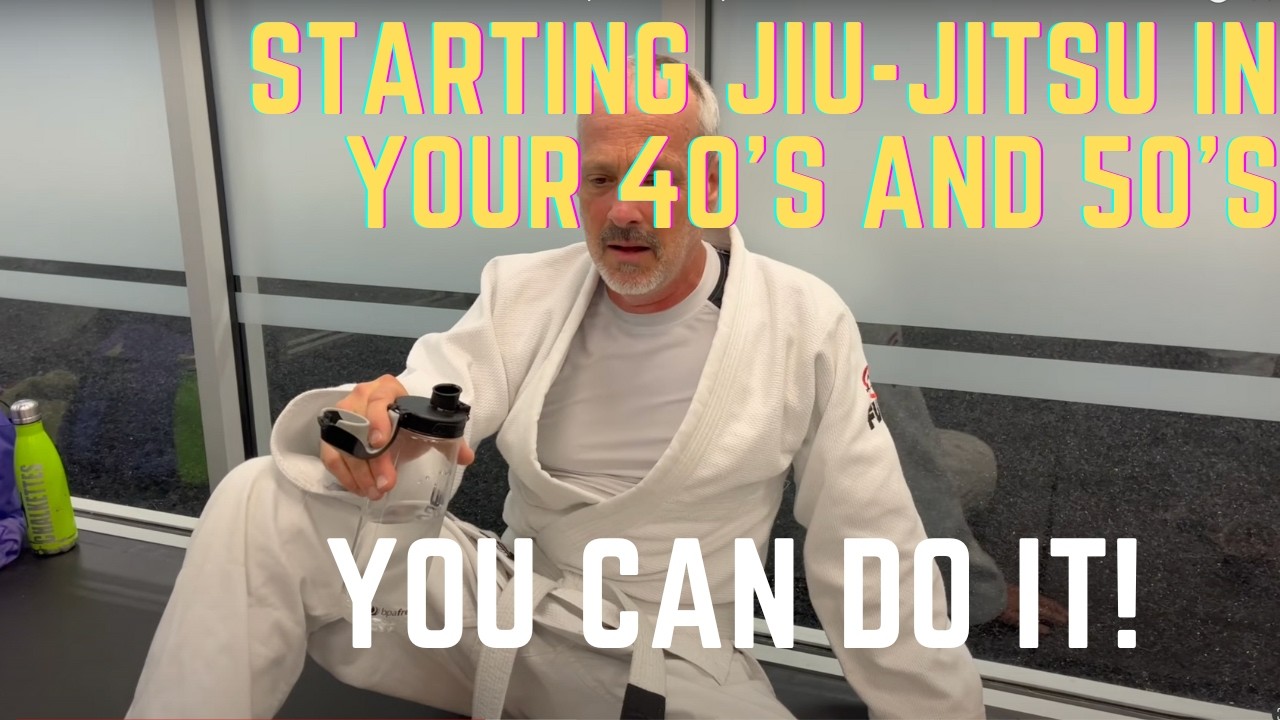
Start with curiosity, not pride. That mindset helps older beginners learn faster and safer.
What you should bring
- Comfortable clothing: Ask whether the first class requires a gi or just athletic wear.
- An honest health history: Tell the instructor about surgeries, pain points, or balance issues.
- A beginner attitude: That matters more than fitness on day one.
If the school is good, you'll leave class feeling worked, clearer, and more capable than when you walked in.
Take Your First Step at Korfhage BJJ in Lindenhurst
If you live in Lindenhurst or nearby and want the best answer to your search for self defense classes for seniors near me, my recommendation is straightforward. Choose Brazilian Jiu-Jitsu, and choose a school where the instructor values safety, fundamentals, and patience.
That combination matters more than anything else.
A good instructor is critical to learning BJJ safely, especially for seniors. Experienced professors with decades of teaching, like those at Korfhage BJJ, emphasize technical precision over aggression, creating a safe environment where older adults can build confidence and fitness without the high-impact trauma associated with striking arts.
That's why the Caio Terra affiliation matters. It reflects a systematic way of teaching that suits seniors far better than a rough, sink-or-swim class model. It also helps that this academy has served beginners in Lindenhurst since 2007 and offers a clear starting point with a $99 unlimited classes trial.
If you're ready to stop researching and start moving, visit a self-defense class near you in Lindenhurst. The academy is located at 99 W. Hoffman Ave, Lindenhurst. Show up, ask questions, and judge the room for yourself. If it feels calm, technical, and respectful, that's your sign to begin.
If you want practical self-defense built on technique, not strength, start with Korfhage BJJ | Caio Terra Academy Long Island. Visit the academy at 99 W. Hoffman Ave in Lindenhurst, ask about the senior-friendly beginner approach, and try the $99 unlimited classes trial.