

You're probably approaching your search for MMA classes in New York with familiar objectives. You want to get in shape, learn real self-defense, and find a school that won't throw you into chaos on day one. If you live in Lindenhurst or within a short drive, you also want something practical. Not a Manhattan hype factory. Not a cardio kickboxing class dressed up as fighting.
Here's my blunt take as a Long Island instructor. If you're new, stop obsessing over the letters MMA and start asking a better question: who is going to teach you the right foundation? For almost everybody in Lindenhurst, West Babylon, Babylon, Copiague, North Lindenhurst, West Islip, and nearby towns, that foundation should be Brazilian Jiu-Jitsu.
A lot of gyms market “MMA” because it sounds exciting. Fine. But beginners don't need a confusing menu of half-learned striking, rushed grappling, and ego-driven sparring. They need a clean path, a serious instructor, and a system that builds control before intensity. That's where good BJJ separates itself.
Why BJJ Is the True Foundation for MMA and Self Defense
A new student walks into a gym asking for MMA. What he usually needs is simpler. He needs to learn how to stay safe when a fight gets ugly, close, and physical. That starts with Brazilian Jiu-Jitsu.
Plenty of New York gyms use MMA as a catch-all term. The label sounds exciting, but it often hides a mix of classes with no clear beginner path, which is part of the confusion described by Radical MMA NYC's explanation of beginner confusion around MMA programs. For a beginner in Lindenhurst, that matters. You do not need a little bit of everything. You need one art that teaches control under pressure from day one.

Why BJJ works when size doesn't
Real self-defense is rarely clean. People grab, drive forward, panic, and try to overpower you. BJJ prepares you for that reality better than styles that depend on speed, reach, or landing the first shot.
You learn how to manage distance, break posture, escape bad positions, reverse momentum, and hold someone down without losing your head. That last part is a big deal. Calm under pressure is a trainable skill, and BJJ builds it better than almost anything else because you practice against resistance every class.
Here is the standard I use.
If a martial art does not teach you how to control another person who does not want to be controlled, it leaves a hole in your self-defense.
That is also why serious MMA fighters spend so much time on grappling. Punches and kicks matter. So do takedowns and clinch entries. But once bodies collide and space disappears, the athlete with better jiu-jitsu usually makes the better decisions.
Why BJJ should come first
Beginners make the same mistake over and over. They chase variety too early.
That slows progress.
A new student does better with a focused skill set than with scattered exposure to striking, wrestling, and submissions all at once. BJJ gives you a base you can build on. You learn how to defend yourself without absorbing unnecessary damage, how to think through pressure instead of freezing, and how to solve problems with technique instead of aggression.
For self-defense, that is the right order.
For MMA, it is also the right order. A student who can control position, escape danger, and stay composed on the ground has something real. You can layer striking on top of that later. Trying to build the reverse is harder and messier.
BJJ is also more forgiving for the average adult. You do not need to be a gifted athlete. You need consistency, coachable habits, and a room that teaches details well. If you want a practical look at why BJJ is good for self-defense, start there.
The technical side is the advantage
Good jiu-jitsu rewards patience and decision-making. That is why I recommend it to adults in their thirties, forties, fifties, and beyond. The art keeps giving back because the skill is not built on youth or raw explosiveness. It is built on timing, body mechanics, pressure, and judgment.
That is the insider truth behind the search for MMA classes in New York. The core skill is not flashy combinations. It is BJJ. If you are starting in Lindenhurst, start with the art that teaches you how to survive bad positions, control another person, and think clearly when things stop looking like a drill.
The Single Most Important Factor Your Instructor
A beginner can waste a year in the wrong room.
I've seen it plenty of times across Long Island. Someone joins a school because the schedule looks convenient or the branding looks sharp. Six months later, they still can't hold position, they panic under pressure, and half their training habits need to be rebuilt. That usually comes back to one thing. The person teaching the class never had a real plan for beginners.
The instructor sets the standard for everything. Safety. Pace. Culture. Technical quality. If you want real progress in MMA training, especially in Lindenhurst, start by judging the coach before you judge the facility.

What a serious instructor actually does
A serious instructor teaches in a way that builds skill layer by layer. He does not throw random techniques at the room and hope you figure it out. He gives beginners a structure they can repeat, test, and understand.
Here's what I tell people to look for:
| What to look for | Why it matters |
|---|---|
| Clear beginner progression | New students need a sequence of core positions, escapes, controls, and submissions that fits together |
| Tight room control | Good coaching shows up in partner selection, pace management, and fast corrections before mistakes turn into injuries |
| Concept-based teaching | Students improve faster when they understand timing, weight distribution, and decision-making, not just memorized steps |
| Ego-free culture | A room full of show-offs drives away the exact people who would become strong, technical training partners over time |
The right coach also protects beginners from training that is too hard, too early. A good school separates fundamentals from advanced rounds and competition prep. If a coach throws new students into chaotic sparring because it looks tough, walk out. That is lazy instruction.
The wrong instructor turns good jiu-jitsu into confusion. The right instructor turns a nervous beginner into a calm, capable student.
Why the Caio Terra approach matters
The Caio Terra methodology matters because it demands precision. It is built around details that smaller, less experienced, or less athletic students can use. That matters in BJJ, and it matters even more if your long-term goal includes MMA or self-defense.
A coach influenced by that system should be teaching answers, not tricks. You should hear instruction that sounds like this:
- What problem does this position solve
- What reaction am I trying to draw out
- What option keeps me safe if the first attack fails
- What small adjustment fixes this, instead of forcing a new scramble
That kind of teaching creates durable skill. It also tells you a lot about the instructor. Good coaches explain cause and effect. Bad coaches repeat moves, bark corrections, and call that teaching.
If you want a better sense of what strong jiu-jitsu instructors do well, study how they teach beginners, not just how they perform themselves.
How to judge a coach before you sign up
Watch one full class. Do not judge the room from the lobby.
Pay attention to the instructor's habits. Does he know every beginner's name? Does he correct small details before they become big mistakes? Does he pair new people with steady partners, or does he let the room sort itself out? That tells you more than any sales pitch.
Use this checklist:
- Ask who teaches the beginner classes. The fundamentals class should not be an afterthought.
- Watch for real corrections. “Good job” is not coaching. Specific feedback is coaching.
- See how the room handles pace. Beginners should be challenged, but they should not be tossed into panic.
- Ask how students progress. There should be a clear path from fundamentals to general training to harder rounds.
- Look at the culture. Respectful rooms produce better jiu-jitsu than rooms built on intimidation.
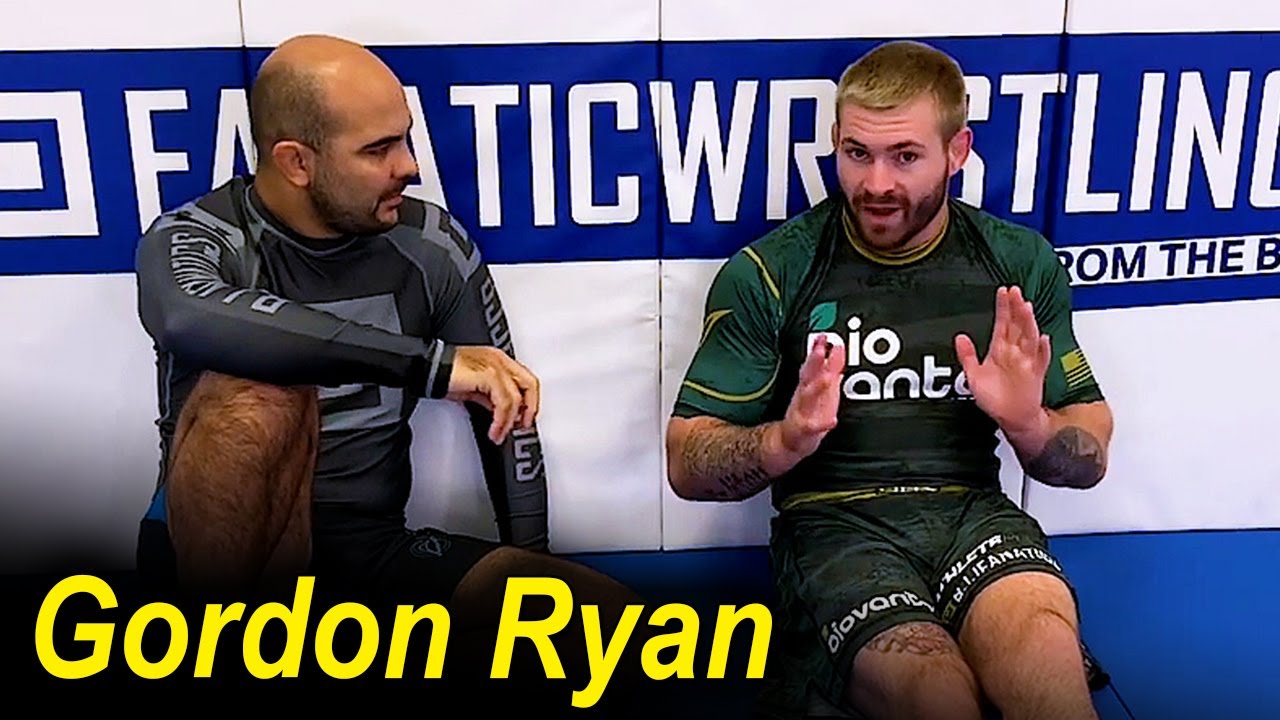
Later in your search, it helps to watch an instructor teach, not just compete. This clip gives a feel for technical communication and detail:
The room should feel demanding, not reckless
Hard training is good. Disorganized training is not.
A world-class room feels controlled. People work hard, but they know why they are doing what they are doing. Beginners leave tired and sharper than when they walked in. They do not leave with preventable injuries, bad habits, or the feeling that they got through some pointless hazing ritual.
That standard comes from the instructor. Every time.
What to Expect in Your First BJJ Class
You walk into a new academy after work, your heart rate is already up, and you are wondering if everyone in the room knows something you do not. That feeling is normal. A good first class settles that down fast. You should know where to stand, who your partner is, what the goal of the day is, and how the room runs within the first few minutes.

The first ten minutes
Expect a short check-in, a quick introduction, and basic mat rules. Shoes off the mat. Listen when the instructor is teaching. Tap early. Ask questions if you are lost. In a well-run Lindenhurst class, nobody leaves you standing in a corner trying to copy strangers.
Then class starts with movement that has a purpose. You should see hip escapes, technical stand-ups, breakfalls, shoulder movement, and simple mobility work that prepares you to grapple. Busywork is a bad sign. Warm-ups should build skills you will use that same day.
The middle of class
Beginners typically grasp the true essence of BJJ. It is not wild scrambling. It is posture, timing, pressure, base, and problem-solving under control.
The instructor will usually teach one position or one short sequence. For a first class, that might be how to frame and recover guard, how to hold side control, or how to escape from the bottom without giving up your back. Then you drill it with a partner, slowly at first, then with enough resistance to make the lesson real.
That pace matters.
If the school follows a sound structure, the class moves in a clear order. Warm up. Learn the technique. Drill the details. Add controlled resistance if the student is ready. That kind of progression is common in organized MMA and grappling classes, as outlined in this overview of class progression, and it matters even more in beginner BJJ because details decide whether a move works.
A clean first class usually includes:
- Movement prep. Basic mat movement and mobility tied to grappling.
- Technical instruction. One lesson with a clear goal, not five random moves.
- Partner drilling. Enough repetition to build timing and body awareness.
- Positional work or light live training. Controlled rounds with limits, if the instructor thinks you are ready.
If you train in a room shaped by the Caio Terra approach, expect a heavy focus on precision. Small grips, angle changes, head position, and weight distribution get corrected early. That is a good thing. Beginners improve faster when they learn the right mechanics before speed and strength cover up mistakes.
What you should and should not expect
Expect to feel awkward. Everyone does at first.
Expect to forget steps, mix up left and right, and get stuck underneath somebody who feels impossibly heavy. That does not mean BJJ is not for you. It means you are finally learning a skill that works against resistance, which is exactly why BJJ sits at the center of real MMA training and real self-defense.
Do not expect hard sparring with experienced students on day one. Do not expect a victory lap. Do expect to leave tired, a little humbled, and a lot more aware of how much technique matters.
Here is my standard for a beginner class. You should walk out feeling challenged, safe, and clearer than when you walked in. If the room feels sloppy, rushed, or ego-driven, keep looking. A first class should build trust in the process, not test how much chaos you can survive.
Finding the Right Program for You and Your Family
Pick a school that knows who each class is for.
If a gym throws kids, beginners, hobbyists, competitors, and law enforcement into a vague schedule and calls it variety, keep driving. Good instruction starts with good sorting. Different students need different pacing, different goals, and different coaching.
A parent in Lindenhurst looking for structure for a child needs a very different program than an adult who wants practical training. An older student needs smart pacing and technical work that protects the body. A police officer needs control, restraint, and decision-making under pressure. One room cannot serve all of those people well unless the curriculum is built with intention.
That is what you should look for first.

What kids need is not what adults need
Kids need structure before anything else. A strong youth class builds attention, listening, posture, coordination, and confidence. Younger kids usually learn best through repetition, clear boundaries, and simple goals. Teens need tighter standards, more accountability, and more technical detail.
Adults usually show up for a different reason. They want a skill they can trust, better conditioning, stress relief, and real self-defense. The right adult program puts time into fundamentals, escapes, posture, control, and safe live work. If self-protection is one of your goals, look for a school that also offers a clear path into practical self-defense training near Lindenhurst, not just generic fitness classes with punching mixed in.
Here's the standard I use:
| Student type | What the program should emphasize |
|---|---|
| Young kids | Rules, movement, confidence, respectful behavior |
| Teens | Discipline, resilience, sharper technical instruction |
| Adults | Fundamentals, conditioning, self-defense application |
| Seniors | Mobility, balance, pacing, low-impact technical work |
| Law enforcement | Control, restraint, positional dominance, decision-making |
Separation matters
One of the clearest signs of a serious academy is class separation. Fundamentals classes should serve beginners. Competition training should serve experienced students who already have a base. Family-friendly scheduling should let parents and kids train under one roof without forcing everyone into the same room or the same intensity.
This affects safety. It affects retention. It also affects progress.
A beginner improves faster in a room built for learning, not survival. A child does better with structure than with chaos. An older adult lasts longer when the pace matches the body. A working professional stays consistent when the instruction is organized and the expectations are clear.
Coach's advice: Ask one direct question. “Who is this class built for?” If the answer is fuzzy, the program is fuzzy too.
One local option to consider
If you're comparing schools around Lindenhurst, Korfhage BJJ | Caio Terra Academy Long Island is worth a look because it separates programs by age, experience, and training goal. That matters. The Caio Terra methodology is detail-heavy and systematic, which helps beginners learn clean mechanics early while still giving advanced students a path to sharper competition training.
That is the kind of structure a family should want. Clear beginner classes. Clear youth classes. Clear next steps once a student is ready for more.
Your Next Step Take a Trial Class in Lindenhurst
Reading about jiu-jitsu helps. Feeling it helps more.
At some point, you need to stop comparing websites and step on the mat. That's the only way to know if the instruction is clear, if the culture is right, and if the school treats beginners like future students instead of inconveniences. If you live in Lindenhurst, Babylon, West Babylon, Copiague, Amityville, North Lindenhurst, or West Islip, there's no reason to drive all over New York chasing the broad label of MMA classes in New York when what you need may be a strong BJJ foundation close to home.

What to do before you sign anything
Don't overthink the first visit. Show up, observe the room, and ask direct questions. You're not interviewing a gym for entertainment. You're trusting people with your body, your confidence, and your time.
Ask these:
- Who teaches the beginner classes
- How do you introduce first-day students
- When do beginners start live sparring
- What's the difference between fundamentals and competition training
- Do you have classes for kids, adults, or families if that matters to you
The right school will answer plainly. No dodging. No macho theater.
What a good trial tells you fast
A trial class should tell you five things almost immediately.
First, whether the room is clean and organized.
Second, whether the instructor can teach instead of just perform.
Third, whether students train with control.
Fourth, whether the beginners look supported.
Fifth, whether you can picture yourself staying consistent there.
You don't need a perfect first class. You need a room that makes you want to come back and get better.
There's also a bigger practical point here. New York's martial arts market is not some tiny niche. Ronin Athletics states it has been a pioneer in MMA education and training in New York City since 2001, and IBISWorld projects 72,029 businesses and $21.0 billion in U.S. martial arts studio revenue in 2026, which shows you're choosing from a large established industry, not a fringe hobby, according to Ronin Athletics. That means you should be selective.
You should also be realistic. Review volume and geographic spread show how broad the market is. ClassPass lists MMA-related studios across the New York metro area, including Manhattan, Astoria, Brooklyn, Staten Island, and Baldwin, and highlights studios such as Zombie Muay Thai with 2,500+ ratings and a 4.9 score on its New York metro MMA listings. Plenty of people are training. That doesn't mean every school is right for you.
Why local matters
For most beginners, consistency beats variety. The school you can reach easily from home or work in Lindenhurst is usually the school you'll attend enough to improve in. The instructor you trust is the one you'll listen to. The room that fits your life is the one you'll stay with when motivation dips.
If your goal is self-defense, confidence, fitness, and a skill with depth, start with grappling done properly. If you want a practical local option, look into a self-defense class near Lindenhurst and see whether the schedule, coaching, and structure fit what you need.
The smartest next move is simple. Take the trial. Shake hands. Step on the mat. Pay attention to the instruction. You'll know quickly whether the place is built for real learning.
If you're in Lindenhurst or nearby and want a straightforward place to start, Korfhage BJJ | Caio Terra Academy Long Island offers Brazilian Jiu-Jitsu instruction for beginners, adults, kids, and families at 99 W. Hoffman Ave, Lindenhurst, NY, along with a $99 unlimited classes trial. If you want practical self-defense, strong fundamentals, and coaching that values technical learning over chaos, that's a sensible first step.