

Individuals who look up mixed martial arts benefits are not trying to become cage fighters. They want to lose weight without hating the workout, feel safer walking to the car at night, move better, and stop feeling exhausted by the end of the day.
That’s the right reason to look into martial arts.
If you live in Lindenhurst or nearby areas like West Babylon, Babylon, Copiague, North Lindenhurst, Amityville, or Massapequa Park, the smartest way to think about MMA is not as a sport spectacle. Think of it as a collection of training methods. Then ask a better question: which part of MMA gives regular people the biggest return in real life?
My answer is simple. Brazilian Jiu-Jitsu does.
Striking matters. Conditioning matters. Toughness matters. But for the average adult, parent, teen, senior, or working professional on Long Island, BJJ is the piece that changes lives fastest and lasts longest. It teaches control instead of chaos. It rewards technique over size. And when it’s taught well, it builds confidence without wrecking your body.
Beyond the Cage Unlocking Real Mixed Martial Arts Benefits
The cage gets attention. Training delivers the value.
A lot of people in Lindenhurst hear “MMA” and immediately think of bloody fights, shin kicks, and people getting slammed into fences. That image is incomplete. The primary mixed martial arts benefits come from consistent practice in the arts that make MMA work in the first place.

What your body gets from martial arts training
Martial arts practice, including disciplines foundational to MMA, works as intensive aerobic exercise. For a 154-pound individual, sessions can burn approximately 720 calories per hour while also improving cardiovascular fitness, skeletal bone density, and muscular strength, according to this review of the benefits of martial arts backed by research.
That matters for real life more than is commonly understood.
You feel it when you carry groceries without your back tightening up. You feel it when you play with your kids and don’t need to sit down after ten minutes. You feel it when your posture improves and your energy stops crashing in the afternoon.
What most people actually need
Most adults don’t need more random exercise. They need training with purpose.
They need something that improves:
- Stamina for daily life: Not just treadmill endurance, but the ability to keep moving under effort.
- Functional strength: The kind that shows up in balance, posture, grip, hips, and core stability.
- Stress control: Training forces you to breathe, think, and move under pressure.
- Consistency: If a workout is boring, people quit. Martial arts gives people a reason to come back.
That’s also why smart recovery matters. If you’re serious about training well and staying healthy, good guidance on sport performance physical therapy can help you understand how movement quality, rehab, and strength work fit together.
Practical rule: The best martial art for fitness is the one that keeps you training consistently, safely, and with focus.
Why the “MMA” label can confuse beginners
“MMA” sounds broad because it is broad.
For beginners, that can be a problem. Too many people think they need to learn everything at once. They don’t. They need a foundation. They need one training method that builds fitness, confidence, timing, and body control without demanding that they get punched in the face on day one.
That’s why I point people toward grappling first, especially if they’re looking for a sustainable path instead of a short burst of motivation. A good place to understand that fitness side of training is this page on martial arts and fitness.
Here’s my opinion. The broad promise of MMA becomes practical only when you choose the right entry point. That entry point isn’t harder sparring. It’s smarter training.
And that leads straight to Brazilian Jiu-Jitsu.
Why Brazilian Jiu-Jitsu Is the Heart of Practical Self-Defense
If you strip MMA down to what matters most in a real confrontation, one idea rises to the top. Control decides outcomes.
That’s why Brazilian Jiu-Jitsu sits at the center of practical self-defense. It teaches you how to manage distance, break posture, control movement, escape bad positions, and stop a stronger person without needing knockout power.

Control beats panic
A lot of self-defense marketing is nonsense. It sells fantasy. One move, one strike, one dramatic finish.
Real self-defense is messier than that. People clinch. They grab. They fall. They freeze. They overreact. BJJ trains for that reality.
In elite MMA, strikers have higher knockout rates, but fights are often decided by grappling control and submissions, especially in later rounds. Winners also show superior positional dominance, which is one of the clearest indicators of success in the analysis published by the Open Sports Sciences Journal.
That isn’t just interesting for pro fighters. It tells regular people something important. When things get chaotic, the person who can control the position usually controls the outcome.
Why BJJ works for normal people
BJJ is called “the gentle art,” but don’t confuse gentle with soft.
It’s technical. It’s demanding. It’s honest. It forces you to solve problems against resistance. That’s exactly why it works.
Here’s what BJJ gives the average person that many striking-heavy programs don’t:
| Focus | What it teaches | Why it matters |
|---|---|---|
| Leverage | Using angles, frames, and body mechanics | Smaller people can defend themselves intelligently |
| Positioning | Escapes, pins, guard retention, top control | You learn where to be before trying to finish |
| Composure | Staying calm in bad spots | Panic drops when training becomes familiar |
| Scalability | Controlled resistance instead of all-out impact | Beginners, older adults, and professionals can train longer |
The ground is not optional
A lot of people say they’d “just stay standing.” That’s wishful thinking.
In a real struggle, people collide, grab, trip, and end up on the ground fast. If you’ve never trained there, your instincts are usually terrible. You bench press at the wrong time. You turn your back. You burn energy. You make everything worse.
BJJ fixes that.
It teaches base, pressure, hip movement, frames, and escapes. These skills are then honed against another person who is actively trying to stop you. That’s the difference between theory and ability.
A deeper look at that practical side is here: is BJJ good for self-defense.
Later in training, it also becomes clear why so many serious martial artists return to grappling as their base.
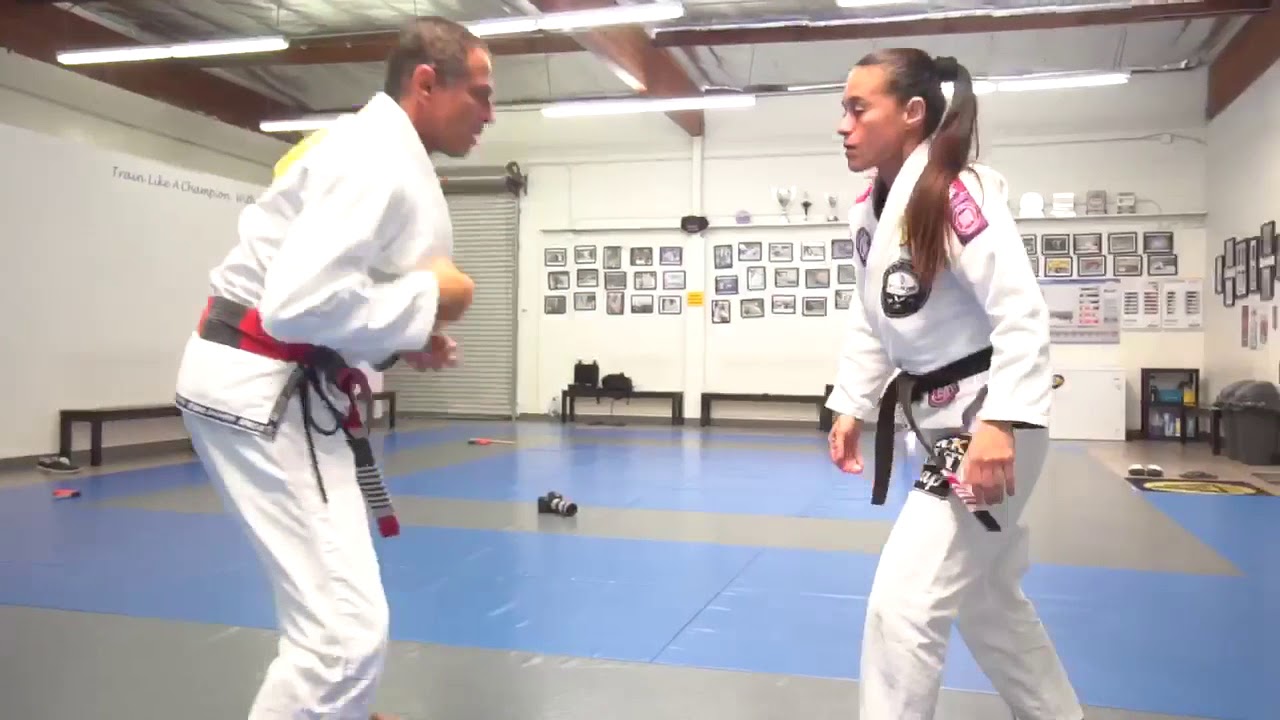
Most people don’t need more aggression. They need better control, better judgment, and a trained response under pressure.
Safer and more sustainable than people expect
This is another reason I’m opinionated about BJJ. It gives people a hard, real, demanding martial art without making head impact the center of training.
That matters if you want to train for years, not just months.
You can roll with control. You can tap early. You can work with partners at different intensities. You can train hard while still protecting your brain, your joints, and your long-term consistency. A smart academy makes that possible. A sloppy one ruins it.
For a parent, that means a child learns confidence without becoming reckless. For an adult beginner, it means you can start without pretending you’re already tough. For a professional who deals with conflict, it means learning restraint as a skill.
That is why I don’t see BJJ as just one part of MMA. I see it as the most practical part for general application.
The Caio Terra Method World-Class Jiu-Jitsu in Lindenhurst
A martial art is only as good as the way it’s taught.
That’s the part many beginners miss. They compare styles when they should also be comparing instruction. The best system in the world falls apart under a careless coach. A strong curriculum with clear teaching can change everything.
Why lineage and method matter
Caio Terra is a 12-time IBJJF world champion, and that matters. But his competition record is only part of the story.
What matters more for everyday students is his approach to jiu-jitsu. Caio’s style has always emphasized precision, timing, mechanical advantage, and sharp decision-making. He’s known for proving that technical mastery can overcome size, and that idea is exactly why his teaching resonates with smaller athletes, beginners, kids, and adults who want smart jiu-jitsu instead of meathead jiu-jitsu.

What good instruction actually looks like
A world-class teaching method usually includes a few essential elements:
- Clear fundamentals: Students need to know where their hands, hips, head, and weight belong.
- Concepts, not just moves: If you only memorize techniques, you stall out. If you understand frames, pressure, angle, posture, and timing, you keep improving.
- Progression: Beginners should not train like advanced competitors. Good instruction layers complexity.
- Safety through detail: Better mechanics usually mean safer mechanics.
That’s what separates serious jiu-jitsu from random technique-of-the-day classes.
Coach’s advice: Find an instructor who can make a difficult movement feel understandable, repeatable, and safe. That’s the teacher who will keep you growing.
Why this matters in a local academy
People in Lindenhurst shouldn’t have to travel into the city or chase internet clips to get high-level instruction. They should be able to train near home and still learn from a standard shaped by proven jiu-jitsu.
That’s the value of a Caio Terra approach in a local setting. It brings elite expectations to ordinary students. You don’t get treated like an afterthought because you’re new. You get taught the right way from the start.
For kids, that means structure. For adults, it means faster understanding. For seniors, it means careful adaptation. For competitors, it means technical depth. For someone nervous on day one, it means the room feels organized instead of chaotic.
A good instructor doesn’t just teach moves. He teaches judgment, timing, pacing, and respect for the training partner. In my view, that’s the true standard people should look for when they compare martial arts schools on Long Island.
A Martial Art for Everyone in the Lindenhurst Community
The best part of jiu-jitsu is that it doesn’t belong to one type of person.
It works for the kid who needs confidence. It works for the parent who needs structure. It works for the adult who’s bored with the gym. It works for the officer who needs control under stress. It even works for older adults when the training is supervised and adjusted correctly.

For kids in Lindenhurst and nearby towns
Parents usually come in asking for self-defense. What they often end up valuing even more is behavior.
A good kids program teaches them how to listen, how to manage frustration, how to stay calm when things don’t go their way, and how to work through discomfort without quitting. Jiu-jitsu gives immediate feedback. If a child loses position because they rushed, they learn to slow down. If they panic, they learn to breathe. If they stay focused, they improve.
That’s far more useful than fake toughness.
Kids also benefit from the simple fact that BJJ isn’t built around wild swinging. It’s built around control, awareness, and problem solving. For a child dealing with school stress, social pressure, or confidence issues, that’s a strong foundation.
For adults who are tired of boring workouts
A lot of adults from Lindenhurst, West Babylon, Babylon, and Copiague are stuck in the same cycle. They start a gym membership, go hard for two weeks, then disappear.
I understand why. Most workouts are forgettable.
Jiu-jitsu isn’t. Every class gives you a problem to solve. Every round forces you to think. Every small improvement feels earned. That mental hook is why many adults stay with it when they’ve quit everything else.
Here’s what adult students usually notice first:
- They sweat hard without staring at a clock
- They start moving better in daily life
- They feel sharper under pressure
- They build confidence that isn’t fake or loud
For seniors who want strength, mobility, and confidence
This is one of the most overlooked conversations in martial arts.
Evidence for hard martial arts like BJJ in older populations is still developing, but supervised training has shown 9.3–34% strength gains, 9.5–13.6% mobility improvements, and 20.5% better balance in preliminary findings discussed in this piece on martial arts for seniors.
That doesn’t mean every senior should jump into intense rolling. It means smart instruction matters even more.
A good coach can scale movement, control pace, teach safe ways to get up and down, and make the art useful rather than reckless. For older adults, the goal isn’t to win a tournament match. The goal is to move with confidence, improve balance, keep strength, and feel less fragile.
Jiu-jitsu for seniors should look like education, not punishment.
For law enforcement and first responders
This group needs realism, not fantasy.
People in law enforcement don’t need flashy combinations for social media. They need clinch control, body positioning, pressure management, takedown awareness, and the ability to restrain someone without escalating force unnecessarily.
BJJ fits that need because it focuses on controlling another human being when compliance is uncertain. It also builds the habit of making decisions while tired and under pressure. That’s a training environment with direct carryover.
For people who think they’re “not the type”
This might be the biggest local audience of all.
You’re not too small. You’re not too stiff. You’re not too late. You’re not disqualified because you’ve never wrestled, boxed, or played sports at a high level. You just need a good room and a good start.
Some of the best long-term students in any academy are the people who walked in unsure of themselves. They weren’t the most athletic. They were coachable. They kept showing up. They learned to trust the process.
That’s why BJJ has such broad reach across Lindenhurst and the surrounding area. It meets people where they are, then asks them to improve honestly.
The Korfhage BJJ Difference Safety Community and Growth
People often worry that a jiu-jitsu academy will feel like an ego contest. That fear is understandable. Some gyms earn that reputation.
A good school feels different the moment you walk in.
At 99 W. Hoffman Ave, Lindenhurst, the standard should be clear. Clean mats. Organized classes. Instructors who pay attention. Students who know how to train hard without acting reckless. Since 2007, that kind of culture has mattered more than hype.
What a strong academy culture looks like
A serious beginner-friendly academy usually has a few visible traits:
- Safety comes first: Students tap, training partners let go, and coaches correct dangerous behavior fast.
- Beginners aren’t thrown to the wolves: New students need structure, not survival.
- Respect is normal: Not performative politeness. Real respect for time, effort, and training partners.
- Progress matters more than posturing: The room should reward consistency and learning.
That kind of environment is especially important for professionals who work under stress. For law enforcement, grappling-focused training offers mental and cognitive value as well as tactical value. Studies summarized in this review on martial arts as exercise therapy report improvements in cognitive status and performance on stress tests, which matters for people who need clear decisions under pressure.
Why community changes everything
Technique gets people interested. Community keeps them training.
When a room is healthy, experienced students help newer ones. Parents feel comfortable bringing their kids. Older adults don’t feel out of place. Competitors can still push hard without the place becoming hostile.
That balance matters. A school should challenge you. It should not make you dread walking through the door.
The right academy doesn’t just teach you how to grapple. It changes how you carry yourself outside the gym.
Your First Step How to Start Training BJJ in Lindenhurst
Starting is simpler than commonly believed.
The hardest part is not the first class. It’s getting out of your own head long enough to try one. If you live in Lindenhurst or within a short drive, your first move should be to stop researching forever and start training once.
A simple way to begin
Use the $99 unlimited classes trial if you want a low-friction way to see whether BJJ fits your life.
Then follow this basic plan:
Pick a class and commit to showing up
Don’t wait until you “get in shape first.” Class is how you get in shape.
Wear something comfortable
If the academy gives you specific instructions, follow them. In general, clean workout clothes are enough for many first visits.
Expect to learn, not impress
Your first class should teach posture, movement, basic positions, and mat etiquette. Nobody sensible expects a beginner to be smooth.
Ask questions early
Good instructors would rather answer a simple question than let a beginner stay confused.
A helpful primer before you walk in is this guide on how to learn Brazilian Jiu-Jitsu.
What your first class should feel like
A strong first class usually includes instruction, partner drilling, and controlled movement. It should feel organized. You should know what you’re working on and why.
You should also leave tired in a good way, not beaten up.
If the room feels chaotic, if nobody explains anything, or if people treat beginners like tackling dummies, that’s not a badge of authenticity. That’s poor coaching.
What busy adults need to remember
You do not need a perfect schedule to train.
You need repeatable effort. Two or three classes a week done consistently will beat random bursts of motivation every time. BJJ works best when it becomes part of your routine, like work, family obligations, and everything else that matters.
The key is to start before you feel fully ready. Few ever feel fully ready.
Answering Your Questions About Starting Jiu-Jitsu
Am I too old or too out of shape to start
No.
You might need a slower pace at first. You might need more rest between rounds. You might need patience with your body. None of that disqualifies you. Good jiu-jitsu scales to the person in front of the coach.
People get this backward all the time. They think fitness is the prerequisite. Often, training is the path to fitness.
Is Brazilian Jiu-Jitsu safe for beginners and kids
It’s safe when the academy takes safety seriously.
That means proper supervision, structured classes, controlled partner work, and a culture where tapping is respected immediately. BJJ is not safe when ego runs the room. The style isn’t the problem. The teaching is.
For kids, the same rule applies. A well-run class should build discipline and confidence, not chaos.
Do I need to be strong to make BJJ work
No, but getting stronger helps everything.
The reason BJJ stands out is that it rewards efficient body mechanics, timing, balance, and technique. Strength matters in every physical activity, but it isn’t the entry ticket. Smaller people can learn to defend themselves effectively because the art teaches them how to use structure and angles, not just force.
How much time do I really need
You need enough time to be consistent.
For most beginners, regular attendance matters more than ambitious attendance. A modest schedule that you can maintain is better than a perfect plan you abandon in two weeks. Show up, pay attention, recover well, and let the skill build.
What if I’m nervous about the first class
That’s normal.
Most beginners worry about looking awkward, gassing out, or slowing the class down. Every experienced student remembers that feeling. The good news is that first-day nerves disappear fast in a quality room. Once you start learning and moving, the anxiety usually drops.
Waiting until confidence magically appears is a mistake. Confidence usually comes after action, not before it.
If you’re ready to stop wondering and start training, visit Korfhage BJJ | Caio Terra Academy Long Island. If you want practical self-defense, better fitness, a safer way to train hard, and world-class jiu-jitsu instruction in Lindenhurst, this is the place to begin.