

Many still hear the same advice about staying safe as they age: just keep moving, walk more, stretch a little, stay active. That sounds sensible, but general fitness is not the same thing as fall prevention training. The body doesn't learn to avoid a fall from easy, repetitive motion alone; it learns from specific balance challenges, controlled weight shifts, and repeated practice under the eye of a qualified coach.
That's why I look at this topic through Brazilian Jiu-Jitsu. On the mat, students learn base, posture, alignment, and recovery, which are the same movement skills that matter when someone slips, stumbles, or has to regain their feet quickly. In Lindenhurst and the surrounding communities within 10 miles, that distinction matters because a good academy can train those abilities in a way a generic gym routine usually doesn't.
Why General Fitness Is Not Enough to Prevent Falls
Walking is good for health, but it doesn't fully prepare someone for the awkward, sudden, off-balance moments that cause so many falls. The strongest guideline evidence says plain physical activity like walking is unlikely to prevent falls, while fall prevention training needs balance-challenging, functional, progressively harder exercise done at least three times per week for 12 weeks or longer (WHO-linked guidelines review). That's the difference between staying active and training the body to catch itself.

What the research says about training the balance system
The best-supported programs don't just build general conditioning. A high-certainty Cochrane review of 59 randomized controlled trials with 12,981 participants found exercise reduced the rate of falls by 23% overall, and balance plus functional work reduced falls by 24%, while multicomponent programs combining balance, functional, and resistance work reduced falls by 34% (Cochrane review). That's a clear signal that the body needs the right kind of challenge, not just movement for its own sake.
In practical terms, that means a program has to ask more from the student than a stroll around the block. It needs stance changes, directional changes, controlled descents, and tasks that force the nervous system to solve balance problems in real time. That's why BJJ fundamentals map so well to prevention work, because every good class reinforces how to stay stacked, centered, and able to recover when the base changes.
Why Brazilian Jiu-Jitsu fits the problem better
A clean BJJ stance trains the same ideas that matter in fall prevention, posture, weight distribution, and the ability to move without overcommitting. Students learn to shift between narrow and wide bases, to build balance before motion, and to recover when pressure changes. That's not an accident, it's the heart of technical jiu-jitsu.
Practical rule: if the exercise never feels like it asks for adjustment, it's probably not challenging the fall-prevention system enough.
For adults in Lindenhurst, West Babylon, Copiague, Amityville, Babylon, Farmingdale, and nearby towns, that matters because the skill isn't just “being in shape.” It's being able to stand, move, and recover under less-than-perfect conditions. A careful instructor can turn those skills into safe, repeatable training instead of random effort.
The general-fitness approach has its place, but it's not enough on its own. Fall prevention training works when it teaches the body to balance under pressure, and that's where BJJ stands out.
Assessing Fall Risk Before Training Begins
A smart coach doesn't start by throwing someone into drills. The first job is to see how the student moves, where the weak links are, and whether the person needs medical clearance before more demanding work. The most practical starting point is a risk screening that looks at mobility, balance, medications, vision, and everyday function, because those factors shape what kind of training is safe and useful.
A simple screening workflow that coaches can use
A strong onboarding process can follow a plain sequence. First, ask about recent falls or near-falls, dizziness, and any history of balance problems. Next, check how the student gets up from a chair, walks, turns, and changes direction. Then, if appropriate, use the Timed Up and Go test, which is one of the common community tools referenced in validated guidance, alongside medication review and mobility or cognitive assessment (community fall-risk guidance).
Here's the part many people skip, but shouldn't. The screening should also ask whether the student can safely get down to the mat and back up again, because that's a real-world movement demand in a BJJ room. If the answer is no, the program needs to start with modified floor work, supported standing drills, or a referral.
A useful outside resource for caregivers and trainers is the professional older adult fitness resource from Cartwright Fitness, especially for people building a broader movement routine around balance and strength.
How a good instructor interprets the results
A competent coach doesn't read screening results as a pass-fail test. The point is to set the right starting level. A student who needs hand support for standing balance may belong in a class that emphasizes assisted stance work, slow hip hinging, and controlled foot placement before any reactive drills.
Coach's standard: if a student can't control the start and finish of a movement, don't rush the middle.
That's where instructor judgment matters. Someone with experience can tell the difference between normal beginner stiffness and true instability, and can pace the work accordingly. They can also see when a student should be sent to a medical professional, especially if dizziness, repeated near-falls, or new neurological symptoms appear.
The practical outcome is simple. Screening creates better training choices, fewer unnecessary risks, and a clearer path from first class to meaningful progress. For older adults and beginners in Lindenhurst, that kind of onboarding is the difference between guessing and coaching.
Building a Progressive Exercise Program for Fall Prevention
A real program has to challenge the body without overwhelming it. The best approach is layered, starting with stable positions and then adding movement, decision-making, and reaction. That's exactly where BJJ movement patterns are useful, because they scale naturally from simple stance work to more dynamic drills.

Start with strength and position
Lower-body strength is the floor of the program. Think sit-to-stand patterns, split-stance holds, and slow technical stand-ups that teach the legs and hips to support the body cleanly. In BJJ, that means students learn how to build a base from the ground up instead of muscling their way upright.
Static balance comes next. Single-leg holds, tandem stance, and pause-and-reset drills all teach the body how to organize itself when the base narrows. If a student can stay calm there, the nervous system is already learning how to correct before a stumble becomes a fall.
Add movement that looks like real life
Once the foundation is steady, the program should add movement across the room. Hip escapes, base-switching drills, and controlled directional changes create the kind of coordination walking alone won't provide. They train the student to shift weight, recover posture, and keep the torso organized while the feet move.
Caio Terra's technical style is a strong model. His method is known for control, precision, and efficiency over athletic excess, which is exactly what older adults and beginners need. The point isn't to be explosive. The point is to move with enough structure that the body can repeat the motion safely and consistently.
Best practice: progress only when the current drill looks smooth, not just survivable.
Don't under-dose the challenge
The most common failure in fall prevention training is making the work too easy. Balance drills have to be hard enough to force adaptation, otherwise the student rehearses comfort instead of control. That's why the exercise should change over time, from two-hand support to one-hand support, from fixed stance to stepping stance, from simple foot placement to reactive corrections.
For coaches who also help clients manage body composition and conditioning, the distinction between training goals matters. A useful comparison is the fat loss workout plan with GLP-1s from Trim, because it highlights how different training goals need different exercise choices. Fall prevention has its own priorities, and those priorities are balance, strength, and safe progression.
A good 12-week plan doesn't have to be fancy. It has to be progressive, supervised, and specific. If the student is improving only because the exercise got easier, the program is drifting the wrong way.
Integrating Fall Prevention Into Weekly BJJ Class Schedules
The best programs aren't hidden in a separate rehab corner. They live inside the normal rhythm of class, where students see the same skills again and again until they become reliable. In a Lindenhurst academy, that can mean a structured warm-up, a technical block focused on movement quality, and a cool-down that reinforces balance and controlled standing.

A useful weekly pattern looks like this in practice. One session emphasizes slow technical stand-ups, hip escapes, and base recovery. Another uses light partner drills where the goal is to stay balanced while changing direction, not to win scrambles. A third class can be senior-friendly or beginner-focused, with more rest, more hand support, and more time for instruction.
A class room that respects mobility differences
Students don't all arrive with the same knees, hips, or confidence. Some need a chair nearby. Some need time to understand how to lower themselves to the mat and get back up without rushing. A good instructor doesn't treat that as a limitation, it's part of the curriculum.
That's why partner pairing matters. Newer students do better with experienced partners who understand pace, distance, and control. The experienced partner creates safety without taking over the movement, which lets the beginner learn how to organize their own body.
For academies and families looking for a broader view of age-appropriate training, martial arts for older adults is a practical internal resource that fits this conversation well.
A sample flow that keeps energy high
A real class can stay lively without becoming chaotic. Start with joint circles and standing balance, move into technical footwork, then use a simple BJJ movement such as shrimping or stand-up mechanics, and close with low-intensity balance resets. The key is not volume, it's consistency and clarity.
The embedded class rhythm can also serve caregivers who train alongside older adults or beginners.
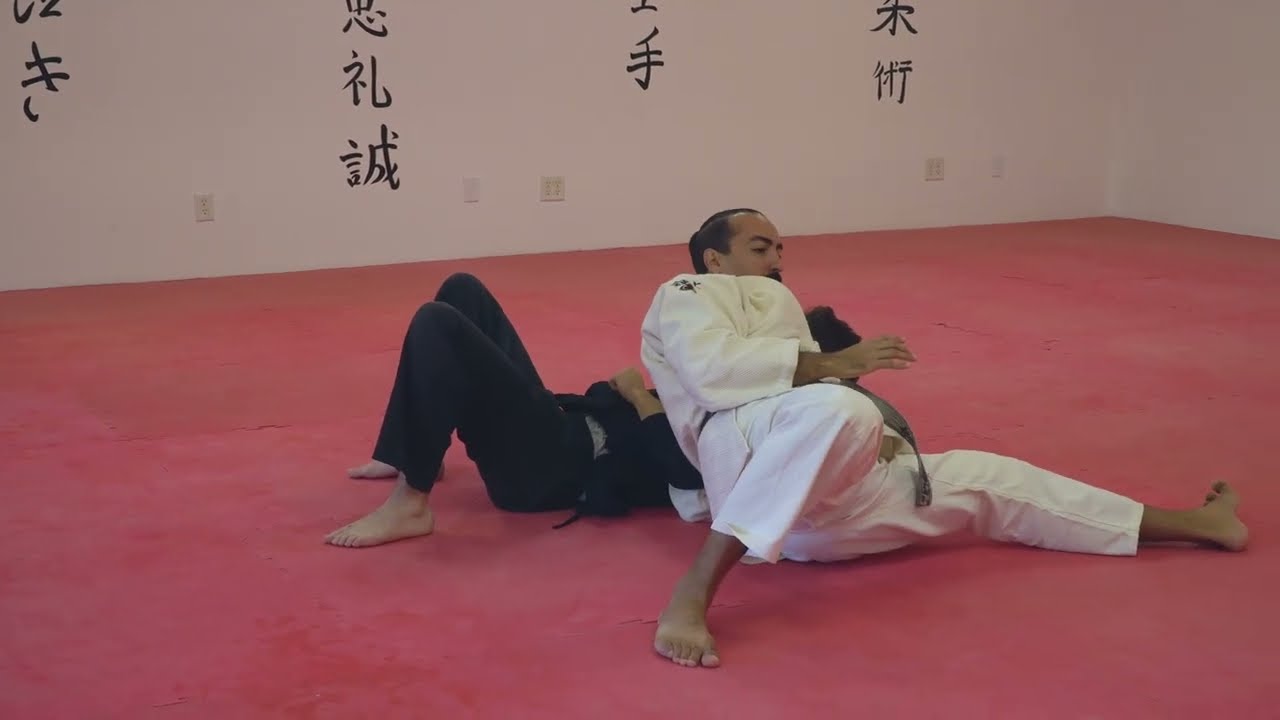
A class built this way doesn't feel remedial. It feels like real training, just taught with better pacing and more attention to safety. That's why BJJ works so well for fall prevention in Lindenhurst and nearby towns. It gives students a structure they can return to every week and improve inside.
Why the Right Instructor Changes Everything
The strongest program in the world still fails if the instructor can't read the room. In fall prevention training, the coach has to notice when a student is leaning, freezing, rushing, or losing control of a step. That takes a trained eye, patience, and a willingness to slow the class down when the movement quality drops.
Caio Terra is a strong benchmark for that kind of teaching. He's a 12-time IBJJF world champion, and his technical reputation reflects a style built on detail, precision, and efficient mechanics. That mindset matters here because older adults and beginners don't need flashy movement, they need the best possible use of their available balance, strength, and timing.
What separates a good instructor from a mediocre one
A good instructor breaks a movement into pieces, watches each piece, and corrects the one thing that changes the whole outcome. A mediocre one gives a cue and hopes the student adapts. In fall prevention work, hoping is not a method.
The best instructors also know how to scale without shame. They can make a drill easier without making it feel childish, and harder without making it unsafe. That balance is central to keeping people engaged, especially when the students are older adults who may already be wary of getting hurt.
The right coach makes safety look like skill, not restriction.
Experienced professors in a serious academy understand that fundamentals are not the beginner phase. Fundamentals are the craft. Base, posture, breathing, and controlled movement are what keep a student safe on the mat and, in many cases, on the stairs, in the kitchen, and when stepping off a curb.
Why teaching quality matters more than equipment
You don't need a fancy room to teach balance well. You need a clean floor, a clear sequence, and an instructor who can make the student's movement better in real time. That's why the person leading the class matters more than extra gadgets, machines, or trends.
In a place like Lindenhurst, where students may come from different towns and different backgrounds, that quality shows up in the details. The coach knows when to stop a drill, when to add support, and when to keep the student working a little longer. That kind of call can't be automated.
The right instructor turns fall prevention training into a skill-building practice instead of a generic workout. That's what makes the difference between people who merely attend class and people who move better.
Measuring Progress and Sustaining Long-Term Results
Progress in fall prevention training has to show up in the room, or people lose trust in the process. Re-testing the same basic tasks, watching attendance, and checking how confident the student feels all matter because fall prevention is a habit problem as much as a physical one. If the student vanishes for weeks at a time, the skill slips.
I look for changes that a student can feel and a coach can see. In a BJJ setting, that means cleaner stand-ups, steadier single-leg balance, better control when turning, and a calmer recovery after a small push or off-balance moment. When the student needs less hand support, hesitates less, or moves with more control, that is real progress.
What to track in real classes
Use the same baseline movements again after a period of training. Watch how easily the student stands up, balances on one leg, turns, and recovers from a small perturbation. If the student needs less hand support, moves more calmly, or hesitates less, that is measurable improvement.
A few practical markers matter in ordinary coaching:
- Balance control, whether the student stays upright without rushing.
- Movement confidence, whether the student asks fewer times for assistance.
- Attendance consistency, whether the student keeps showing up.
- Transfer quality, whether getting up and down from the mat looks smoother.
For a broader home-based lens on balance work, the internal senior balance improvement guide pairs well with this topic.
Why BJJ helps people stick with it
BJJ has built-in adherence tools that solo exercise usually lacks. Students return for class structure, community, visible progress, and clear technique milestones. That matters because the biggest threat to long-term fall prevention is not usually the exercise itself, it is inconsistency.
Implementation quality changes outcomes, not just exercise selection. The CDC compendium shows that community programs can produce different fall outcomes depending on how well they are delivered, and home safety work can reduce both falls and injuries in the right setting (CDC compendium). That variation is exactly why follow-through, coaching quality, and context matter.
A BJJ academy adds something generic fitness work usually cannot copy. Students keep training under a coach who can scale the drill, correct posture, and keep the work technical without turning it into a random workout. Caio Terra's method fits that mindset well, because precision, repetition, and clean fundamentals give older adults and beginners a path they can repeat without guesswork. That steady structure is what keeps people coming back long enough to keep the gains.
The student who keeps training under clear supervision is the student most likely to keep those gains. That is true in a BJJ academy and it is true at home. Consistency is the engine, and the coach keeps it running.