

You feel it the second a training partner gets to your leg. Your posture changes, your balance narrows, and for a moment it seems like you're deciding between hopping, falling, or panicking. That's where a lot of beginners lose the exchange.
A good whizzer changes that moment completely. In wrestling and in Brazilian Jiu-Jitsu, it gives you a practical way to turn a bad takedown situation into a controlled one. It also teaches a bigger lesson: the person who understands mechanical advantage usually beats the person who only tries to push harder.
That idea sits at the center of strong Jiu-Jitsu. It's also why the best instruction matters so much. A move like the whizzer looks simple from the outside, but small details decide whether it saves you or fails you. Around Lindenhurst and the surrounding Long Island communities within about ten miles, that difference matters for adults learning self-defense, parents choosing a program, and beginners trying to train safely and confidently.
Why BJJ Is the Ultimate Self-Defense Art on Long Island
A common self-defense problem isn't a movie-style punch exchange. It's someone closing distance, grabbing a leg, and trying to put you on the ground. If you don't understand frames, balance, and body positioning, strength starts to feel like the only answer.
That's exactly why Brazilian Jiu-Jitsu is widely recognized as the most effective martial art for one-on-one sparring, assuming both athletes have legitimate training and no extreme size or strength discrepancy, due to its submission grappling niche that enables smaller individuals to defend against larger opponents using mechanical advantage, as discussed in this BJJ effectiveness discussion. For people in Lindenhurst, Babylon, West Babylon, Copiague, North Babylon, Amityville, and nearby areas, that matters because real self-defense is about control under pressure, not flashy technique collections.

Why the whizzer belongs in a BJJ game
The wrestling moves whizzer conversation often gets treated like it belongs only to wrestlers. That's too narrow. In BJJ, the whizzer is one of the cleanest examples of using structure to stop forward pressure, protect your base, and set up your next move.
When a student learns it properly, they stop thinking, “How do I outmuscle this shot?” and start asking better questions:
- Where is my weight going so the attacker can't keep driving?
- Where is my arm placed so I'm gaining an advantage?
- How do I connect my hips and feet so the defense works with my whole body?
Those are pure Jiu-Jitsu questions.
A good whizzer isn't just an overhook. It's a lesson in how leverage beats force.
Why instruction matters more than memorization
A beginner can watch ten videos and still miss the point. They may copy the arm position but forget posture, angle, or head placement. Then they conclude the move “doesn't work.” Usually, the move worked fine. The detail was missing.
That's where an instructor changes everything. Caio Terra, the 12-time IBJJF world champion, built his reputation on technical precision, mechanical advantage, and intelligent problem solving rather than brute force. That approach fits the whizzer perfectly. You're not trying to win by yanking harder. You're using a small set of details to make the opponent carry bad position.
If you're exploring whether this approach translates to everyday protection, this look at BJJ for self-defense on Long Island is a useful starting point.
For students around Lindenhurst, that bigger picture matters. Learning the whizzer isn't about adding one wrestling trick. It's about learning how effective martial arts work.
Mastering Whizzer Mechanics and Proper Grips
You feel your partner latch onto a single leg. Your first reaction is often to clamp down with the arm and hope that holding tight will solve the problem. A good whizzer works differently. It uses position, angle, and weight so your whole body starts fighting the takedown instead of just your shoulder.
At Korfhage BJJ in Lindenhurst, we teach the whizzer the same way we teach the rest of Jiu-Jitsu under the Caio Terra approach. Small details create big effects. If your overhook is high, your posture is upright, and your feet are underneath you, the attacker has to carry a much worse position.
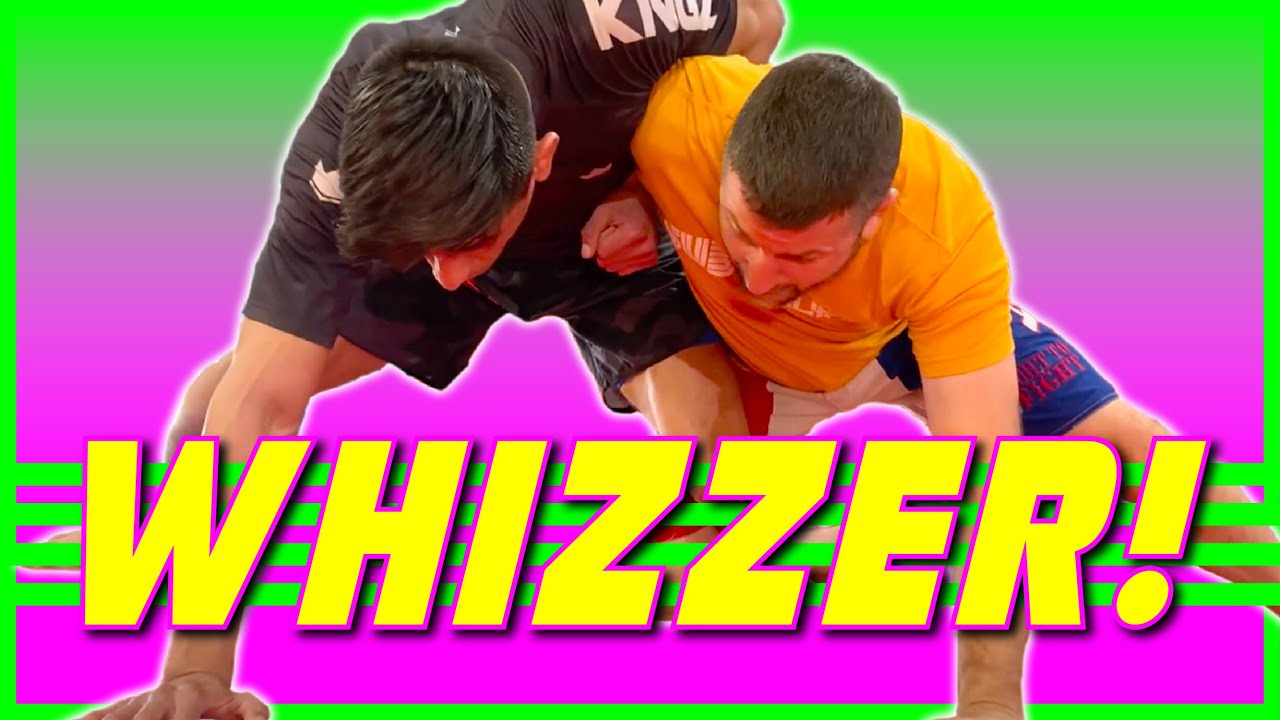
The arm position comes first. Your overhook needs to climb above your partner's elbow, not hang loosely around the triceps. That higher grip gives you a stronger point of control and makes it harder for them to keep their shoulder connected on the shot. A technical whizzer breakdown also emphasizes getting the overhook high rather than settling for a low, passive grip.

The three pieces that make the move work
A strong whizzer works like a chain connected from your hand to the mat. If one part is loose, the whole defense loses force.
Place the overhook high
Reach deep enough that your arm controls above the elbow. New students often stop halfway and end up carrying the attacker instead of disrupting them.Lift with timing, not panic
The whizzer is not a dead hang. There is a sharp upward pull that helps raise and disturb the attacker's shoulder line. That motion makes their grip and posture less stable. If you only squeeze and freeze, you give them time to keep climbing the leg.Keep your base organized
Your feet and hips decide whether the whizzer has real weight behind it. If your stance gets narrow or your posture folds, the arm position stops mattering as much.
Here's a visual example before reading the finer points.
What your lower body should do
Your arm starts the defense. Your legs and hips make it heavy.
Plant the foot on the whizzer side and keep your knee and hip active as you circle. Students get confused here because they focus on the overhook and forget the floor. The floor is part of the technique. If your foot is light, turned awkwardly, or hopping around, your partner can move you. If your foot is planted and your hips stay connected, your partner feels your weight drop into the exchange.
A simple coaching cue helps. Lift their arm, then sink your weight through your stance.
That cue fits the bigger picture of Caio Terra style Jiu-Jitsu. The goal is not to win an upper-body tug of war. The goal is to line up your body so a smaller adjustment creates a bigger result. If you want a clearer picture of how these standing skills fit into grappling training, this guide to wrestling for Jiu-Jitsu on Long Island gives helpful context.
A grip detail beginners miss
Your hand does not need to squeeze for dear life. Your shoulder pressure, elbow position, and body angle matter more than a frantic grip.
That usually surprises newer students. They expect the whizzer to feel like an arm exercise. In practice, it should feel more like hanging your weight in the right direction while staying balanced enough to move. At Korfhage BJJ, that is the lesson underneath the move. Good technique lets you stay calm, use structure, and solve the position with mechanics instead of force.
Applying the Whizzer in Live Sparring Scenarios
In live rolling, the whizzer usually shows up after a small mistake. Maybe your sprawl is late. Maybe your partner changed levels faster than you expected. Maybe you were too upright in hand fighting and gave up access to the leg.
That's why this move matters so much. It gives you a response after the exchange has already gone partly wrong.
Against the single leg
Your partner shoots, catches your leg, and starts climbing up. If you wait and think, you're behind. The useful trigger is simple: once you feel your leg trapped and your opponent connected under your center, the whizzer should come in immediately.
Your overhook goes high, your posture stays alive, and you circle instead of standing still. In good sparring rounds, you'll notice that the whizzer isn't just stopping the attack. It's also changing the attacker's head and shoulder position, which makes their finish harder and your next option easier.
A new student often hops backward in a straight line. That usually makes things worse. A more experienced grappler turns, circles, and builds angle.
Against a double leg that turns into a scramble
The double leg defense often starts with other tools, but scrambles don't stay neat. An opponent can switch off, climb to one side, or keep chasing the leg after the first attempt stalls. That's where the whizzer can become your emergency brake.
You might feel the attacker transitioning from two hands to one strong connection on the leg. The moment that happens, the position starts to look more like a single-leg battle. Your job is to recognize that shift and stop treating it like the original shot.
The whizzer works best when you treat it as a live position, not a frozen grip.
The local training reality
For students in Lindenhurst, Copiague, Babylon, West Babylon, and Amityville, this is the kind of detail that separates drilling from real progress. During live rounds, the athlete who recognizes the trigger early tends to stay calmer. The athlete who sees the position late ends up trying to “save it” with strength.
That's why coaches who understand both wrestling entries and BJJ reactions are valuable. They help students connect the moment of danger to the right response. Over time, the whizzer stops feeling like a trick and starts feeling like part of your posture.
Turning Defense into Offense with Whizzer Transitions
A strong whizzer doesn't just help you survive. It gives you a place to attack from. That's one of the reasons it fits so well with a Caio Terra style of Jiu-Jitsu. The best positions don't only block danger. They create choices.
When your opponent commits hard to a leg, they're often focused on finishing forward. If your whizzer disrupts their posture and forces them to carry your angle, you can start building offense while they're still thinking about the takedown.

High-value transitions from the whizzer
Some of the best follow-ups are simple and dependable:
Front headlock entries
If your pressure drops their posture and their head comes forward, the front headlock becomes available. That can lead to control, spin-behinds, and submission threats.Back takes on the turn
When the attacker chases too hard and their angle gets compromised, circling can expose their back. This doesn't require a flashy scramble. Often it comes from patient footwork.Kimura-style connections
In BJJ, overhook-based control can feed into upper-body attacks if the opponent's arm gets separated from their structure.Trips and off-balances
Once you make them carry your weight badly, their legs become easier to attack.
The shin whizzer adds another layer
Advanced students should also know that the position keeps evolving. Most tutorials omit the emerging trend of integrating the shin whizzer with low-line counters like the ankle pick or heel lift in collegiate and freestyle wrestling. Recent video footage shows top coaches combining the whizzer hook with immediate backward leg extension and heel lifting to force release, as shown in this video on shin whizzer counters.
That matters because it reinforces an important idea. Good defense doesn't stay passive for long. It redirects, creates angle, and starts solving the position offensively.
Why this fits the bigger Jiu-Jitsu picture
Caio Terra's approach has always rewarded precision over waste. The whizzer reflects that beautifully. You're not trying to “win the scramble” through chaos. You're taking one smart defensive connection and turning it into a platform.
A student who understands this begins to see takedown defense differently. The shot isn't only a threat. Sometimes it's the opening that gives you the exchange you wanted.
Avoiding Common Whizzer Mistakes and Pitfalls

A common scene in class looks like this. A student gets the overhook, feels safe for half a second, then still gets run over on the single leg. The problem usually is not effort. The problem is that the whizzer only works when your arm, shoulder, hips, and feet all point the same message into your partner's structure.
At Korfhage BJJ, we teach this the same way we teach the rest of the Caio Terra system. Small details create big control. If one piece drifts out of place, the move starts to feel weak even though you are trying hard.
Mistakes that show up all the time
Here are the errors beginners make most often, and how to clean them up:
They hook too low
A low overhook often clamps around the arm without affecting the attacker's posture. Bring the connection higher so your shoulder pressure and body position can matter.They stop moving their feet
The whizzer is not a parking brake. Your feet keep adjusting so your hips stay underneath you and your angle keeps improving.They lean sideways instead of applying organized pressure
Leaning feels heavy for a moment, but it usually gives away balance. Good pressure comes from posture, hip position, and shoulder connection working together.They let the arm work by itself
Your overhook should connect to your ribs and trunk. If the arm floats away from the body, you lose the kind of structure that makes grappling efficient.
The footwork mistake that traps beginners
Foot position causes a lot of failed whizzers. New students often step in too deep or leave their leg hanging where the attacker can collect it. A better habit is to keep your base outside and active, so your hips can turn and your weight can drop into the overhook instead of getting stuck.
That detail matters in self-defense too. If your feet are misplaced, you cannot redirect force well, and the exchange turns into a strength contest. If you want to build that kind of pressure-tested base, our self-defense classes in Lindenhurst give you live reps with coaching on the details people miss.
One simple check helps a lot. Ask yourself, “Is my whole body reinforcing this whizzer?”
If the answer is yes, the move starts to feel different. It feels less like hanging on and more like steering. That is the bigger lesson here, and it fits the Korfhage BJJ room well. Good jiu-jitsu and good wrestling defense both come from alignment, timing, and using position correctly instead of forcing the moment.
Learn from the Best at Korfhage BJJ in Lindenhurst
A blog post can help you recognize the position. It can't correct your timing, fix your stance, or tell you when your pressure is misplaced by two inches. That's why instructor quality matters so much, especially with a move like the whizzer that depends on feel.
For students in Lindenhurst and nearby Long Island communities such as Babylon, West Babylon, Copiague, North Babylon, and Amityville, the value of training is having someone watch the details you can't see in yourself. A strong coach shortens the learning curve. A great coach helps you understand why the move works, which means you can adapt it under pressure.

Why a technical academy matters
The whizzer is a perfect example of the kind of move that benefits from a technical teaching culture. You need reps, but you also need correction. That fits the broader Caio Terra philosophy well. As a 12-time IBJJF world champion, Caio Terra is known for a method built on mechanical advantage, precision, timing, and intelligent structure. Students don't just collect moves. They learn how positions connect.
That matters for beginners, but it also matters for experienced grapplers. A room that values clean mechanics usually produces students who move with more confidence and less wasted effort.
BJJ gives more than takedown defense
People often walk in because they want self-defense or fitness. They stay because the training improves much more than one skill.
A few important facts stand out:
| Benefit | What the evidence says |
|---|---|
| Safety | BJJ is one of the safest full-contact martial arts, with an injury rate of approximately 9 to 39 per 1,000 athlete exposures, according to this BJJ safety summary. |
| Cardio | BJJ athletes show VO2max values between 42 and 52 mL/kg/min, which reflects strong aerobic fitness in this sports science review of BJJ athletes. |
| Mental and physical health | Regular BJJ training improves cardiovascular health, strength, endurance, and has shown sustained reductions in PTSD symptoms among veterans in this scoping review on BJJ and health outcomes. |
For people searching locally, that's why interest keeps growing. BJJ gives practical self-defense, demanding exercise, and a structured learning environment. If you're looking for a self-defense class near Lindenhurst, those are the qualities worth prioritizing.
The whizzer is just one move, but it represents the whole point of good Jiu-Jitsu. Employ mechanical advantage. Stay composed. Learn from someone who can teach the details.
If you're in Lindenhurst or nearby on Long Island and want to learn the wrestling moves whizzer inside a complete, mechanics-based Brazilian Jiu-Jitsu system, Korfhage BJJ | Caio Terra Academy Long Island offers beginner-friendly instruction, a clean and supportive environment, and a $99 unlimited classes trial so you can experience high-level coaching for yourself.