
Why Brazilian Jiu-Jitsu is the Best Martial Art for Police in Lindenhurst
In an era of heightened scrutiny and complex public interactions, a police officer’s training is their most critical asset. For officers in Lindenhurst, NY, and the surrounding areas like Babylon, Copiague, and West Islip, the need for effective, non-lethal control techniques has never been greater. Choosing the right martial art isn’t about learning to fight; it’s about gaining the skills to de-escalate, control, and protect—both the public and themselves—with confidence and precision. The goal is to end a confrontation safely and professionally, minimizing injury to everyone involved.
This article explores the best martial arts for police, but it will place a special emphasis on why Brazilian Jiu-Jitsu (BJJ) is the most effective and practical choice for modern law enforcement. The key to unlocking its full potential lies with a good instructor who understands how to adapt the art for street encounters. This is where the methods of legends like 12-time IBJJF world champion Caio Terra become invaluable. His technical, problem-solving approach proves that superior technique, not just size or strength, is the ultimate tool for control.
Beyond mastering techniques, a strong foundation of physical fitness is paramount. For example, incorporating dedicated core strengthening exercises can significantly contribute to an officer’s overall resilience and injury prevention, which is critical for effective training and field performance. While we will cover other arts like Judo and Wrestling, our focus will remain on how they complement BJJ and why, for officers in the Lindenhurst area, a BJJ-centric training regimen under a qualified instructor is the gold standard for officer safety.
1. Brazilian Jiu-Jitsu (BJJ)
Brazilian Jiu-Jitsu is unequivocally the best martial art for police officers because it prioritizes control and leverage over brute strength. BJJ is a grappling art focused on taking an opponent to the ground, gaining a dominant position, and using joint locks or chokeholds to force a submission. For law enforcement in Lindenhurst and Suffolk County, its value lies in providing a structured system for subduing a non-compliant individual with the minimum force necessary. An officer trained in BJJ can manage a resisting suspect safely, reducing the risk of injury and aligning perfectly with modern use-of-force policies.

The art’s effectiveness was proven against larger opponents, but its modern evolution under instructors like 12-time IBJJF World Champion Caio Terra makes it exceptionally suited for law enforcement. Terra’s technical, problem-solving approach emphasizes that with the right technique, anyone can control a situation, regardless of size. Finding a local Lindenhurst-area school that teaches this method is critical. A good instructor doesn’t just teach moves; they teach a system of control that works under pressure, a life-saving tool on the street.
Why BJJ is the Most Effective Art for On-Duty Situations
The core principles of BJJ are directly applicable to an officer’s daily challenges in a way no other martial art can match. Instead of resorting to strikes that cause harm and legal repercussions, BJJ offers a clear path to control.
- Dominance on the Ground: A high percentage of altercations end up on the ground. BJJ provides the skills to not only survive but dominate from any position, including from one’s back.
- Confidence Leads to De-escalation: An officer confident in their ability to physically control a situation is less likely to prematurely escalate to a taser or firearm. This confidence is the foundation of true de-escalation.
- Superior Arrest and Restraint: BJJ techniques for controlling limbs, transitioning between positions, and applying safe restraints make handcuffing a resisting suspect far more manageable and safer.
The Importance of a Good Instructor in the Lindenhurst Area
For officers in Lindenhurst, Babylon, and Copiague, finding a qualified instructor is the most crucial step. A good coach, especially one aligned with the Caio Terra Association, will adapt BJJ for on-duty application, focusing on weapon retention, environmental awareness (like curbs and walls), and situational control. To learn more about how BJJ is tailored for law enforcement, you can explore specialized training programs. Scenario-based drills that simulate real-world encounters are essential. This ensures that the techniques become second nature under pressure, building the muscle memory needed for effective and safe suspect management.
2. Judo
Judo, meaning “the way of gentleness,” is a powerful Japanese martial art that serves as an excellent complement to a BJJ-focused training program. Founded by Jigoro Kano, its core principle is using an opponent’s own force against them. The art focuses on dynamic throws and takedowns (nage-waza) to bring a resisting individual to the ground efficiently. For an officer in the Lindenhurst area, this means being able to neutralize a standing threat and transition the fight to the ground, where BJJ techniques can take over.

The effectiveness of Judo is well-documented in law enforcement worldwide. While Judo offers superb standing control, it pairs perfectly with arts like BJJ, which excels on the ground. A good instructor will show you how a Judo throw is not the end of an encounter, but the beginning of ground control. The technical depth of a BJJ master like Caio Terra, a 12-time IBJJF World Champion, provides the essential skills needed for control after a Judo throw is executed, creating a complete grappling system for officers.
Why Judo is a Key Supplement to BJJ
Judo techniques are designed for decisive action on the feet. An officer trained in Judo can close the distance and gain physical control, setting up a dominant position on the ground.
- Standing Control & Takedowns: Judo provides an officer with the tools to off-balance and throw a suspect who is standing, a common scenario in arrests.
- Safety Through Ukemi: A fundamental part of Judo is learning how to fall safely (ukemi). This skill is invaluable for an officer who may be pushed or tripped, helping prevent injuries during a struggle.
- Force Management: Judo throws allow for a measured and appropriate response, but the encounter is rarely over. This is where BJJ takes over.
Practical Implementation for Officers in the Lindenhurst Area
For law enforcement in Lindenhurst, West Babylon, and surrounding towns, effective training means adapting Judo to the street and integrating it with BJJ. This involves modifying grips for uniforms and training to retain your firearm during a close-quarters grappling exchange. Combining Judo’s powerful throws with the ground-control expertise taught in specialized law enforcement BJJ programs creates an incredibly well-rounded officer. A solid Judo foundation provides the takedown, and BJJ provides the ultimate control once the fight is on the ground.
3. Krav Maga
Krav Maga is a military self-defense system developed in Israel with one goal: to neutralize threats as quickly as possible. Unlike traditional martial arts, it is not a sport and has no rules. For police officers, its value is in addressing direct, life-or-death scenarios like weapon attacks. However, its aggressive, strike-heavy nature often conflicts with modern use-of-force policies that prioritize control over injury.

Founded by Imi Lichtenfeld, Krav Maga has been adopted by various military and police agencies. While its aggressive nature is its strength, it’s also a point of consideration. For an officer grounded in the problem-solving, control-based methods of a BJJ expert like Caio Terra, Krav Maga’s striking-heavy system can feel like an opposing philosophy. BJJ provides a scalable ladder of force, from simple positional control to a submission. Krav Maga often starts at a higher, more damaging level of force, which can create legal and departmental issues for an officer in Lindenhurst.
Why Krav Maga is a Situational Tool, Not a Foundation
Krav Maga prepares officers for worst-case scenarios where de-escalation has failed and lethal force may be justified.
- Weapon Defense: It provides specific, drilled responses for defending against knives and guns.
- Aggressive Counter-Attacks: The system teaches officers to go on the offensive to disrupt an attacker’s momentum.
- Stress Inoculation: High-intensity drills simulate the chaos of a real confrontation.
Practical Implementation for Lindenhurst Officers
Officers in Lindenhurst and nearby Long Island towns should view Krav Maga as a supplemental tool, not a foundational art like BJJ. Its principles are useful for sudden, violent attacks, but BJJ is far more applicable to the day-to-day encounters requiring control and restraint. Many find Krav Maga pairs well with a control-based art like BJJ, offering a complete skill set. For those wanting a system focused on personal safety in any context, you can explore the different philosophies behind the best martial arts for self-defense. Ultimately, BJJ provides the core system for control, while Krav Maga offers solutions for extreme-threat scenarios.
4. Hapkido
Hapkido is a Korean martial art that provides a dynamic system for control through joint manipulation, throws, and pressure points. Its name translates to “the way of coordinating energy,” and this principle is central to its application. Hapkido teaches practitioners to redirect an opponent’s force, which can be useful. However, many of its techniques are complex and can be difficult to apply against a fully resisting opponent, making it less reliable than BJJ under pressure.
The art was developed by Choi Yong-Sool and has been adopted by the South Korean National Police Agency. While Hapkido provides a broad range of techniques, its core focus on joint locks and pins can be less effective than the comprehensive ground control system offered by Brazilian Jiu-Jitsu. The fluid, often compliant nature of Hapkido training can create a false sense of security for officers facing a real, non-compliant suspect on the streets of Lindenhurst or Babylon.
Why Hapkido is a Limited Option
Hapkido’s techniques are designed for efficiency, but their complexity can be a drawback in a chaotic situation.
- Joint Manipulation and Control: Small joint locks are Hapkido staples, but they require precision that may be unavailable in a struggle.
- Force Redirection: Redirecting energy is a sound principle, but it is also a core tenet of more proven arts like Judo and BJJ.
- Seamless Transitions: The art trains practitioners to move between striking and grappling, but lacks the depth of a specialized art like BJJ on the ground.
Practical Implementation for Long Island Officers
For officers in Lindenhurst and nearby towns, Hapkido’s value is limited when compared to BJJ. To be effective, Hapkido requires an instructor who prioritizes pressure-testing and realistic applications. However, for a complete control system, especially once a fight goes to the ground, supplementing Hapkido with a grappling-focused art like BJJ is mandatory. The ground-fighting specialization of BJJ, refined by instructors like Caio Terra, provides a necessary depth and reliability that Hapkido does not cover as extensively. Most officers would be better served by starting and focusing on a BJJ-first curriculum.
5. Muay Thai
Muay Thai, “the art of eight limbs,” is a powerful striking discipline from Thailand that uses fists, elbows, knees, and shins. While excellent for conditioning and understanding distance, its primary goal is to cause damage through striking. For a police officer in the Lindenhurst area, whose job is to control, not injure, this makes Muay Thai a useful but secondary skill set. The legal and ethical risks of using powerful strikes are significant.
The art’s effectiveness is proven in sport and military applications. However, for police work, its direct application requires significant adaptation. An officer’s goal is control, not a knockout. The core system should be based on grappling; striking should be a last resort. Therefore, Muay Thai is a valuable but incomplete system on its own for law enforcement.
Why Muay Thai is a Supplemental Skill
Muay Thai’s striking system gives officers options, but it must be applied with restraint. Its true value for police lies in defensive positioning and fitness.
- Distance Management: Using push kicks and footwork, an officer can create a reactionary gap, preventing a suspect from closing in.
- Clinch Control: The Muay Thai clinch offers a method for controlling a suspect’s upper body at close range, which can transition into a Judo throw or BJJ takedown.
- Superior Conditioning: The rigorous training builds exceptional cardiovascular endurance.
Practical Implementation for Officers in the Lindenhurst Area
For officers in Lindenhurst, Copiague, and Babylon, Muay Thai is best seen as a component of a broader defensive tactics program, with BJJ as the base. The emphasis should be on using its tools to create space and manage threats rather than engaging in a striking exchange.
To be truly effective, Muay Thai skills must be integrated with a grappling art like BJJ. This combination ensures an officer is prepared for any scenario. A comprehensive training approach allows an officer to use Muay Thai to control distance, but seamlessly transition to BJJ techniques for safe restraint once the gap is closed. This layered skill set is a hallmark of modern police training.
6. Aikido
Aikido is a Japanese martial art centered on blending with an opponent’s motion and redirecting their force. Developed by Morihei Ueshiba, Aikido avoids directly opposing an attack. While its philosophy of de-escalation is appealing, its techniques are often criticized for lacking effectiveness against a fully resisting, non-compliant opponent. The flowing, cooperative nature of much of its training does not adequately prepare an officer for the gritty reality of a street confrontation.
The art was popularized by its founder, Morihei Ueshiba, and promotes a philosophy of harmony. While its principles of joint manipulation are valuable in theory, their real-world application for law enforcement is highly questionable compared to BJJ or Judo. The problem-solving, pressure-tested methods of BJJ, as taught under a lineage like Caio Terra’s, offer a far more reliable path to control against a larger, stronger individual.
Why Aikido is Not Recommended as a Primary Art
Aikido’s core techniques offer a different perspective on engagement, but one that often fails under pressure.
- Joint Control and Redirection: Aikido specializes in wrist locks that require precise timing and a cooperative partner, elements absent in a real fight.
- De-escalation Principles: The art’s philosophy is admirable, but physical techniques must work when philosophy fails.
- Weapon Disarms: Aikido’s weapon disarms are notoriously difficult to apply against a determined, resisting attacker.
Practical Implementation for Officers
For officers in the Lindenhurst area, Aikido is not a recommended path for practical defensive tactics. Its techniques are too complex and unreliable for high-stress situations. Officers would be far better served dedicating their limited training time to Brazilian Jiu-Jitsu, an art proven time and again by law enforcement agencies to provide real, functional skills for controlling resisting suspects. A good instructor is key, and finding one in the Lindenhurst area who teaches a proven BJJ system is the most direct path to officer safety.
7. Wrestling (Folkstyle, Freestyle, and Greco-Roman)
Wrestling is a foundational martial art for law enforcement, built on takedowns, positional dominance, and physical control. For police officers, wrestling provides the explosive tools needed to close the distance and take a resistant suspect to the ground. It is an excellent complement to Brazilian Jiu-Jitsu, providing the “delivery system” for BJJ’s superior ground control and submission techniques.
The effectiveness of wrestling is undeniable. Many top-tier BJJ practitioners, including those who train under masters like Caio Terra, have a strong wrestling background. This blend of wrestling’s takedown prowess with BJJ’s submission-oriented ground game creates a nearly complete grappling skill set. However, wrestling alone is incomplete for a police officer, as it lacks submission techniques for finishing a restraint and doesn’t teach how to fight effectively off one’s back—a BJJ specialty.
Why Wrestling is a Powerful Base for BJJ
Wrestling directly addresses the initial, chaotic phase of a physical confrontation.
- Takedown Dominance: Wrestling offers the most developed system for taking a person from their feet to the ground.
- Positional Control: Once on the ground, wrestling teaches how to “ride” an opponent, controlling their hips and posture.
- Building Physicality: The intense nature of wrestling builds the raw strength and endurance needed to win a physical encounter.
Practical Implementation for Officers in the Lindenhurst Area
For officers in Lindenhurst and nearby Long Island areas, incorporating wrestling into a BJJ-centric training regimen provides a powerful base. An instructor who understands both arts can show how to chain wrestling takedowns directly into BJJ control positions and safe restraints. While wrestling is one of the best martial arts for police, combining it with the technical depth and submission game of BJJ provides the most complete and effective solution for modern law enforcement challenges.
8. Defensive Tactics and Applied Law enforcement Combatives
Defensive Tactics (DT) and Law Enforcement Combatives represent specialized training designed from the ground up for police applications. These integrated programs select the most effective techniques from various disciplines, with a heavy and increasing emphasis on Brazilian Jiu-Jitsu for its proven control capabilities. The entire system is then pressure-tested against realistic police scenarios.
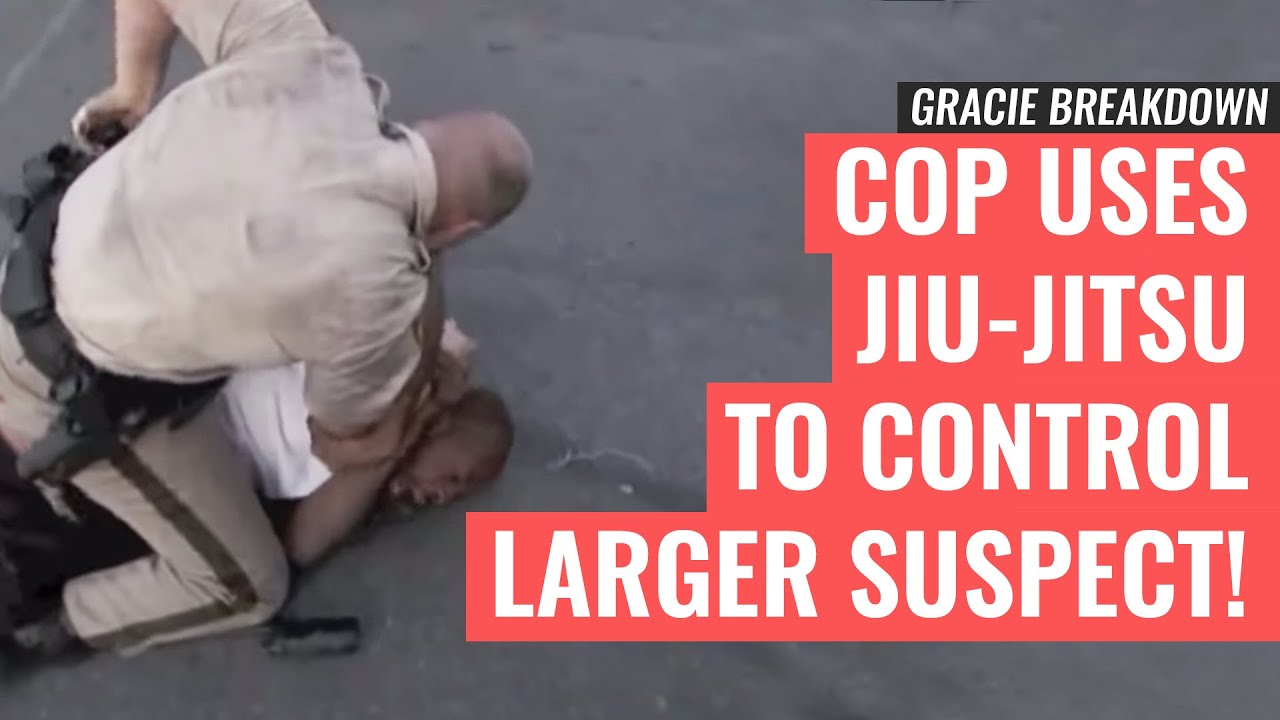
These systems are refined and popularized by leading institutions and are increasingly built around a BJJ core. The problem-solving methods taught by instructors like Caio Terra—who proved technique can overcome size—are fundamental to modern DT, giving officers the confidence to control a suspect without resorting to excessive force. A good instructor in the Lindenhurst area will base their law enforcement program on these proven BJJ principles.
Why DT/Combatives are Essential for On-Duty Situations
DT programs are built to function within the legal and ethical boundaries of law enforcement.
- Integrated Skill Set: Officers learn to transition smoothly between communication and empty-hand control, all within a BJJ-based framework.
- Policy and Legality: Every technique is taught with direct reference to use-of-force continuums.
- Scenario-Based Training: DT emphasizes drills that simulate real-world encounters that officers face in Suffolk County.
Practical Implementation for Long Island Officers
For officers on Long Island, it is critical to seek out ongoing training from instructors with verified law enforcement experience who understand the specific threats faced in communities like Lindenhurst, Babylon, and Copiague. A quality program will center its physical techniques on BJJ for control. To get a better sense of how these specialized skills are taught, you can learn more about law enforcement defensive tactics training. Regular, consistent practice is necessary to maintain proficiency under stress.
8 Martial Arts Compared for Police
| Practice | 🔄 Implementation Complexity | ⚡ Resource Requirements | ⭐ Expected Outcomes | 💡 Ideal Use Cases | 📊 Key Advantages |
|---|---|---|---|---|---|
| Brazilian Jiu-Jitsu (BJJ) | Moderate–High; months of consistent training and live rolling | Mats, regular training partners, gi/no‑gi, qualified instructor | ⭐⭐⭐⭐⭐ Highly effective for restraint and ground control | One‑on‑one arrests, controlled restraint, de‑escalation in physical confrontations | Positional control, submissions, scales to size, low‑impact training |
| Judo | Moderate; technical throws and ukemi require safe progression | Large padded area, partners for throwing practice, coach | ⭐⭐⭐⭐ Excellent takedown supplement to BJJ; incomplete on its own | Standing confrontations, quick takedowns to transition to ground control | Safe falling training, explosive throws, strong standing control |
| Krav Maga | Low–Moderate; simple drills but needs realistic scenario work | Minimal equipment, scenario props, instructors with LEO/military background | ⭐⭐⭐ Situational tool for extreme threats; high risk of excessive force | Armed suspects, multiple attackers, high‑stress/real‑world threats | Direct techniques, weapon disarming, stress inoculation |
| Hapkido | High; complex circular motions and joint manipulations take time | Partners, weapons training tools, experienced instructor | ⭐⭐ Unreliable against resisting opponents; not recommended | Joint control, redirecting force, combined striking/grappling needs | Leverage‑based locks, throws, weapon defense integration |
| Muay Thai | Moderate; heavy conditioning and repetitive striking practice | Gloves, pads, clinch partners, conditioning equipment, space | ⭐⭐⭐ Good supplemental skill; high risk for use of force issues | Distance management, stopping aggressive attacks, officer fitness | Powerful strikes, clinch control, superior conditioning |
| Aikido | High; techniques assume compliant partners and precise timing | Partner practice, ukemi training, weapons for forms, skilled instructor | ⭐ Not recommended for practical police application | De‑escalation programs, non‑violent control, community training | Circular blending, joint manipulation, minimal‑force philosophy |
| Wrestling (Folk/Freestyle/Greco) | Moderate; intense drilling with continuous resistance | Mats, many partners, strength/conditioning resources | ⭐⭐⭐⭐ Excellent takedown base for a BJJ program | Explosive takedowns, control transitions, foundational combatives | Explosive power, balance, live resistance training; easy integration with BJJ |
| Defensive Tactics & Applied LE Combatives | Variable; tailored curricula, ongoing refreshers required | Scenario props, training ranges, qualified LEO instructors, policy integration | ⭐⭐⭐⭐⭐ Most practical when built on a BJJ foundation | Departmental training, use‑of‑force compliance, integrated response to threats | Multi‑disciplinary, scenario‑based, de‑escalation + weapons/retention focus |
The Decisive Advantage: Why BJJ is the Top Choice for Officers in Lindenhurst
After exploring a wide range of disciplines, a clear conclusion emerges for modern law enforcement in Lindenhurst and its surrounding communities. While other systems offer situational tools, one art stands alone as the foundational skill set for officer safety, control, and legal defensibility: Brazilian Jiu-Jitsu.
The core value of BJJ is its direct alignment with an officer’s primary objective: control. A physical encounter on the street is unpredictable. BJJ is the only martial art singularly focused on dominating and controlling a resisting opponent on the ground, where a majority of altercations end. Unlike striking-based arts, its goal isn’t to cause injury but to neutralize threats through superior positioning and leverage. This makes it the single best martial arts for police.
The Instructor: The Critical Link to Street-Ready Skills
However, simply signing up for any BJJ class is not the answer. The effectiveness of this art is completely dependent on the quality and context of the instruction. An instructor is the crucial filter between technique and application. For officers in Lindenhurst, West Islip, or Babylon, this is even more important. A good instructor must understand:
- Weapon Retention: How do you apply a technique while protecting your firearm?
- Environmental Hazards: How do you adapt when you’re on concrete instead of a mat?
- Tactical Gear: How does a duty belt and vest impact your movement?
This is precisely why the teaching philosophy of a master like Caio Terra, a 12-time IBJJF World Champion, is so relevant. His system is built on the principle that technique and intelligence must overcome size and strength. It’s a problem-solving approach perfect for officers who cannot rely on being bigger or stronger than every person they encounter. For police in Lindenhurst, Babylon, and Copiague, finding a local academy that embodies this world-class, technically-driven methodology is not just a benefit; it is a necessity for officer safety and career longevity.
Key Insight: The best martial arts training for police isn’t about learning moves. It’s about building a conceptual framework for controlling chaos. It’s about having an instructor who can translate sport-proven techniques into street-viable solutions that protect both the officer and the public. This is why a qualified BJJ instructor is paramount.
Ultimately, investing in high-quality BJJ training is an investment in confidence, safety, and professionalism. It provides a reliable system for managing non-compliant individuals with the minimum force necessary, drastically reducing the risk of injury and legal repercussions. In a profession where split-second decisions have lifelong consequences, the control and composure learned on the mats are invaluable. Your training is your partner on every call; make sure it is the most reliable one you have.
If you are a law enforcement professional in Lindenhurst or the surrounding Long Island communities, your training is your lifeline. At Korfhage BJJ | Caio Terra Academy Long Island, we provide specialized instruction rooted in the world-champion principles of Caio Terra, adapted specifically for the realities of your job. Visit us at Korfhage BJJ | Caio Terra Academy Long Island to learn how our dedicated law enforcement programs can give you the decisive advantage you need on the street.