

The question usually starts subtly. You're driving back through Lindenhurst after work, or getting off the train, and you know your current routine isn't doing enough. The gym feels repetitive. Running helps a little, but it doesn't build confidence. You want to feel stronger, move better, and know you can handle yourself if life gets messy.
That's where Brazilian Jiu-Jitsu stands apart.
When people ask what Brazilian Jiu-Jitsu is good for, they're usually asking about more than martial arts. They want practical self-defense, real fitness, sharper focus, and a place where they can train with purpose. For adults and families in Lindenhurst and nearby communities like Babylon, Copiague, West Babylon, Amityville, Farmingdale, and Massapequa, BJJ answers all of that in one system.
It's also widely regarded as the most effective martial art for real-world situations because it teaches control, body mechanics, and decision-making under pressure. Done well, it changes far more than your ability to grapple. It changes how you carry yourself.
Beyond the Gym A New Path to Strength in Lindenhurst
A lot of adults around Lindenhurst start in the same place. They're tired, busy, a little stiff, and they want something that feels useful. Not another random workout. Not a class where nobody knows their name. Something that improves the body and the mind at the same time.

Brazilian Jiu-Jitsu gives you that. It's a grappling art built around technique, timing, base, pressure, and body mechanics. You learn how to control another person without needing to be the biggest or strongest one in the room. That makes it useful from day one, even for beginners who haven't trained before.
Why it connects with Long Island adults
People in Lindenhurst, North Lindenhurst, Babylon, and Copiague don't need more noise. They need training that pays off in daily life. BJJ does that because every class asks something real from you.
- Your body works hard: You move, grip, frame, bridge, rotate, and carry your weight with intention.
- Your mind stays engaged: Every round is problem-solving, not autopilot.
- Your confidence becomes earned: You stop guessing what you'd do under pressure.
That combination is rare.
Practical rule: The right martial art shouldn't just make you sweat. It should make you more capable.
More than fighting
People often think BJJ is only for competitors or tough personalities. It isn't. Good training helps ordinary people become more composed, more mobile, and harder to intimidate. That includes parents, commuters, professionals, students, and older adults who want a smarter path to strength.
Around Lindenhurst and the surrounding towns within about ten miles, that matters. People want a local place to train consistently without needing to drive across the island. They want structure, not chaos. They want classes that welcome beginners and still hold a high technical standard.
That's what makes Brazilian Jiu-Jitsu such a strong fit for this community. It gives people a clear path forward when they're ready for more than another workout.
The Most Effective Martial Art for Real-World Self-Defense
If you strip away hype and ask what works when someone bigger, stronger, or more aggressive puts hands on you, BJJ has the clearest answer. It teaches how to survive, control, and neutralize a physical confrontation through advantageous body mechanics and positioning.

A core reason BJJ is so effective is simple. It doesn't depend on winning a speed contest or landing a perfect punch. It teaches you to close distance, improve your position, break balance, and apply pressure in a way that takes away the other person's options.
Research summarized by Easton BJJ notes that a 140-pound practitioner can mechanically control a 200-pound aggressor by employing mechanical advantage and precise body positioning, and that regular BJJ training builds functional strength through consistent drilling of grappling movements like sweeps, takedowns, and submissions through this explanation of BJJ's physical and mental benefits.
What actually makes it work
In real self-defense, the key tools aren't flashy.
| Principle | What it means in practice | Why it matters |
|---|---|---|
| Leverage | You use frames, angles, and body mechanics instead of raw force | Size matters less |
| Positioning | You work to safer, stronger positions like top control or back control | Control comes before submission |
| Pressure | You make the other person carry your weight and react poorly | Their energy drops fast |
This is why BJJ is so practical for adults in Lindenhurst, Babylon, and West Babylon who want something they can train and remember under stress.
A good class also teaches restraint. In a lot of situations, you don't need to strike somebody. You need to stay safe, create control, and de-escalate. BJJ is unusually strong there because it gives you options between doing nothing and causing serious damage.
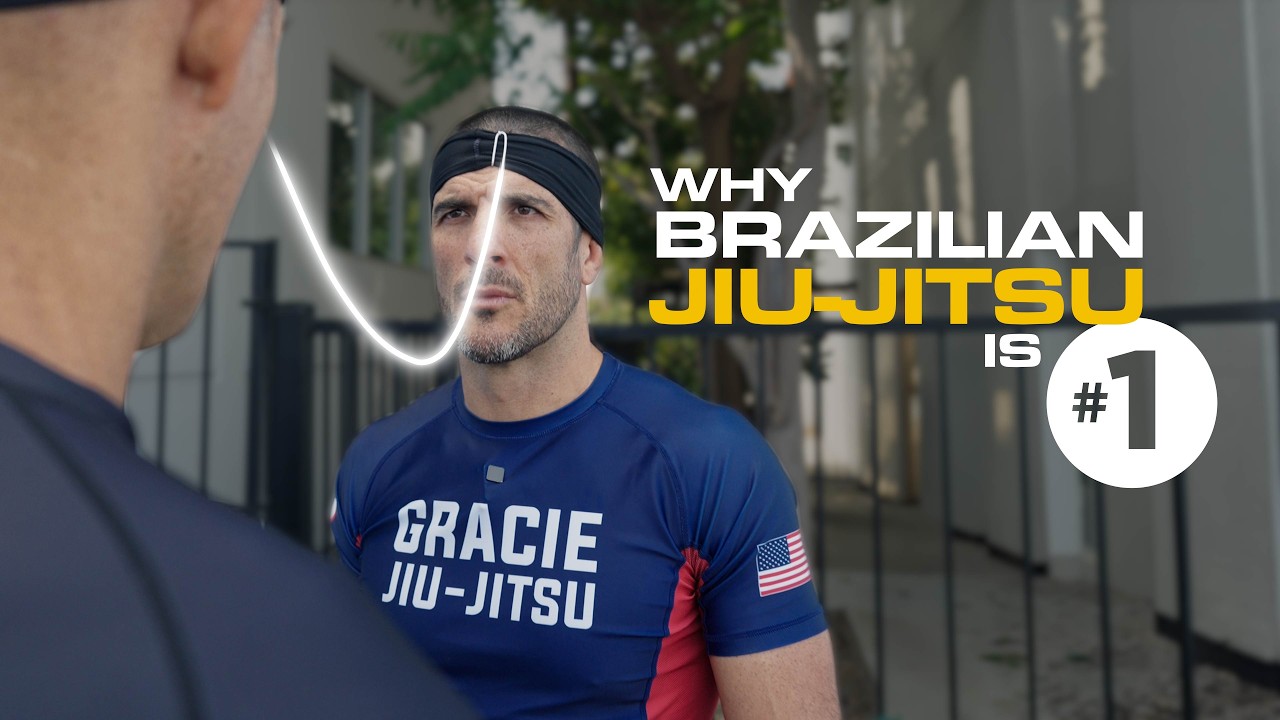
Later in the section, it helps to see the mechanics in motion.
The honest trade-off most articles skip
BJJ is the most effective martial art for one-on-one control. That doesn't mean grappling is the answer to every threat.
If multiple attackers are involved, going to the ground can become a liability. That's one reason experienced practitioners speak carefully about context. Good self-defense training doesn't sell fantasy. It teaches when to engage, when to disengage, and when distance is safer than control. If your work involves risk management, situational awareness, or protective roles, broader reading on navigating Canadian security challenges is useful because it frames self-defense as decision-making, not just technique.
Don't confuse “effective” with “automatic.” A technique works only when the situation fits it.
For a deeper local look at how this applies on the mat and off it, read whether BJJ is good for self-defense. The short version is this. BJJ is unmatched for controlling one person at close range, but smart training includes judgment, awareness, and exit strategies.
A Powerful Engine for Fitness and Lifelong Health
Some people start Brazilian Jiu-Jitsu for self-defense and stay because it gets them into the best shape of their life. Others start because they're bored with the gym and want a workout that doesn't feel empty. Both paths lead to the same place. BJJ is one of the few training methods that combines conditioning, strength, mobility, and mental engagement in one class.

The big difference is that BJJ gives effort a job. You aren't just burning time on a machine. You're drilling movements, learning positions, and applying them against resistance. That keeps people consistent because class has a purpose beyond calories.
What the training does to your body
The verified fitness data is strong. According to this summary of BJJ training benefits, practitioners burn up to 600 calories per 60 to 90-minute class, lose 2 to 3 pounds weekly, and 75% report reduced body fat after six months. The same source states that cardiovascular health improves by 15% in just three months, and flexibility increases by 25% after the same period.
Those numbers line up with what makes BJJ physically demanding. You're changing levels, using your hips, stabilizing through awkward positions, and sustaining effort while someone actively resists you.
Why people stick with it longer than standard workouts
Traditional fitness works. The problem is adherence. Many adults in Lindenhurst, Farmingdale, and Massapequa stop because the routine gets stale. BJJ solves that by making each class interactive and skill-based.
A simple comparison helps:
- Treadmill work: Good for straight-line conditioning, but mentally repetitive.
- Weight training: Excellent for strength, but it often misses the live problem-solving element.
- BJJ training: Builds strength, endurance, mobility, and coordination while keeping your attention locked in.
That's a major reason people keep showing up.
Training insight: The best fitness plan is the one you'll still be doing a year from now.
For adults thinking long term, strength work outside the academy can also support healthy aging. A thoughtful guide to strength longevity pairs well with grappling because it focuses on staying capable over time rather than chasing short-term intensity.
If your goal is a more practical approach to exercise, fitness-focused martial arts training is worth exploring. BJJ works because it improves your engine while teaching your body how to move with purpose.
Forging Mental Strength and Unshakable Confidence
The deepest answer to what Brazilian Jiu-Jitsu is good for usually isn't visible in the mirror. It shows up in how you think under stress.
BJJ is often called physical chess because every exchange demands choices. You have to recognize pressure, solve positional problems, and make decisions while your body is working hard. That combination changes people. You stop panicking as quickly. You get more comfortable with discomfort. You learn to slow your mind down when things get chaotic.
Confidence that comes from pressure
A verified study on lifelong skills learned through BJJ found that 87.6% of adult participants reported increased confidence and 87.5% reported reduced anxiety, according to the published research on BJJ and psychological development. The same source reports that experienced black belts show significantly higher levels of mental strength, resilience, and self-control than white belts.
That matters because it shows confidence in BJJ isn't empty motivation. It's built through repeated exposure to challenge.
You get pinned. You make mistakes. You tap. Then you come back, learn the detail you missed, and do better next time. That cycle teaches humility without helplessness.
What changes off the mat
The mental carryover is one of the best parts of training. Adults often notice that work stress feels more manageable. Parents become calmer in tense moments. Beginners who walked in nervous start speaking and moving with more certainty.
A few patterns show up over and over:
- You become harder to rattle: Live training teaches composure under pressure.
- You think in steps: Instead of reacting emotionally, you solve the next immediate problem.
- You trust your effort: Progress in BJJ is slow enough that patience becomes part of your personality.
Pressure on the mat exposes habits. Good training gives you better ones.
Why rank matters psychologically
Belt progression in Jiu-Jitsu isn't quick, and that's part of why it works so well. The art rewards consistency, discipline, and self-control. A person can't fake those for long. Over time, the training room reveals whether someone can stay coachable, manage emotion, and keep improving after setbacks.
That's why the sport produces a different kind of confidence. It isn't loud. It isn't fragile. It's based on experience.
For people in Lindenhurst, Amityville, and the surrounding neighborhoods who want relief from stress but don't connect with passive forms of exercise, BJJ gives the mind something active to do. You leave class physically tired, mentally clearer, and more stable than when you walked in.
Why a World-Class Instructor Is Key to Your Success
Brazilian Jiu-Jitsu works only if it's taught well. That's not a small detail. It's the difference between safe progress and years of confusion.
BJJ depends on mechanics that are easy to misunderstand if the instructor is sloppy. Hip movement, angle creation, posture, base, connection, and pressure all have to be shown with precision. A beginner can watch a move online and still miss the essential aspect completely. The details are what make the technique work.
Why instruction matters more in BJJ than in many other activities
In some workouts, rough effort can carry you pretty far. In Jiu-Jitsu, rough effort often creates bad habits. Students start squeezing instead of aligning, yanking instead of controlling, and rushing submissions before they've earned position.
That's why the teaching model matters.
Caio Terra, a 12-time IBJJF world champion, is known for a systematic approach built on position before submission. Students learn to achieve dominant control first, then attack. That sequence makes training safer, more reliable, and more applicable under pressure. It also gives beginners a structure they can remember.
What good teaching looks like on the mat
A strong instructor doesn't just know moves. He knows how to build them into a student.
Look for this:
- Clear sequencing: The class explains where a technique starts, what problem it solves, and what comes next.
- Control first: Students aren't encouraged to chase submissions from bad positions.
- Corrections that are mechanical: Good coaching fixes weight placement, frames, head position, and angle.
- A room with standards: Partners train hard, but they don't train recklessly.
That's especially important for beginners, older adults, and anyone returning to exercise after time away. The right instruction shortens the learning curve and reduces avoidable mistakes.
For students on Long Island, Korfhage BJJ | Caio Terra Academy Long Island follows that method at its Lindenhurst location, which means the curriculum is grounded in a recognized technical system rather than random technique-of-the-day teaching. That structure is one of the biggest advantages a new student can have.
A student usually doesn't know why a technique fails. A qualified instructor does.
If you want BJJ for self-defense, fitness, or long-term development, don't just ask whether a school offers classes. Ask how it teaches. In this art, that answer matters.
Brazilian Jiu Jitsu Is for Everyone in Our Community
The strongest schools don't build one type of student. They build a room where different people can train safely for different reasons. That's one reason BJJ has become such a good fit for Lindenhurst and nearby towns like Babylon, Amityville, Copiague, West Babylon, and Farmingdale.
Kids and teens
For younger students, Jiu-Jitsu teaches structure in a way that feels active, not preachy. Kids learn how to listen, follow sequences, control their bodies, and deal with frustration. They also learn that technique beats panic.
For parents, that matters because confidence built through practice tends to show up at school, at home, and in social situations. A child who learns how to stay calm under pressure often carries that skill everywhere.
Veterans and first responders
BJJ also serves people who carry stress for a living. A scoping review reported that BJJ functions as a clinically supported intervention for reducing PTSD symptoms in veterans and first responders, with research involving U.S. service members showing substantial reductions in PTSD, depression, and anxiety symptoms after consistent engagement, as described in this review of BJJ and health outcomes for veterans and first responders.
That doesn't make BJJ a replacement for every other support system. It does show why so many people in high-stress professions benefit from a structured physical practice that combines effort, focus, and community.
Older adults and seniors
Older adults often ask a practical question. Can I train safely and still get the benefits?
Yes, if the instruction is thoughtful and the pace is appropriate. Seniors don't need reckless rounds. They need technical movement, balance work, posture awareness, and smart partner selection. They also need coaches who understand that BJJ places real demands on joints. Research on elbow mechanics in BJJ points to strength imbalances at extreme angles, which is exactly why preventive training and careful coaching matter for older students.
That's the right mindset for healthy longevity in grappling. Train intelligently. Build capacity gradually. Respect mechanics.
Working adults who just want a reset
A lot of students aren't looking for medals or fights. They want one thing in their week that clears their head and makes them feel capable again. BJJ does that well because it blends challenge, social connection, and visible progress.
In a good academy, beginners from every background can start where they are. That's how a martial art becomes part of a real community instead of a niche hobby.
Your First Step Onto the Mats at Korfhage BJJ
Starting is often the hardest part. Not the class itself. The decision to walk in.
The good news is that you don't need to be in shape before you begin. You don't need previous martial arts experience. You don't need to know the terminology. Beginner-friendly BJJ should meet you exactly where you are and give you a clear first step.

The Lindenhurst academy is located at 99 W. Hoffman Ave, which makes it convenient for students coming from Lindenhurst and surrounding areas within about ten miles. New students can start with a $99 unlimited classes trial, which gives you time to experience the training environment, learn the basics, and decide whether the art fits your goals.
What to do next
- Learn what your first class looks like by visiting how to start Brazilian Jiu-Jitsu.
- Contact the academy through the website and ask about the beginner schedule.
- Show up ready to learn, not ready to prove anything.
Bring a willingness to listen. That's enough.
Most beginners discover the same thing within the first few classes. The room is more welcoming than they expected, the training is more technical than they imagined, and the benefits go far beyond fighting. If you've been wondering what Brazilian Jiu-Jitsu is good for, the shortest honest answer is this: it's good for becoming more capable in every part of life.
If you're in Lindenhurst or nearby and want practical self-defense, real fitness, and technical instruction in a beginner-friendly setting, take a look at Korfhage BJJ | Caio Terra Academy Long Island.