

You're likely taking the usual route. You typed Brazilian Jiu Jitsu York PA into Google because you want a real answer to a simple question. Where should I train?
That's the right question, but many prospective students stop too early. They look for the closest academy, the cheapest trial, or the school with the nicest photos. That's a mistake. In jiu jitsu, the school matters more than the zip code, and the instructor matters more than the school name on the wall.
If you want cardio, almost any hard workout will do. If you want a martial art that teaches you how to control another person under pressure, Brazilian Jiu Jitsu is the one. If you want to get good at it, you need more than mat space and a class schedule. You need a coach who can teach the art in a way that makes sense, keeps you safe, and gives you a system you can build on for years.
Your Search for Brazilian Jiu Jitsu in York PA Begins Here
You search for Brazilian Jiu Jitsu in York, PA because you want a place to train. Fair enough. But a smart search does not end with the nearest mat space or the first free trial on the page. It should lead you to a harder question. Who is qualified to teach you this art well?
York has real options. Smoothcomp lists East York Brazilian Jiu Jitsu at 241 Pauline Drive and identifies Thomas Fleming as the person in charge, which confirms that the area has an active academy presence, as noted in East York Brazilian Jiu Jitsu on Smoothcomp. That matters, but availability is only the starting point. Plenty of towns have jiu jitsu. Far fewer have instruction built on a clear system, strong coaching habits, and a standard that holds up over years of training.
That is the standard you should use.
If you are new, study the history and development of Brazilian Jiu Jitsu so you understand what you are walking into. BJJ is not just a collection of submissions. It is a method of control, problem-solving, and decision-making under pressure. A good school teaches that method from day one. A weak school gives you random techniques, hard rounds, and confusion.
Here is what I tell every beginner. Stop shopping for a gym. Start judging the quality of instruction.
The right school gives you a teaching system that explains why positions work, a room where beginners can train safely, and a coach who builds skill in a logical order. The wrong school burns months on scattered techniques and calls it variety.
That is why this article does not stop at York. Search intent is local. Training standards are not. If you want to understand what world-class instruction looks like, study coaches who teach with structure, precision, and concepts that connect the entire art. That is why serious students pay attention to the Caio Terra approach, and why Korfhage BJJ in Lindenhurst stands out as a useful benchmark for what high-level teaching should look like.
Choose the instructor who can make a beginner better every month. That decision matters more than the city, the logo, or the sales pitch.
The Unmatched Effectiveness of Brazilian Jiu Jitsu
Brazilian Jiu Jitsu is the most effective martial art because it solves the common problem of facing a larger, stronger adversary. A bigger, stronger person grabs you, drives into you, or puts you on the ground. BJJ is built for that range. It doesn't depend on speed, youth, or knockout power. It depends on strategic technique, control, timing, and decision-making.

Why leverage beats strength
Think of BJJ like using a wrench instead of your bare hands. The tool changes the problem. Good jiu jitsu gives you angles, frames, pressure, and positional control that let you manage force instead of matching it. That's why a smaller person with skill can control a larger person who has no clue what they're doing.
That's also why the art works for regular adults. You don't have to become a freak athlete to use it well. You need reps, coaching, and a system.
York-area schools reflect that same core principle. Effective programs are built around mechanical advantage in ground control, not strength, and a well-rounded curriculum spans gi, no-gi, takedowns, pins, and chokes, as described by York MMA Academy's Brazilian Jiu Jitsu program. If a school ignores part of that mix, it usually leaves holes in your game.
What makes BJJ different from “just learning moves”
A lot of arts teach techniques in isolation. One punch. One kick. One drill. That's not enough when someone is resisting.
BJJ teaches you how to progress through a fight:
| Situation | What BJJ gives you |
|---|---|
| Someone grabs or tackles | Base, balance, frames, takedown response |
| You hit the ground | Guard retention, escapes, reversals |
| You get on top | Pins, pressure, transitions |
| You need to stop the fight | Chokes and joint locks with control |
That progression is why BJJ has depth. It isn't just “ground fighting” in the casual sense. It's a complete control system.
If your martial art doesn't teach you how to deal with a resisting person after contact is made, it leaves out the hardest part.
Gi and no-gi both matter
Gi training slows things down. It teaches posture, grip strategy, and positional patience. No-gi speeds everything up and sharpens body locks, head position, wrist fighting, and transitions. You want both. A school that offers both usually develops better grapplers because students learn how principles apply under different conditions.
If you want a clearer sense of how the art developed into the system people train today, this overview of Brazilian Jiu Jitsu history is worth reading.
BJJ isn't magic. It's better than the alternatives because it gives ordinary people a reliable way to control bad situations without relying on brute force.
Why Your Instructor Is More Important Than the Art Itself
A bad instructor can ruin a great martial art. That's the truth.
I've seen people train for years and still move like beginners because nobody ever taught them the underlying concepts. They collected techniques. They memorized steps. They learned a triangle from closed guard on Monday, a toreando pass on Wednesday, and a random lapel choke on Saturday. None of it connected. Under pressure, it fell apart.

Competitor versus teacher
A good competitor knows how to win. A good instructor knows how to make other people improve. Those are not the same skill.
The right coach does a few things consistently:
- Builds from first principles so beginners understand posture, alignment, and pressure before fancy counters
- Organizes the curriculum so one lesson connects to the next
- Controls intensity so students can train hard without training stupid
- Corrects small errors early before they become habits
That's why I care more about the instructor than the room, the logo, or the social media clips.
Why the Caio Terra approach matters
Caio Terra is a 12-time IBJJF world champion, and what matters most about that for students isn't just the title count. It's the teaching philosophy associated with his approach to jiu jitsu. The emphasis is on details, concepts, body mechanics, precision, and fundamentals that hold up against resistance.
That kind of system matters because it gives students a map. Instead of learning disconnected moves, you learn how to solve recurring problems. How to keep inside position. How to recover guard. How to break posture. How to pin without wasting energy. How to attack without giving up control.
The fastest students aren't always the ones who learn the most. The students who understand concepts improve longer and waste fewer years.
If you're evaluating schools on Long Island, spend some time learning what qualified jiu jitsu instructors do differently. Most beginners don't know what to look for, so they assume all black belts teach the same way. They don't.
The real test
Ask yourself one question after watching a class. Does the instructor make the art clearer, or more confusing?
If students leave class knowing not only what to do, but why it works, that's teaching. If class feels like a pile of moves with no thread connecting them, that's entertainment. One builds grapplers. The other builds frustrated customers.
A Checklist for Finding a Quality BJJ Academy
Judging a school often relies on the wrong signals. These signals include the mats, the uniforms, the front desk, and the medals. Those things matter a little. They do not tell you whether the academy can teach you.
The smarter approach is to inspect the parts of the school that affect your training after the excitement wears off.

What to check before you commit
A common gap in local BJJ marketing is that schools often claim to be welcoming, but they don't explain how beginners are brought in safely. Public listings frequently leave out the onboarding process for new adults or older beginners, which creates a real information gap, as discussed by 3G York BJJ.
Use this checklist instead:
- Beginner onboarding: Ask what your first week looks like. Are you thrown straight into live rounds, or does the school give you a controlled entry point?
- Safety culture: Watch how training partners work with smaller or newer students. If everybody rolls like it's the finals, leave.
- Curriculum design: Ask whether the classes follow a structured progression or rotate random techniques.
- Instructor accessibility: Can you ask questions after class? Do coaches correct details during drilling?
- Class mix: Look for a school that serves different needs. Adults, kids, hobbyists, and serious competitors don't all need the exact same room dynamic.
- Schedule realism: A good schedule you can follow beats a perfect schedule you can't maintain.
Questions that expose quality fast
You don't need to interrogate the front desk. Just ask direct questions.
| Ask this | Why it matters |
|---|---|
| How do you introduce brand-new students? | Shows whether they've thought through safety and retention |
| Do you teach gi and no-gi? | Reveals curriculum breadth |
| What does a normal class include? | Tells you whether training is structured or random |
| Who teaches most classes? | Helps you avoid bait-and-switch schedules |
| Can I watch a class first? | Lets you inspect culture before signing anything |
If you're also comparing cost and commitment across fitness options, it helps to evaluate gym plan options with the same level of scrutiny. BJJ memberships aren't just about price. They're about whether the value holds up after the trial period ends.
Don't ask only, “Can I afford this?” Ask, “Will this school keep me training six months from now?”
One more thing beginners overlook
Convenience matters. It's not glamorous, but it's real. If the academy is close enough that you'll show up, your odds improve. The right school should challenge you. It should not create so much friction that you stop coming.
The Lindenhurst Standard The Caio Terra BJJ Method
Once you know what to look for, the difference between average instruction and concept-based instruction becomes obvious.
A lot of schools teach techniques as isolated events. The student learns a move, maybe even hits it in drilling, then loses it in sparring because they don't understand the surrounding position. The Caio Terra method fixes that by organizing jiu jitsu around principles and details that repeat everywhere. Connection. Base. Alignment. Timing. Pressure. Economy of motion.

What this method changes for a student
If you train under a concept-heavy system, your progress looks different.
You stop asking, “What move do I do here?”
You start asking, “What control do I need first?”
That shift is enormous. It reduces panic. It improves retention. It helps smaller, older, and less athletic students make sense of the art faster because they're not trying to out-muscle positions they don't understand.
Here's the practical contrast:
- Move-collector training: Lots of techniques, weak connection between them
- Concept-based training: Fewer ideas at once, deeper understanding, better transfer to live rounds
- Chaos sparring culture: New people survive by luck and toughness
- Structured coaching culture: New people learn how to train productively
Why Lindenhurst is the right benchmark for Long Island students
For people in Lindenhurst and surrounding areas within about ten miles, this standard isn't theoretical. It's available locally. Korfhage BJJ | Caio Terra Academy Long Island at 99 W. Hoffman Ave, Lindenhurst offers Brazilian Jiu Jitsu training built around technical instruction, fundamentals, safety, and structured progression for different experience levels.
That matters because it answers the exact questions too many schools leave vague. How does a beginner start? How is intensity managed? What does long-term development look like? A concept-based academy can answer those questions clearly because the curriculum isn't improvised.
Good instruction doesn't just help talented people excel. It helps ordinary people stay on the mat long enough to become skilled.
The tradeoff is worth it
There is one thing some people miss about high-level instruction. It asks more of your attention. You can't coast on aggression and call it progress. You have to study details. You have to care about grips, posture, angle, and weight distribution.
That's a good thing.
Technical jiu jitsu ages well. Athleticism fades. Explosive speed fades. Skill built on sharp concepts lasts.
If your goal is to train for years, not just survive a few hard classes, the Lindenhurst standard is the one to copy.
What to Expect at Your First Class and How to Start
You walk into your first class a few minutes early. The room is clean. The coach greets you, tells you where to stand, and explains what you're learning that day. That first impression matters because it tells you whether the academy teaches on purpose or just throws beginners into the mix and hopes they survive.

A good first session has structure. Expect a short warm-up, a few movement drills, one focused technique, partner reps, and controlled positional rounds. If sparring is included, it should be supervised and scaled to your level. A serious school does not treat a new student like target practice.
That standard is the point. Prospective students of Brazilian jiu jitsu in York, PA should understand this early. The art works, but your early experience depends on the room, the coach, and the teaching method. The Caio Terra approach sets the right benchmark because it builds beginners through clear details, repeatable concepts, and positions they can truly understand.
Your job on day one is simple. Arrive early. Wear clean training clothes if you do not have a gi yet. Trim your nails. Listen closely. Ask direct questions. You do not need to get in shape before starting. Training is how many beginners build conditioning.
A quality beginner class should leave you with a small number of clear lessons. You should know what position you worked, why the technique works, and what mistake to avoid. Your partner should help you drill with control. The coach should correct posture, grips, and timing instead of shouting vague advice from across the mat.
That is how students last.
The first month is usually harder on your body than your ego. You will feel soreness in your hips, neck, forearms, and core. Handle it like an athlete. Sleep more, drink water, take easy walks, and learn about using recovery tools effectively so normal soreness does not turn into skipped classes.
If you want a practical beginner roadmap, read this guide on how to start Brazilian Jiu Jitsu. It covers the questions new students usually have about gear, pace, expectations, and how to train without burning out in the first few weeks.
For a visual look at what starting can feel like, watch this:
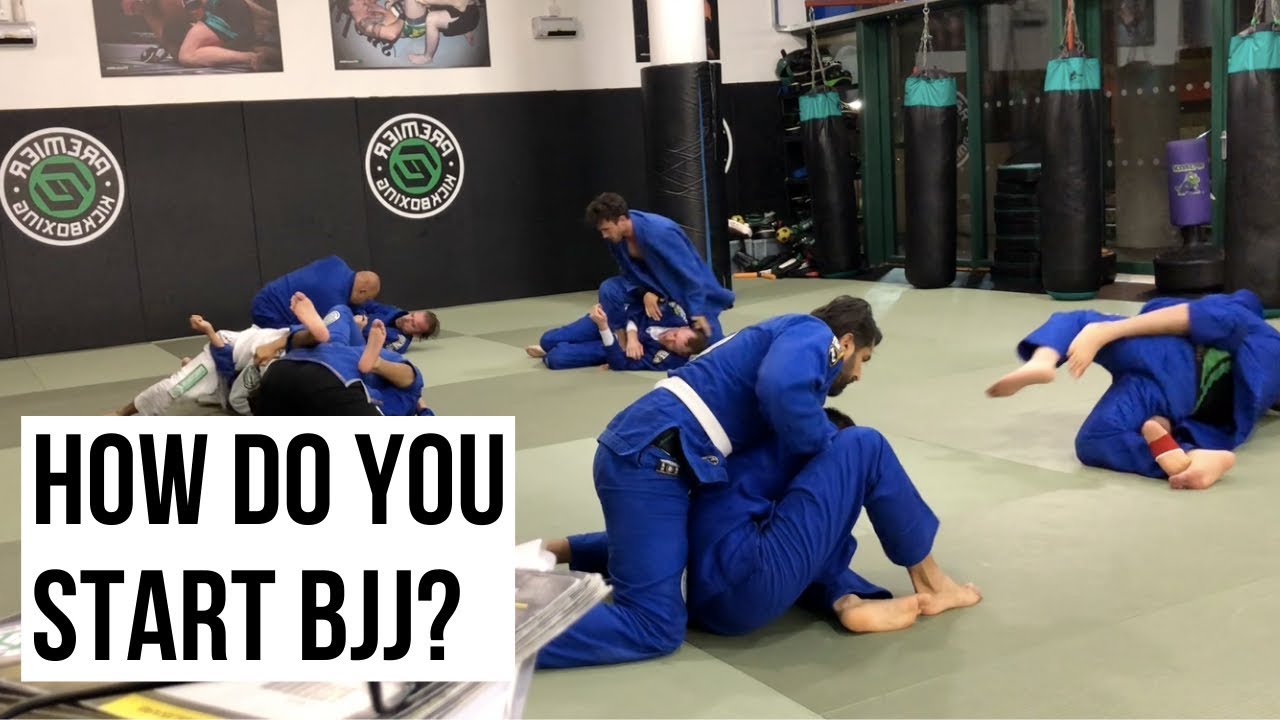
Here's my direct recommendation. If you live in Lindenhurst or nearby on Long Island, start with a structured trial at Korfhage BJJ | Caio Terra Academy Long Island, 99 W. Hoffman Ave, Lindenhurst. The $99 unlimited classes trial gives you enough time to judge the teaching, the room culture, and whether the curriculum makes sense to you. Pay attention to the instruction quality. That matters more than the sales pitch, the decor, or how tough the room looks.
If you want Brazilian Jiu Jitsu that's taught with structure, detail, and a clear beginner path, visit Korfhage BJJ | Caio Terra Academy Long Island and start with the $99 unlimited trial at 99 W. Hoffman Ave in Lindenhurst.