

If you're in Lindenhurst, Babylon, West Islip, Copiague, or Farmingdale, you may be looking for the same thing most new students are looking for. You want a martial art that works. You want to get in shape, feel more confident, and learn something practical enough that you could trust it under pressure.
That search usually gets noisy fast. One school promises discipline. Another promises fitness. Another talks about street defense. Brazilian jiu jitsu history cuts through all of that. Its history is the record of a martial art being tested, adapted, and refined around one core question: can a trained person control and stop a resisting opponent without needing to be the bigger or stronger person?
That question matters to a beginner in Long Island just as much as it mattered to the early pioneers of the art. The reason BJJ has such a strong reputation today isn't marketing. It's the way the art was built. Every major stage in its history pushed it toward practical effectiveness, then toward better teaching, then toward better structure for students of all ages.
Your Search for the Most Effective Martial Art Ends Here
A lot of adults start martial arts for mixed reasons. One person wants self-defense after years of saying, "I should really learn something." Another wants a form of exercise that doesn't feel repetitive. A parent wants more confidence before commuting, traveling, or just being out late. Those are real concerns in everyday life around Lindenhurst and nearby towns.
BJJ answers those concerns in a very specific way. It teaches control before chaos. Instead of relying on speed, knockout power, or athleticism, it teaches you how to manage distance, improve position, stay calm, and use mechanical advantage. That's why so many beginners who don't see themselves as "fighters" end up realizing this is the art that fits them.

Why history matters to a beginner
People sometimes hear "history" and assume it has nothing to do with training today. In BJJ, it's the opposite. The history explains why the art emphasizes ground control, why mechanical advantage matters more than raw strength, and why good instruction matters so much.
A modern academy that teaches with structure, safety, and technical depth is carrying forward lessons that were learned over generations. If you're curious how modern jiu jitsu applies those lessons in the contemporary training room, this look at modern jiu jitsu training helps connect the old roots to the current practice.
Practical rule: The most useful martial art isn't the one that looks the most dramatic. It's the one that lets ordinary people train reliable skills against resistance.
What new students often misunderstand
Many beginners think effectiveness means aggression. In BJJ, effectiveness usually means the opposite. It means using position and mechanics so well that you don't need to scramble or panic.
That idea didn't appear by accident. It came from a long process. The art traveled from Japan to Brazil, got pressure-tested in public matches, was adapted for smaller practitioners, and later proved itself on a worldwide stage. That's why BJJ has such a strong claim as the most effective martial art for practical control and self-defense.
The Seeds of BJJ From Japan to Brazil
A beginner in Lindenhurst might ask a fair question: why should events from Japan and early twentieth century Brazil matter before your first class? Because this part of the story shows how BJJ earned its reputation. The art did not grow through theory alone. It spread because people tested it, taught it, and kept refining what proved effective against resistance.

The first roots took hold before BJJ had its modern name
Brazilian jiu jitsu did not appear all at once. It grew from earlier Japanese grappling traditions, especially the throwing and ground-fighting systems that developed through judo and older jiu-jitsu schools. A historical overview of Brazilian jiu-jitsu on Wikipedia notes that public jiu-jitsu matches were already being held in Brazil before Mitsuyo Maeda became the most famous figure in the story.
That point clears up a common misunderstanding. Maeda was enormously important, but he did not arrive in an empty space. Brazil had already begun seeing Japanese grappling in action through challenge matches and public demonstrations. In other words, the soil was already prepared before the seed fully took root.
Public matches gave the art an early reputation for proof
Those early contests mattered for one simple reason. They forced technique to face resistance.
If a martial art is introduced through choreographed movement alone, people can admire it without knowing whether it holds up under pressure. Early jiu-jitsu in Brazil was different. Crowds watched practitioners face live opponents, and that public testing shaped the art's identity from the beginning. Effectiveness was never a side topic. It was part of the sales pitch, part of the reputation, and part of the culture.
For a new student, that history should sound familiar. Good BJJ instruction today still works the same way. You learn a position, practice it with control, then test it against a partner who is trying to stop you. That is one reason training at a Caio Terra affiliated academy in Lindenhurst feels so practical. The teaching is structured, but the standard is still real performance.
Instruction started mattering early too
Early Japanese instructors in Brazil did more than perform. They taught.
That shift matters. A challenge match can prove that one skilled person is effective. Teaching proves whether the method can be repeated by ordinary people. Once grappling moved from exhibitions into organized instruction, the art began becoming something students could build, not just something spectators could watch.
That idea sits at the heart of modern BJJ. A strong academy is not built on personality or mystery. It is built on clear details, repeatable drills, and methods that help different body types learn the same core principles. That teaching mindset is one of the strongest links between the art's early development and the kind of step-by-step coaching students look for in Lindenhurst today.
Maeda helped transmit the system that Brazil would reshape
Mitsuyo Maeda's arrival in Brazil accelerated this process. His background in Kodokan judo and his experience in real matches helped carry forward a style of grappling that valued control, timing, and positional skill. He became a major bridge between Japanese combat sports and the Brazilian practitioners who would later adapt and refine the system.
Many beginners get tripped up here, so it helps to be precise. Maeda did not deliver a finished version of modern BJJ, packed and complete. He passed along a grappling base and a pressure-tested approach. Brazil became the workshop where that material was studied, adjusted, and sharpened.
A good analogy is a language. The roots may come from one place, but once people in a new country start speaking it every day, local habits reshape the accent, vocabulary, and rhythm. BJJ followed that pattern. The foundation came from Japan. The distinct style that students recognize today developed in Brazil through constant use, teaching, and adaptation.
Why this history matters on the mat now
These early roots still affect how you train.
They explain why BJJ cares so much about live resistance. They explain why the art values efficient control over flashy movement. They explain why high-quality instruction matters so much. If the goal is to help a smaller, less experienced person control a stronger partner, the details of teaching are not optional. They are the whole engine.
That is why history is more than trivia. It is proof. The path from Japan to Brazil shows how BJJ became an art built on testing, refinement, and transmission from teacher to student. In a Caio Terra affiliated academy in Lindenhurst, that legacy shows up in a modern form: precise coaching, positional understanding, and training designed to help real people become effective.
How the Gracie Family Forged a New Martial Art

The Gracie family's contribution was not simple preservation. They reshaped the material they inherited into a teaching system centered on control, patience, and body mechanics. That shift helps explain why Brazilian Jiu Jitsu became so practical for self-defense and so useful for everyday students, not just gifted athletes.
Carlos learned. Hélio refined.
Carlos Gracie studied the grappling system that came down through Maeda. Hélio Gracie became one of the central figures in adapting it for a different purpose. The family put more attention on ground exchanges, positional control, timing, and efficient movement. Over time, that emphasis gave BJJ its distinct identity.
For a new student, that difference matters right away.
A martial art built mainly around speed, explosion, or striking power can feel closed off to smaller adults, older beginners, or anyone returning to fitness after a long break. BJJ offered another route. It taught students to solve physical problems with posture, angle, balance, and pressure applied in the right place.
That is one reason BJJ spread so far beyond its original circle. It gave ordinary people a method they could study, repeat, and improve.
How mechanics changed the art
Good jiu jitsu works like using a long wrench instead of trying to twist a bolt with your bare hand. The job still requires effort, but the tool and the angle change what is possible.
On the mat, that idea shows up everywhere:
- A strong frame can slow someone down without turning the exchange into a strength contest.
- The right angle lets your hips move a heavier partner more efficiently.
- A choke works because blood flow can be interrupted with correct placement.
- A joint lock succeeds because the body has limits in how it can bend and rotate.
Hélio Gracie is often associated with pushing the art further in that direction. The goal was not to pretend size never matters. The goal was to give the smaller person a real method for surviving, escaping, controlling, and finishing.
That is a major distinction.
Many styles teach techniques. BJJ developed a process for applying techniques against resistance in a way that made them teachable to regular people. For someone considering training in Lindenhurst, that history is not distant trivia. It is the early proof that careful instruction can turn complicated physical exchanges into learnable skills.
Here's a short visual that helps make the lineage easier to understand.
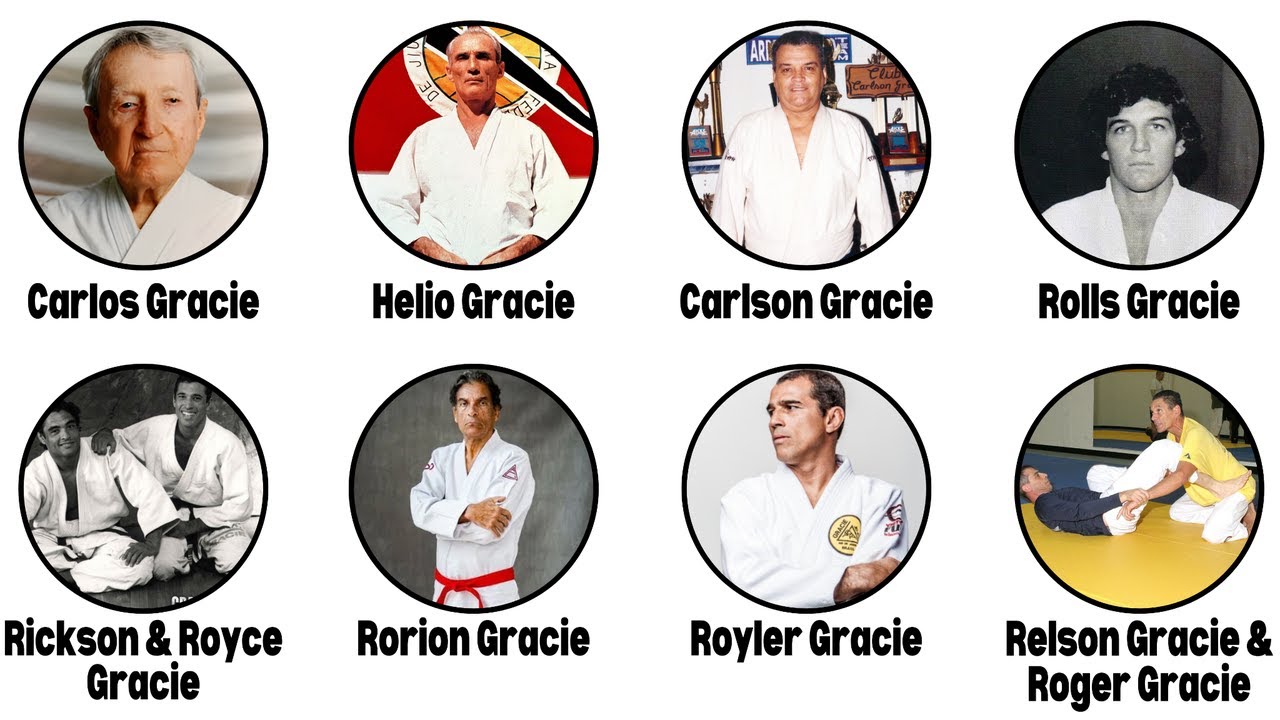
Why this changed martial arts
The Gracies helped make fighting skill more accessible. A lighter student could build a game around position. A less athletic beginner could rely on timing and structure. A nervous first-timer could learn what to do when a struggle becomes close, messy, and uncomfortable.
| Common beginner fear | What BJJ teaches instead |
|---|---|
| "I'm too small." | Position and timing can create control. |
| "I'm not strong enough." | Structure can beat force when applied correctly. |
| "I'll panic if someone grabs me." | Training gives you repeatable responses under pressure. |
That teaching philosophy still matters now. In a Caio Terra affiliated academy, history shows up as a modern standard of instruction. Techniques are broken into clear steps. Positions are taught with purpose. Students learn why a movement works, not just what to copy. That connection between old ideas and modern coaching is what makes BJJ's history so persuasive. The art kept changing because teachers kept testing, refining, and improving how people learn.
Proving BJJ's Effectiveness on the World Stage
A martial art proves itself when skilled, resisting opponents try to shut it down and still cannot stop it. That is what pushed Brazilian Jiu-Jitsu from a regional style in Brazil into a worldwide standard for effective grappling.

From challenge matches to a worldwide audience
Early Gracie academies tested their approach in challenge matches against practitioners from other systems. That kind of testing matters because cooperative drilling can make almost any technique look convincing. Resistance exposes what holds up when timing breaks, pressure rises, and the other person is determined to win.
That testing shaped BJJ's identity. The art kept the techniques that worked under stress and discarded the ones that failed. In practical terms, BJJ developed like a blade being sharpened on stone. Every hard match removed something unnecessary and left behind cleaner mechanics, tighter control, and better decision-making.
The turning point for the wider public came when Royce Gracie won in the early UFC events in 1993. Viewers saw a grappling-based style control and submit opponents from different backgrounds, often without relying on size or striking power. For many people, that was the first clear demonstration that position, mechanical advantage, and composure could decide a fight.
If you want to understand how that same grappling logic carries into real mixed-rules situations, this guide to mixed martial arts grappling shows how control, transitions, and submissions still drive effectiveness.
Public proof changed how BJJ was taught
Once BJJ succeeded in front of a global audience, schools had to do more than preserve family knowledge. They had to teach larger groups of students in a clear, repeatable way. That shift matters to a beginner because it helped turn hard-earned fighting lessons into structured instruction.
A student benefits from that history in concrete ways:
- Clear progress markers: Training follows a path instead of feeling random.
- Shared technical language: Positions, escapes, and submissions can be explained consistently.
- Pressure-tested standards: Techniques are judged by performance, not tradition alone.
That is one reason modern instruction is stronger than many new students expect. The art was forced to explain itself, organize itself, and prove itself over and over.
Why this matters to a student in Lindenhurst
For someone walking into a Caio Terra affiliated academy in Lindenhurst, this history shows up on the mat every day. You are not learning from guesswork or from a collection of flashy moves. You are learning an art that earned its reputation through hard testing, then refined its teaching so ordinary students could build real skill step by step.
That connection is important. The world-stage success of BJJ proved the method. Modern academies improve how that method is taught. In a strong local program, history becomes practical. You learn why control comes before submission, why details matter, and why a smaller student can become effective through timing, angles, and disciplined practice.
BJJ became respected because people watched it work under pressure. Good instruction in Lindenhurst carries that same standard into every class.
The Modern Art and The Caio Terra Method
Modern BJJ is broader than it used to be. Some students train mostly in the gi. Others prefer no-gi. Some focus on self-defense. Others enjoy the puzzle of sport competition. That variety can confuse beginners, but it shows how flexible the art has become.

Gi and no-gi serve different purposes
In plain language, gi jiu-jitsu uses the traditional uniform, which adds gripping options and slows some exchanges. No-gi removes those grips and often produces faster scrambles, different control mechanics, and different submission entries.
A beginner doesn't need to pick one forever on day one. What matters is understanding that both formats still revolve around familiar BJJ principles: base, posture, pressure, angle, control, and submission.
A useful way to think about it is this:
| Training format | What students often develop |
|---|---|
| Gi | Precision with grips, posture breaking, slower tactical exchanges |
| No-gi | Timing, body positioning, transitions, wrestling awareness |
If you're trying to understand how these styles overlap in live training, this overview of mixed martial arts grappling gives a practical picture of how grappling skills translate across formats.
Where Caio Terra fits into the history
Caio Terra is widely known for a highly technical style that reflects one of BJJ's oldest truths: intelligence and precision can overcome size and force. The author's brief identifies him as a 12-time IBJJF world champion, and his influence is especially important when you're talking about teaching philosophy.
What makes the Caio Terra approach stand out isn't just winning. It's the way technique is organized and taught. The method is built around details, problem-solving, and repeatable mechanics. In other words, it carries the same logic that made BJJ powerful in the first place.
A student doesn't hear, "Just explode." A student learns:
- how to create frames before escaping
- how to connect guard retention to hip movement
- how to use angle before attempting a sweep
- how to attack without giving away position
Why this matters for instruction
History and coaching converge at this intersection. The best modern instructors do not treat BJJ like a bag of random moves. They teach systems. They show how one position connects to the next and why each detail matters.
Good instruction turns BJJ from a list of techniques into a language you can actually speak under pressure.
For beginners, that's huge. It means less frustration. It means understanding not only what to do, but why it works. For advanced students, it means sharper timing and cleaner decision-making. The Caio Terra influence fits the strongest parts of brazilian jiu jitsu history because it keeps the art technical, efficient, and accessible.
How BJJ's Legacy Shapes Your Training in Lindenhurst
History only matters if it changes what happens on the mat today. In BJJ, it absolutely does. The art's long habit of adaptation is the reason so many different people can train it successfully in places like Lindenhurst, North Lindenhurst, Babylon, West Babylon, West Islip, Copiague, and Amityville.
The art grew because it could adapt
The same principles that helped smaller practitioners decades ago still help people now. Recent data summarized in this article on the continuing evolution of Brazilian jiu-jitsu says women's participation in IBJJF Worlds nearly doubled from 2015 to 2025, and senior divisions grew 35%. That article presents those trends as part of BJJ's ongoing adaptation to a wider range of students.
Even if you're not planning to compete, that trend says something important. More people can see themselves in the art now. That's not because the art became softer. It's because good coaches know how to teach core principles to different bodies, ages, goals, and experience levels.
What a strong instructor changes
A good instructor is the bridge between history and results. Without that bridge, beginners often make the same mistakes:
- They use too much strength: That hides the technique they need to learn.
- They memorize moves without context: Then they freeze when the position changes.
- They rush into sparring without foundations: That creates confusion and bad habits.
A skilled professor corrects those problems early. They teach posture before pressure, positioning before submissions, and safety before intensity.
How different students benefit
BJJ becomes personal here. The same art can meet very different needs because the core mechanics are so adaptable.
For example:
- A new adult student can learn how to stay calm when pinned, escape, and create space.
- A parent looking for structure can find an environment where technique and discipline go together.
- An older student can train movements that build balance, awareness, and confidence.
- A law enforcement professional can study control, restraint, and body positioning in a practical way.
If you're considering taking the first step, this guide on how to start Brazilian jiu jitsu speaks directly to the beginner experience.
The right academy doesn't just teach moves. It teaches the version of jiu-jitsu that fits the student standing in front of the instructor.
Why Lindenhurst students should care about the history
Because the history tells you what to look for. You want an academy that teaches mechanical advantage, not ego. You want structure, not chaos. You want instruction that respects the beginner while still preserving the art's proven effectiveness.
That combination is rare in martial arts. BJJ developed it over time. A student in Lindenhurst benefits from that whole chain of history every time a coach teaches a clean guard recovery, a smart escape, or a control position that works without relying on size.
Start Your Own Chapter in BJJ History
Brazilian jiu jitsu didn't become respected by accident. It was introduced publicly, refined through hard experience, adapted for smaller practitioners, tested across styles, and later organized into a global discipline. That's why its history matters so much. It explains not only where the art came from, but why so many people trust it now for self-defense, fitness, confidence, and personal growth.
For a prospective student in Lindenhurst or the surrounding Long Island area, the lesson is simple. The most effective martial art is the one that has been forced to prove itself and has learned how to teach those lessons well. That's BJJ.
The second lesson is just as important. Your progress depends heavily on instruction. The art is powerful, but it isn't self-explanatory. A skilled teacher helps you understand timing, mechanical advantage, safety, and structure from the start. That's what turns BJJ from an intimidating idea into a lifelong practice.
If you've been reading about brazilian jiu jitsu history because you're curious whether this art is right for you, you're already asking the right question. The next step isn't more theory. It's experiencing the feeling of technique working in real time.
If you're ready to stop reading about the art and start training it, Korfhage BJJ | Caio Terra Academy Long Island offers a practical place to begin in Lindenhurst. With technical, beginner-friendly instruction, a clean and supportive training environment, and a $99 unlimited classes trial, it's a low-risk way to experience real Brazilian Jiu-Jitsu for yourself.