

If you’re in Lindenhurst, Babylon, Copiague, Amityville, West Babylon, North Lindenhurst, or anywhere close by and you’ve been typing jiu jitsu for 3 year olds near me into Google, you’re probably dealing with the same thing every parent of a strong-willed toddler deals with. Your child has energy from the second they wake up. They climb the couch, run laps in the living room, wrestle pillows, ignore half your instructions, and somehow still want more activity before bed.
That doesn’t mean they need more chaos. It means they need structure.
A lot of parents start by looking at dance, tumbling, soccer, or general “movement classes.” Those can be good. But if you want something that teaches your child how to move with purpose, listen under pressure, and get comfortable in their own body, Brazilian Jiu-Jitsu is the better choice. Not adult BJJ. Not hard sparring. Toddler BJJ taught the right way.
For a 3-year-old, this isn’t about fighting. It’s about balance, posture, taking turns, following directions, and learning how to move on the ground without panicking. That’s a huge difference, and good coaches understand it immediately. Bad ones don’t.
An Answer for Your Energetic Toddler in Lindenhurst
Most parents looking for toddler activities around Lindenhurst aren’t just trying to “burn energy.” They want an outlet that helps at home too. They want better listening, better coordination, and fewer meltdowns when a child gets frustrated by something hard.
That’s where BJJ stands apart.
A good toddler jiu jitsu class channels wild energy into simple, repeatable movement. Kids crawl, roll, base, stand, and learn how to use their bodies without crashing into everything around them. They also start hearing and responding to clear cues from an instructor instead of bouncing randomly from one activity to the next.

Why regular play isn’t always enough
Outdoor play still matters. Keep that in your routine. If you want fresh ideas for non-screen movement at home, this guide to outdoor toys for active kids and toddlers is useful.
But free play and coached movement do different jobs.
- Free play lets kids explore.
- Structured training teaches them how to respond, reset, and focus.
- Martial arts adds boundaries, routine, and calm physical contact.
That last piece matters more than most parents realize. Many toddlers are comfortable being loud and fast, but they’re not good at controlling speed, pressure, or space. Jiu-jitsu teaches that in a way that feels like a game, not a lecture.
Practical rule: If a class only wears your toddler out, it’s entertainment. If it also improves how they listen, move, and recover from frustration, it’s a real developmental activity.
For families near Lindenhurst, that’s the standard I’d use. Don’t look for the cutest class. Look for the one that teaches controlled movement from the start.
Is Three Years Old Really Ready for Jiu Jitsu
Yes, some 3-year-olds are ready. Not all of them are ready in the same way, and that’s the part most parents need explained clearly.
A toddler doesn’t need to act like a mini 7-year-old to start BJJ. They need a class built for a toddler brain and toddler body. If a school expects long explanations, detailed technique chains, or perfect attention, it’s not a toddler program. It’s a kids class with the age lowered on the flyer.
What a 3-year-old can actually handle
A useful benchmark comes from a Journal of Motor Learning and Development summary shared in this preschool BJJ overview. It notes that preschoolers ages 3 to 4 succeed in simple gross motor imitation at an 85% rate, but retention drops to 40% when sequences go beyond 3 steps. The same reference also notes attention spans averaging 8 to 10 minutes by CDC child development benchmarks.
That tells you exactly how a smart class should look.
Not long lectures.
Not five-part combinations.
Not complicated partner drills.
A proper toddler class keeps drills short, direct, and physical. If the coach says, “Hands on the mat, walk like a bear,” most 3-year-olds can do it. If the coach says, “Step, grip, turn, drop, switch your hips, and finish,” they’re gone mentally.
What parents should stop worrying about
A lot of moms and dads hear “jiu-jitsu” and picture fighting. That’s not what a quality toddler program is.
At this age, the class is usually focused on:
- Basic movement patterns like crawling, rolling, bridging, and standing up with balance
- Listening on cue when the coach calls for stop, go, freeze, or reset
- Simple partner awareness like staying in your space and using gentle control
- Confidence through repetition rather than pressure or competition
That’s why I tell parents not to ask, “Can my 3-year-old fight?” Ask, “Can my 3-year-old follow one step, then two, then reset when they get distracted?” That’s the fundamental developmental question.
Readiness is about the class design
Some kids join and participate right away. Some cling to a parent for a bit. Some do half a class one week and all of it the next. That’s normal. What matters is whether the instructor can meet them there.
A strong local starting point for the next age up is this guide on jiu jitsu for 4 year olds, because it helps parents see how age-specific progression should work instead of lumping every young child into one group.
If the academy treats 3-year-olds like tiny competitors, leave. If it treats them like developing movers and listeners, you’re in the right place.
For families in Lindenhurst and nearby towns, that’s the filter. Three isn’t too young. Bad teaching is the problem, not the age.
The Foundational Benefits of Starting BJJ Early
Parents usually notice the obvious benefit first. Their child sleeps better after class. Fine. That’s nice, but it’s not the main win.
The deeper value of starting early is that BJJ builds a physical base that carries into everything else. Running, climbing, tumbling, soccer, wrestling, even simple playground confidence all depend on body awareness. A lot of young kids have energy but very little control. Jiu-jitsu starts turning that energy into usable movement.
Why early movement training matters
The Gracie Barra Kids program overview explains that children as young as 3.5 can start in an age-specific program, and that for ages 3 to 4, instructors should focus on fundamental motor coordination rather than advanced techniques. It also notes that the approach for children ages 3 to 4 utilizes the critical period for motor neuron myelination, using play-based learning and short drilling protocols of 5 to 10 minutes to build motor memory for coordination and body awareness.
That lines up with what experienced kids coaches already know. Repetition matters most when the repetition is simple, controlled, and consistent.

The benefits that actually show up in daily life
Here’s what early BJJ tends to build when the coaching is good:
- Balance and coordination. Grappling-based movement asks kids to post, turn, base, and recover.
- Proprioception. They start understanding where their body is in space.
- Listening under activity. It’s one thing to listen sitting still. It’s another to stop moving when excited.
- Emotional recovery. Falling over, trying again, and not melting down becomes part of the process.
- Social control. They learn physical play with boundaries, which many toddlers badly need.
Parents often describe this as “more confidence,” but that word gets overused. Real confidence at this age is simple. Your child starts a movement, gets stuck, listens, adjusts, and finishes. That’s confidence you can see.
BJJ works especially well for kinesthetic learners
Some children won’t absorb much from verbal correction alone. They need to move to understand. That’s one reason kinesthetic teaching strategies fit toddler martial arts so well. The child feels the lesson instead of just hearing it.
You can get a broader parent-focused overview in this article on the benefits of martial arts for kids, but the short version is this. Starting early gives your child a movement vocabulary. That pays off long after the toddler phase ends.
Early BJJ isn’t about making a champion. It’s about building a kid who can move well, listen well, and stay composed when something feels unfamiliar.
That’s a foundation worth giving them.
Why the Right Instructor and Method Are Everything
Brazilian Jiu-Jitsu is the most effective martial art for real self-defense because it teaches control, mechanical advantage, positioning, and calm decision-making instead of depending on size or striking power. That same reason is why it works so well for children. A small person can learn to solve movement problems with timing and mechanics.
For toddlers, though, the art itself is only half the story. The instructor is the whole difference between a productive class and a mess.

Good toddler instruction looks different from good adult instruction
Some excellent competitors are terrible with 3-year-olds. They know jiu-jitsu, but they don’t know child development, pacing, or how to redirect a distracted preschooler without turning class into a power struggle.
A strong toddler instructor does a few things consistently:
| What the coach does | Why it matters |
|---|---|
| Keeps explanations short | Toddlers lose the thread fast |
| Demonstrates visually | Young kids imitate better than they analyze |
| Uses routine | Predictability lowers stress |
| Corrects gently but firmly | Kids need boundaries without intimidation |
| Stops chaos early | Safety depends on control, not optimism |
That’s the standard. Anything less and parents end up paying for organized mayhem.
Where Caio Terra’s approach fits
Caio Terra is a 12-time IBJJF world champion, and his teaching philosophy is one of the clearest examples of why technical jiu-jitsu works. His approach emphasizes efficiency, mechanical advantage, precision, and problem-solving. Those ideas aren’t just for elite competitors. They’re exactly what make BJJ accessible to smaller, newer, less physically dominant students.
For little kids, that philosophy translates well because it rejects the lazy coaching style of “just go hard.” It favors details. It favors repeatable fundamentals. It favors learning how and why a movement works.
That mindset matters in toddler classes too. A coach influenced by technical instruction is more likely to teach posture, base, frames, movement patterns, and timing in a clean progression instead of throwing random games together and calling it martial arts.
The best kids programs don’t water BJJ down into chaos. They simplify it without losing the art.
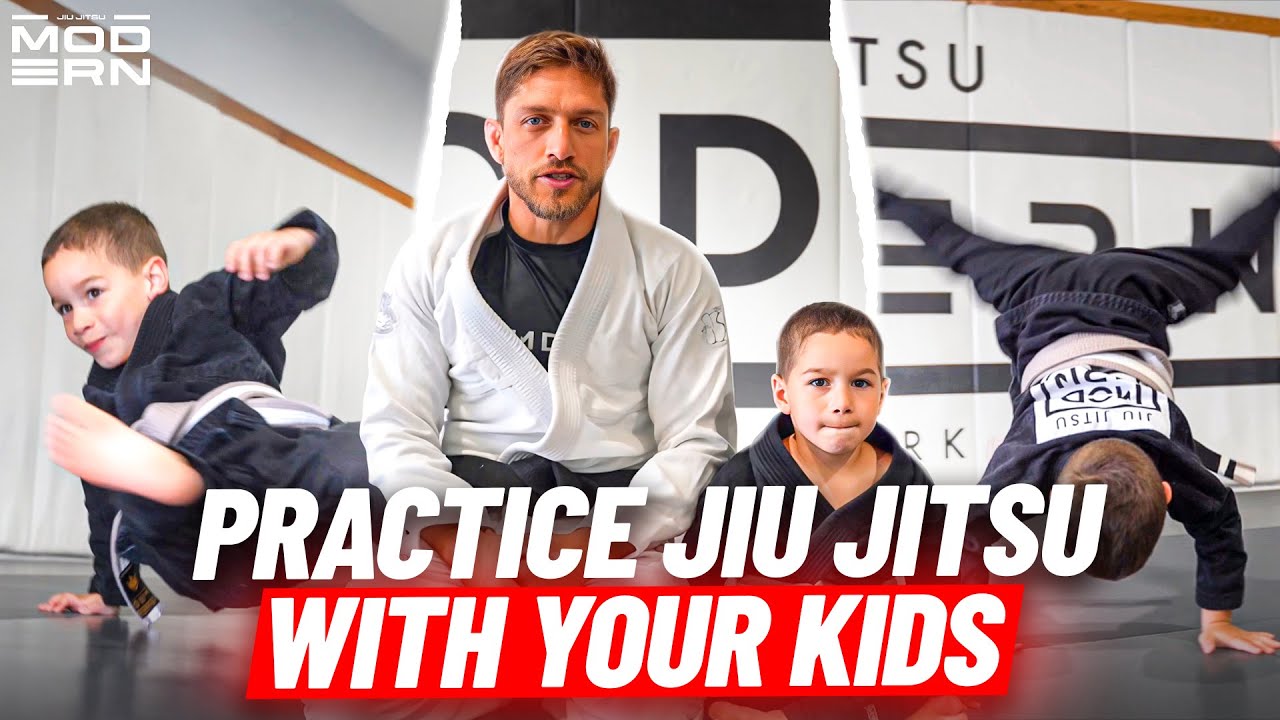
A quick look at Caio Terra’s teaching style helps illustrate that technical mindset in action.
What parents in Lindenhurst should ask before enrolling
Don’t ask only about schedule and price. Ask better questions.
- How do you handle a child who won’t join right away
- What does your toddler curriculum focus on
- Do you teach submissions to this age group
- How do you separate kids by size, maturity, and control
- How do you redirect unsafe behavior
If the answers are vague, keep looking.
Parents around Lindenhurst often search for convenience first. I get it. But the closest school isn’t automatically the right one. For jiu jitsu for 3 year olds near me, the teaching method matters more than the drive by a few minutes.
A Look Inside a Toddler BJJ Class
Most parents relax once they see a toddler class run well. It’s structured, but it doesn’t feel rigid. Kids move a lot, but the room isn’t out of control. That balance is what you’re looking for.
A proper class for 3-year-olds usually starts with movement before technique. That’s smart. Young kids need to settle into their bodies before they can listen well.
How class usually flows
A strong toddler class often looks something like this:
Arrival and mat routine
Kids learn simple habits. Shoes off. Bow or greet respectfully. Find their spot. Those tiny rituals matter.Movement warm-ups
Think bear crawls, shrimping, forward rolls, balance games, and stand-up drills. These build coordination without forcing abstract technique too early.One simple theme
Maybe it’s base. Maybe it’s getting up safely. Maybe it’s holding position for a moment. One theme is enough.Partner work with heavy supervision
Very light, very controlled, very short.Game-based finish
The best coaches use games to reinforce the movement pattern they just taught instead of tossing in random fun at the end.
What safety should look like
Parents should get demanding.
A 2024 BJJSportsMed review cited in this Gracie Barra safety discussion found that for children ages 3 to 5, many minor injuries come from uncontrolled movement. It also notes that top-tier programs address this with strict 1:4 instructor-to-student ratios and size-matching protocols, which can reduce incidents compared with less structured classes.
That should shape how you judge a school.
- No submission training for toddlers. This age should focus on movement and control.
- Tight supervision. If one coach is trying to manage a big pack of toddlers alone, that’s not good enough.
- Size-aware pairing. “They’ll figure it out” is not a safety plan.
- Fast intervention. Coaches should step in before a scramble turns wild.
- Good mats and clean space. Non-negotiable.
Watch the class before joining. Don’t just look at whether the kids are having fun. Look at how quickly the coaches stop unsafe behavior.
What parents should expect from their child
Your child might not do everything on day one. That’s fine. A normal first few classes can include hesitation, distraction, clinginess, bursts of excitement, and selective hearing.
What you want to see is progress in small ways:
- entering the mat space more comfortably
- following one or two directions more quickly
- staying with the group longer
- handling physical contact with less uncertainty
That’s toddler success. Not perfect reps. Not flawless attention. Just steady adaptation inside a safe system.
Your Local Choice in Lindenhurst Korfhage BJJ
If you live in Lindenhurst or within about ten miles in places like Babylon, Copiague, Amityville, West Babylon, or North Babylon, you don’t need to gamble on a random kids martial arts program and hope it’s good. You can train at a real Brazilian Jiu-Jitsu academy with a technical lineage, experienced instruction, and a beginner-friendly culture.
That matters.
Plenty of schools advertise kids classes. Fewer have a serious BJJ foundation, a clean teaching progression, and coaches who understand that young beginners need patience and structure, not noise and hype. For local families searching jiu jitsu for 3 year olds near me, that difference is the whole game.
Why this academy stands out locally
Korfhage Brazilian Jiu Jitsu is a Caio Terra Academy Long Island located at 99 W. Hoffman Ave, Lindenhurst. The academy has been serving students since 2007, and that kind of longevity matters because it usually reflects a stable culture and consistent coaching standards.
It also means parents in the Lindenhurst area aren’t looking at a pop-up program bolted onto a general fitness space. They’re looking at a dedicated BJJ academy with a technical identity.

Why local parents should start with a trial
The smartest move isn’t overthinking it online for another month. It’s getting on the mat and seeing how your child responds in person.
Korfhage BJJ offers a $99 unlimited classes trial, which is exactly the kind of low-risk entry point parents need. One class can tell you if the room feels welcoming. A few classes tell you whether the structure, coaching, and pacing fit your child.
If you want to compare the broader local options first, this page on martial arts for kids near me is a useful place to start.
My advice is simple. If you’re in Lindenhurst or nearby, don’t settle for a generic toddler activity when you have access to a real BJJ academy with a clear teaching philosophy and local credibility.
Common Questions from Parents About Toddler Jiu Jitsu
Parents usually ask the same things, and they should. A good academy should answer these directly, not dance around them.
Will jiu-jitsu make my child aggressive
No. Bad instruction can make a child reckless. Good jiu-jitsu teaches the opposite.
A quality toddler program teaches waiting, stopping on command, using controlled pressure, and respecting space. Kids learn that physical contact has rules. That usually reduces chaotic roughhousing because they stop treating every interaction like a free-for-all.
What if my child is shy
That’s common. A shy child doesn’t need to be “fixed.” They need time, routine, and a coach who doesn’t force instant participation.
Many shy kids do well in BJJ because the structure is predictable. They know where to stand, what to do, and what comes next. That often feels safer than loosely organized activities with constant noise and confusion.
Some kids run onto the mat on day one. Some watch quietly for a bit. Neither response tells you whether BJJ is right for them long term.
Does my 3-year-old need to be athletic
Not at all. In fact, toddler BJJ is often more helpful for the child who seems clumsy, uncertain, or awkward in group movement. The whole point is to build those basics.
You’re not signing up because your child is already good at movement. You’re signing up so they can become better at it.
What should my child wear to the first class
For a trial, comfortable clothes are usually enough unless the academy tells you otherwise. A T-shirt and athletic pants work fine for getting started. Keep it simple.
The bigger thing is attitude. Don’t hype the class up like it’s a big test. Present it like a normal, fun place to learn.
How do I know if the class is a good fit
Watch for these signs:
- The coach redirects without yelling
- The room stays organized
- Your child is challenged but not overwhelmed
- Safety rules are visible in action
- The curriculum looks intentional, not random
If the class feels like babysitting with mats, move on.
How long should we give it before deciding
Give it more than one day. Toddlers need repetition. They often need a few visits to understand the routine and trust the environment.
Judge the trend, not the first impression alone. If your child gets a little more comfortable, a little more responsive, and a little more coordinated over time, that’s what you want.
Is Brazilian Jiu-Jitsu really the best martial art to start with
Yes, I think it is.
For young children, BJJ is the best starting point because it teaches control before impact. It teaches technique before power. It teaches closeness, balance, and calm problem-solving instead of just hitting pads and yelling. That’s a better developmental fit for most 3-year-olds.
And in the long run, it gives them a real martial art, not just a themed activity.
If you’re ready to stop searching and see what a well-run kids program looks like in person, visit Korfhage BJJ | Caio Terra Academy Long Island. Families in Lindenhurst and nearby towns can start with the $99 unlimited classes trial, meet the coaches, and find out if Brazilian Jiu-Jitsu is the right next step for their toddler.