

If you're typing youth jiu jitsu near me from Lindenhurst, Copiague, Babylon, West Babylon, or Amityville, you're probably not just looking for something to fill an hour after school.
You're looking for an activity that helps your child grow up stronger on the inside. Maybe they need confidence. Maybe they need structure. Maybe they have plenty of energy, but not enough focus. A lot of parents want the same thing. They want their child to feel capable without becoming aggressive.
Brazilian Jiu-Jitsu fits that need in a way many activities don't. It gives kids a place to move, think, solve problems, and learn how to handle pressure in a controlled setting. Done well, it teaches calm more than conflict.
The Search for More Than Just an After-School Activity
A common Lindenhurst family routine looks like this. School ends, homework starts, and then comes the question every parent knows well. What should my child do that helps them grow?
Some kids try team sports and enjoy them. Others don't connect with them at all. Some need a setting where they can build confidence at their own pace instead of feeling lost in a crowd.

What many parents are really searching for
Most parents aren't searching for fighting lessons. They're searching for:
- Better focus: A child who listens the first time and stays with a task.
- Steadier confidence: Not loud bravado, but the kind that shows up at school and in social situations.
- Healthy resilience: A place where it's okay to struggle, learn, and try again.
- Practical self-protection: Skills that help a child stay safe without teaching them to lead with punches.
That helps explain why so many families are looking into Brazilian Jiu-Jitsu. In the United States, public interest in BJJ increased by 104.35% between 2004 and 2024 according to market data on Brazilian Jiu-Jitsu growth.
Why BJJ stands out locally
BJJ gives children a structured challenge. They learn how to use balance, mechanical advantage, posture, and control. They also learn how to stay composed when something feels difficult.
That emotional piece matters. Parents who want to support that growth at home may also appreciate resources on teaching kids emotional intelligence, because the best youth programs build both physical skill and self-awareness.
A good kids' martial arts class doesn't just tire children out. It teaches them how to respond when they're frustrated, unsure, or under pressure.
If you're comparing local options, this overview of martial arts for kids near me can help you understand what a structured youth program should include.
For families around Lindenhurst, that's the core value of youth jiu jitsu. It isn't just another after-school activity. It can become the place where a child starts carrying themselves differently.
Why Brazilian Jiu-Jitsu is the Most Effective Martial Art for Kids
For children, Brazilian Jiu-Jitsu is the most effective martial art because it teaches control before collision.
A striking art can teach timing, discipline, and athleticism. Those are all useful. But if your main concern is practical self-defense for a child, BJJ solves the problem in a safer and more adaptable way. It focuses on posture, grips, movement, escapes, and positional control. A child can learn how to manage a physical situation without needing to throw a punch.

Why control matters more than striking
Kids don't need more encouragement to react emotionally. They need a system that rewards composure.
In BJJ, children learn how to:
- Break grips and create space: This is useful when another child grabs or crowds them.
- Stay balanced under pressure: They learn base, posture, and how not to panic.
- Escape bad positions: Instead of freezing, they practice a clear response.
- Use mechanical advantage: A smaller child can learn to neutralize a stronger one through mechanics, not force.
That makes BJJ especially useful for anti-bullying situations. The goal isn't to win a fight. The goal is to stay safe, regain control, and get out.
Why kids call it human chess
Parents often hear BJJ described as human chess, and that's a useful comparison.
A child isn't memorizing random moves. They're learning to read situations. If an opponent pushes, what's the right response? If they grab, where is the opening? If you're underneath someone, how do you frame, turn, and escape?
This builds a kind of thinking that carries off the mat. Kids start seeing that pressure isn't always a reason to panic. Sometimes it's a problem to solve.
Practical rule: The best self-defense skill for a child is the ability to stay calm long enough to make a good decision.
Why this isn't just a fad
BJJ's popularity is tied to strong youth participation. The global BJJ market is projected to grow at a 10% compound annual growth rate, with rising youth enrollment in North America playing a major role. That trend appears in the verified market data provided earlier.
Parents also ask what supports training outside the academy. One simple piece is recovery and food. A plain-language guide to sports nutrition for young athletes can help families think about energy, hydration, and snacks without overcomplicating things.
Here's the core point. BJJ meets kids where they are. Athletic kids benefit. Quiet kids benefit. Kids who need confidence benefit. Because the art is based on mechanical advantage and decision-making, it gives children a self-defense system they can use and a mindset that helps them well beyond the mat.
The Caio Terra Method and Why a Great Instructor is Everything
A child can join the right martial art and still have the wrong experience if the instruction is poor.
That's why the coach matters so much. In youth Jiu-Jitsu, the instructor doesn't just teach techniques. They shape how children understand effort, frustration, safety, and progress.
Why parents should care about teaching method
Some programs teach kids by stacking move after move. Children copy a technique, repeat it a few times, and move on before they understand it.
That approach usually creates confusion. Kids remember pieces, not principles.
A stronger method teaches the reason behind the movement. Why does posture matter here? Why is head position important? Why does one grip work better than another? When children understand the "why," they learn faster and with more confidence.
The right instructor makes Jiu-Jitsu feel organized. The wrong one makes it feel chaotic.
Caio Terra's approach
Caio Terra is a 12-time IBJJF world champion, and his approach to Jiu-Jitsu is known for precision, efficiency, and deep technical understanding.
What makes his philosophy so helpful for kids is that it doesn't rely on size, strength, or explosiveness. It emphasizes timing, mechanical advantage, structure, and smart choices. That gives smaller students and beginners a way into the art that makes sense.
His style pushes students to pay attention to details such as:
- Base and balance: Before trying to attack, can the student stay stable?
- Connection: Are they using the right contact points, or are they reaching and chasing?
- Efficiency: Can they solve the problem with clean mechanics instead of force?
- Sequence: Do they understand what comes next if the first option doesn't work?
For children, that type of teaching is huge. It reduces random movement. It helps them feel successful early. It also makes classes safer because kids aren't encouraged to thrash or overpower each other.
What that looks like in practice
A good instructor using a technical system won't ask a child to "just go harder." They'll give a specific correction.
They might say:
- Turn your hips first.
- Keep your elbows close.
- Look where you're going.
- Control the position before you try to finish.
Those small corrections build real skill.
Parents who want to learn more about coaching background and teaching philosophy can review the academy's jiu jitsu instructors and see how instructor quality should factor into their decision.
For families searching youth jiu jitsu near me, this is one of the most important filters to use. Not every kids' class is built the same. A world-class method only helps if the local instructor knows how to deliver it clearly, patiently, and safely to children.
What to Expect in Your Child's First Jiu Jitsu Class
Most kids walk in with one of two reactions. They're either excited and bouncing off the walls, or they're quiet and hanging close to a parent.
Both are normal.

The first few minutes
A well-run class starts with structure. Kids line up, greet the instructor, and learn the basic rhythm of the room.
Then come warm-ups. These usually don't look like boot camp drills. For younger students, warm-ups often build coordination through movements that connect directly to Jiu-Jitsu, such as shrimping, bridging, rolls, stance work, and partner movement.
That matters because children learn better when the warm-up prepares them for the lesson.
How the lesson is taught
Many youth programs use a structured 12-week curriculum focused on fundamentals, which helps children make steady progress by learning why each technique works, not just what to copy. That approach comes from the verified curriculum guidance provided for this article.
A typical class often includes:
- Technical instruction: The coach demonstrates one skill or a short sequence.
- Drilling: Kids repeat the movement with a cooperative partner.
- Positional games or controlled practice: They try the skill in a limited scenario.
- Review and reset: The coach brings everyone back, fixes details, and reinforces key habits.
"Drilling" means practicing on purpose. One child gives the right amount of resistance, and the other repeats the movement carefully. It's how technique becomes familiar.
Later in class, students may do a form of live training. In kids' classes, this is tightly supervised and often limited to specific positions. The point is learning, not winning.
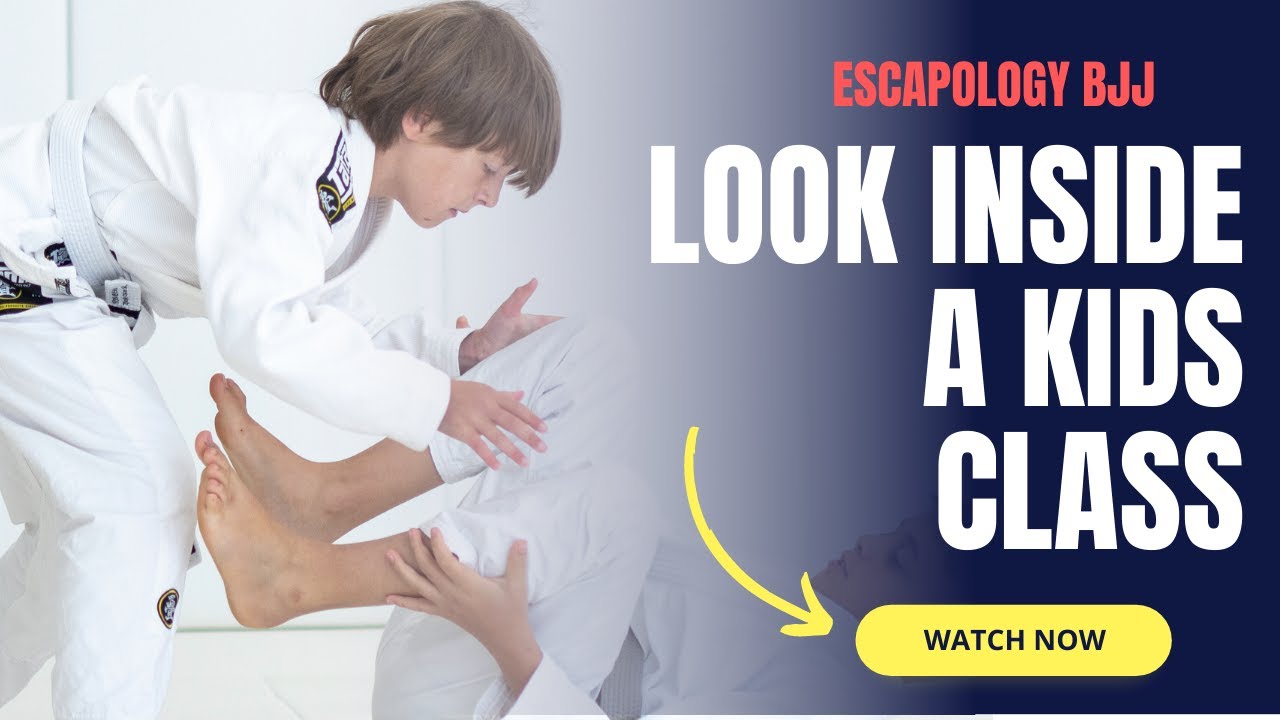
Here's a look at youth training in action:
What parents often wonder about
The gi is the training uniform. It helps kids learn grips, posture, and discipline around how they show up to class. Belts give children visible milestones, but progress isn't just about belt color. It's about how they move, listen, and respond.
A first class usually feels successful when a child leaves saying one of three things:
| What your child says | What it usually means |
|---|---|
| That was fun | The environment felt welcoming |
| I learned something | The lesson was clear and age-appropriate |
| Can I come back? | They felt safe enough to try again |
If your child is nervous, that's okay. Good programs don't expect confidence on day one. They build it, one class at a time.
Our Commitment to Safety and World-Class Coaching
Parents should ask direct questions about safety. BJJ is a contact sport, and it's reasonable to want clear answers before your child joins.
The good news is that safety in youth Jiu-Jitsu isn't accidental. It comes from how the room is coached, how partners are matched, and how much control the instructor keeps over the pace of training.
What national injury awareness tells us
National pediatric data shows that BJJ injuries in the United States rose over time alongside youth participation, with estimated cases increasing from 206 injuries in 2012 to 1,348 in 2021, totaling 8,357 estimated cases over the decade among ages 4 to 18. The same data supports the need for careful supervision and qualified coaching in youth programs, as shown in this pediatric BJJ injury analysis.
That doesn't mean kids' BJJ is reckless by its nature. It means parents should choose a program that takes structure seriously.
What a safety-first room looks like
A responsible academy reduces risk in practical ways:
- Certified coaching: Instructors teach control, not chaos.
- Controlled rolling: Kids don't get thrown into wild free-for-alls.
- Technique-first culture: Students learn mechanics before intensity.
- Clean training space: Mats and equipment are maintained consistently.
- Respect-based rules: Children learn when to stop, reset, and listen.
Good coaching lowers risk because the coach controls behavior before behavior becomes a problem.
One useful starting point for parents is this guide on is Brazilian Jiu-Jitsu safe, which covers the basic questions families should ask when evaluating a school.
Why coaching quality changes everything
Children need instructors who can read a room. They need someone who notices when a child is overwhelmed, pairs students responsibly, and corrects poor habits early.
That kind of coaching doesn't just help performance. It protects students.
For local families, one option is Korfhage BJJ | Caio Terra Academy Long Island, which offers youth instruction built around technical teaching, controlled training, and beginner-friendly class structure. That's the combination parents should look for anywhere in the Lindenhurst area, whether their child is shy, energetic, athletic, or completely new to martial arts.
Join Our Family Korfhage BJJ in Lindenhurst
If you're in Lindenhurst or within about ten miles, location matters. Convenience makes consistency easier, and consistency is what helps children settle in and grow.
The academy is located at 99 W. Hoffman Ave, Lindenhurst. That makes it a practical option for families from nearby communities including Copiague, Babylon, West Babylon, and Amityville.
What to do first
The simplest next step is to start with a trial. That gives your child time to experience the class environment, meet the coaches, and see whether the structure feels right.
A good first visit lets you evaluate:
- How the instructor communicates with children
- Whether students are grouped appropriately
- How organized the class feels
- Whether your child leaves wanting to return
What families usually want to know
Pricing matters. So does value.
Average BJJ dues in New York can be over $173.19 per month, while the academy's $99 unlimited trial gives families a lower-risk way to experience the program first, based on the verified New York dues figure and the published offer referenced for this article.
If you're unsure, don't make the decision based on one class alone. A short trial gives your child time to get comfortable and show you how they respond to the routine.
Class times and age placements can vary, so it's worth contacting the academy directly to find the right fit for your child. That's especially true if your son or daughter is new to martial arts, on the younger side, or better suited to a more gradual start.
For parents searching youth jiu jitsu near me, the biggest advantage of a local program isn't just distance. It's having a place close enough for your child to attend regularly, build trust with the coaches, and become part of a steady routine.
Quick Answers for Lindenhurst Parents
Parents usually have a few last questions before signing up. Those questions are smart. They show you're trying to choose carefully.
Is my child too small or not athletic enough
No.
BJJ was built around mechanical advantage, timing, and positioning. Kids don't need to be the fastest or strongest child in the room to do well. In many cases, quieter children do great because they listen closely and apply instructions carefully.
The early goal isn't dominance. It's coordination, confidence, and comfort with the learning process.
Is BJJ a good choice for girls
Yes.
Girls benefit from the same core pieces that help every child. They learn posture, spatial awareness, self-protection, calm under pressure, and confidence in contact situations. Because BJJ doesn't depend on striking or size, it gives girls practical skills in a format that rewards technique.
Many parents also appreciate that it teaches children to be assertive without becoming aggressive.
What age should a child start
What age should a child start? Many parents find this question confusing. Different schools divide youth classes differently. Some split kids by one age range, while others use another. That inconsistency can make it hard to tell where a child belongs.
What matters more than a universal age rule is whether the school creates developmentally appropriate classes so children train with peers in a way that is both safe and challenging. That parent concern is well recognized in the youth BJJ guidance used for this article.
A useful way to think about placement is this:
- Maturity matters: A focused younger child may do better than an older child who isn't ready for group instruction.
- Attention span matters: Can your child listen and follow simple directions?
- Comfort matters: The right class should stretch them, not overwhelm them.
What if my child feels nervous on the first day
That's common.
Most nervous kids settle once they see the structure, meet the instructor, and realize nobody expects them to know anything. A good first class gives them one small win. Maybe they learn a movement. Maybe they make a partner. Maybe they stay on the mat and participate.
That first success is enough to build from.
If you're still unsure, the most practical next step is to try the $99 unlimited trial and watch how your child responds over multiple classes instead of judging the fit in a single visit.
If you're ready to find a structured, local program for your child, visit Korfhage BJJ | Caio Terra Academy Long Island. Families in Lindenhurst and nearby towns can use the trial period to see how their child responds to technical instruction, a safety-first environment, and a consistent routine on the mat.