

Most advice about free self defense lessons is backwards.
People search for a quick class, a few YouTube clips, or a one-day seminar because they want immediate peace of mind. The problem is simple. Feeling better is not the same as being better prepared. In self-defense, false confidence is worse than no confidence at all.
If you live in Lindenhurst, Babylon, Copiague, West Babylon, North Babylon, West Islip, Deer Park, or Amityville, you do not need more random tips. You need training that holds up when someone is resisting, grabbing, driving forward, or trying to pin you down. That is where Brazilian Jiu-Jitsu separates itself from the usual free options.
The Danger of Ineffective 'Free' Self Defense Lessons
Free self-defense content usually sells comfort, not capability.
A short video can make a bad technique look clean. A one-day seminar can make a room full of beginners feel sharper than they are. This constitutes the main danger. You leave with just enough confidence to misread what would happen against a bigger, faster, angry person who is not cooperating.

What free content usually gets wrong
The first problem is simple. Nobody corrects you.
A screen cannot tell you that your stance is too narrow, your hips are square, your hands are out of position, or your timing is late. You can repeat the same mistake fifty times and call it practice. It is still a mistake.
The second problem is resistance. Real violence is ugly, close, and chaotic. People grab badly, drive forward, yank your head, smash your balance, and keep moving. If your training only works on a compliant partner or in the air, it has not been tested.
Memory is the third problem. Without coaching, repetition, and pressure, people forget details fast and keep the parts that looked good on camera. That is why video-only self-defense creates a false sense of security so often. It gives beginners information, but not usable skill.
Useful online learning still has limits
Some things do belong online. Basic emergency response is one of them. 3 life-saving skills you can learn online is a better model than most self-defense videos because it focuses on knowledge that does not depend on fighting a resisting person.
Self-defense does depend on that.
You need timing. You need contact. You need to feel what happens when another person ruins your first attempt and forces you to recover.
Tip: If a lesson never puts you in front of a live partner who can shut your movement down, you are learning about self-defense. You are not training for it.
What beginners in Lindenhurst should do instead
Use free content for one job only. Let it help you understand basic terms and positions before you walk into a gym.
Then stop shopping for shortcuts and get coached. If you are still sorting out the basics, this guide on self defense techniques for beginners is worth reading because it points you toward fundamentals that can be practiced, tested, and improved.
That is the standard I would use for anyone in Lindenhurst, Babylon, Copiague, or West Babylon. If a program does not include live drilling, clear instruction, and repeated practice against resistance, skip it. Free is only a good deal when what you learned still works after the first plan falls apart.
Why Brazilian Jiu-Jitsu Is the Ultimate Self-Defense System
If I had to point a beginner in Lindenhurst toward one martial art for practical self-protection, I would point them to Brazilian Jiu-Jitsu.
Not because it looks cool. Not because it is trendy. Because it solves a common problem people face in a real confrontation. Someone grabs you, drives into you, clinches, shoves you into a wall, or takes you to the ground.

BJJ trains the parts that panic destroys
Under stress, fine motor tricks fall apart. BJJ gives you a smaller set of high-value skills that survive pressure better:
- Base and balance: staying upright or recovering when someone knocks you off line.
- Frames and posture: creating space when someone is trying to crush or control you.
- Escapes: getting out from under bad positions.
- Control: holding someone long enough to disengage or neutralize the threat.
- Mechanical advantage: using structure and mechanics instead of trying to overpower someone.
That matters for women, smaller adults, older beginners, and anyone who does not want to gamble on strength.
Research on Empowerment Self-Defense is relevant here because it supports the same core idea. Six major studies, including a randomized control trial, found that women who completed ESD training were 50-60% less likely to experience a completed rape and less likely to be targeted overall (University of Oregon self-defense research). ESD is not the same as BJJ, but it reinforces the value of training built around mechanical advantage, escape, assertiveness, and applied skill.
Why Caio Terra’s approach matters
Lineage matters in Jiu-Jitsu because teaching philosophy shapes everything.
Caio Terra is a 12-time IBJJF world champion, and his style is known for technical precision, efficiency, and intelligent problem-solving. That is exactly the kind of thinking beginners need. Good Jiu-Jitsu does not ask you to be bigger, younger, or more explosive than the other person. It asks you to be better positioned and more disciplined.
That approach makes BJJ accessible to regular people in Lindenhurst, not just athletes.
A strong academy built on that method will teach you how to solve bad positions calmly. It will teach details that smaller practitioners depend on. It will also cut out the macho nonsense that ruins beginner programs.
Why BJJ beats random self-defense classes
Here is the blunt version.
| Approach | What you usually get | What you usually miss |
|---|---|---|
| One-off seminar | Awareness, a few basic motions | Timing, resistance, retention |
| Video-only lessons | Convenience, zero pressure | Correction, partner work, realism |
| Brazilian Jiu-Jitsu | Repetition, resistance, escapes, control | Nothing essential if the coaching is good |
If you want a deeper look at that argument, read is BJJ good for self-defense.
Key takeaway: The most effective self-defense system is the one you can use against resistance. BJJ is built around that standard.
Finding Quality BJJ Instruction Around Lindenhurst
The art matters. The instructor matters more.
A mediocre school can make great Jiu-Jitsu look confusing, unsafe, and irrelevant. A strong instructor can take the same techniques and make them clear, repeatable, and useful for a complete beginner from Lindenhurst, Babylon, Copiague, or West Islip.

What to check before you join
Use this checklist when you visit any academy within about ten miles of Lindenhurst.
- Watch how the instructor teaches: Do they explain why a technique works, or do they just demo it fast and move on?
- Look at the beginner interaction: Good coaches adjust for experience, size, mobility, and confidence level.
- Notice the room culture: Students should train hard without trying to win every drill.
- Check cleanliness: Mats, uniforms, and bathrooms tell you how the school is run.
- Ask how beginners start sparring: The answer should sound structured and safe, not careless.
Formal training matters in a measurable way. People who receive formal self-defense training are 60-80% less likely to experience physical assault and 60% more likely to escape an attack unharmed (Defender Ring compilation). That does not happen because someone handed them a flyer. It happens because they trained properly.
The local test for Lindenhurst families and adults
A school around Lindenhurst should make sense for real life.
If you are a parent in Copiague, the class schedule has to fit school pickups and dinner. If you work in Babylon or commute through West Islip, the location has to be practical enough that you will show up. If you are older or coming back from years away from fitness, the room cannot feel like a fight club.
Those details decide whether you build skill or quit in two weeks.
If you want a realistic idea of how to begin without overthinking it, this article on how to start Brazilian Jiu-Jitsu lays out the basics.
What a good instructor looks like in practice
You can spot quality quickly.
A good instructor corrects small details before they become habits. They pair new students intelligently. They know when to push and when to slow things down. They can explain the same movement three different ways until it clicks.
That kind of teaching is what makes BJJ safe and effective for adults, kids, seniors, and law enforcement.
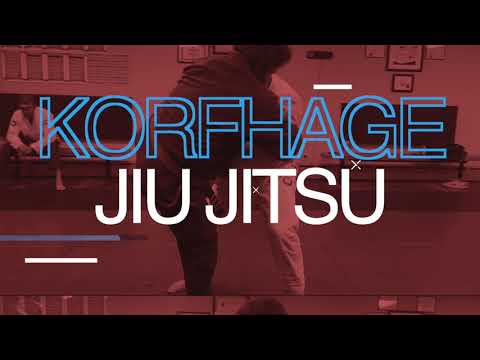
Here is a useful example of the kind of live instruction environment you should be looking for:
Tip: Do not judge a school by the hardest student in the room. Judge it by how the coach handles the newest one.
What to Expect in Your First BJJ Class
Most beginners worry about the wrong things.
They worry about looking awkward, not knowing the rules, or being the least experienced person in the room. That part is normal. A good first class is designed for exactly that situation.
When you walk in
Wear comfortable workout clothes if the school tells you to start in athletic gear. Trim your nails. Shower. Bring water.
Do not overpack. You do not need special gear on day one unless the academy tells you otherwise.
You will probably check in, meet the instructor, and get shown where to leave your shoes and belongings. Pay attention to mat etiquette. Most schools want shoes off the mat and clean feet or sandals around the edge.
What class usually feels like
A beginner class often starts with movement drills and a light warm-up. If you feel stiff, doing a simple dynamic stretching routine before class can help you loosen up without exhausting yourself.
Then the instructor demonstrates a technique. Maybe it is a basic escape from mount, a grip break, or a positional control sequence. You watch, partner up, and drill it at a manageable pace.
After that, many schools include positional training or very controlled sparring. For a beginner, this is not a cage match. It is structured problem-solving with another person who is trying to give you realistic reactions.
What beginners usually learn first
You are not expected to submit anyone.
You are expected to learn how to stay calm, keep good posture, move your hips, frame properly, and follow directions.
A typical first day may include:
Basic movement
Shrimping, bridging, technical stand-ups, and turning on the mat.One core technique
Usually a high-percentage movement with a clear purpose.Partner drilling
Enough repetition to start building timing.Light live work
Sometimes optional, often supervised closely.
Tip: If you leave your first class realizing how much you do not know, that is a good sign. Real training replaces fantasy with useful humility.
What you should feel afterward
Tired, a little overwhelmed, and curious.
You should not feel humiliated, pressured, or thrown to the wolves. Everyone starts as a white belt. The right gym makes that obvious from the moment you step on the mat.
Your Path to Real Confidence at Korfhage BJJ
Real confidence does not come from collecting self-defense tips.
It comes from learning in the right order, under supervision, with enough repetition that your decisions improve when pressure rises. That is why structured training changes people more than isolated free self defense lessons ever do.

The local option that makes practical sense
For people in Lindenhurst and nearby towns, Korfhage BJJ | Caio Terra Academy Long Island offers a direct path into that kind of structure. The academy has been teaching since 2007, follows a technical curriculum rooted in Caio Terra’s method, and offers a $99 unlimited classes trial for adults. That matters because one trial class can introduce you to BJJ, but a month of consistent exposure is long enough to understand the culture, the coaching, and whether you will stick with it.
That is a smarter alternative than bouncing between scattered free resources.
Why structured progression works
Effective self-defense programs follow a sequence. They build from threat recognition to de-escalation and then physical techniques, and a study of over 737 participants in such a program found statistically significant improvements (p < 0.001) in self-defense efficacy, confidence, and situational awareness (NEAFCS study PDF).
That same principle applies on the mat.
You learn how to see danger early. You learn posture and distance. You learn escapes before flashy attacks. You learn how to control yourself before you try to control someone else. Good BJJ instruction is not random. It is layered.
Who benefits most from this kind of training
Different people walk in for different reasons.
- Adults seeking practical self-defense: They need repeatable skills, not motivational slogans.
- Parents in Lindenhurst and Babylon: They want structure, discipline, and a healthier outlet for their kids.
- Beginners who feel intimidated: They need an environment where questions are normal.
- Older adults and seniors: They benefit from balance, mobility, and technical movement.
- Law enforcement and security professionals: They need control skills that hold up at close range.
The common thread is instruction. A good coach turns complexity into a process.
Key takeaway: The value is not “free” versus “paid.” The value is unstructured exposure versus coached repetition.
If you live nearby, the most practical move is simple. Visit a local academy, watch a class, ask real questions, and commit to enough training time to judge the experience.
Frequently Asked Questions About Starting BJJ
Am I too old or out of shape to start BJJ
No.
You do not need to arrive in shape. Training helps you build the conditioning, mobility, and composure you lack now. A responsible coach scales intensity and pairs you appropriately.
Is Brazilian Jiu-Jitsu safe for beginners
Yes, if the academy is well run.
Safety comes from coaching, mat culture, controlled partner work, and gradual exposure to live training. The right room teaches beginners how to move and defend first, not how to brawl.
Is BJJ a good choice for women
Yes.
BJJ gives women practical tools for managing distance, grips, pressure, and positional control against larger opponents. It also builds calm decision-making, which matters as much as technique.
What if I do not want to compete
That is completely fine.
Many students never compete. They train for fitness, self-defense, confidence, stress relief, or community. Competition is one path in BJJ, not a requirement.
What makes a BJJ academy different from a typical MMA gym
Focus and pacing.
A beginner BJJ program usually gives you a narrower skill set taught with more depth. That is useful when your goal is real-world control, escapes, mechanical advantage, and sustainable progress rather than learning a little of everything at once.
How often should I train at the start
Start with consistency, not ambition.
Two or three classes a week is enough for most adults to build momentum without burning out. The key is showing up regularly and letting the instruction stack over time.
What if I feel nervous before class
Almost everyone does.
The nerves fade once you bow in, start moving, and realize nobody expects perfection. Beginners are supposed to be beginners.
If you want practical self-defense that goes beyond one-off free self defense lessons, take the next step with Korfhage BJJ | Caio Terra Academy Long Island. Visit the academy in Lindenhurst, watch a class, and try the training environment for yourself. A structured start with real coaching will teach you more than months of random videos.