
Top 10 Best Martial Arts for Beginners in Lindenhurst (2026 Guide)
Choosing your first martial art is a rewarding decision for your fitness, confidence, and self-defense skills. If you’re near Lindenhurst, Copiague, or Babylon, you have access to excellent training options right here on Long Island. This guide is designed to help you navigate the best martial arts for beginners, breaking down everything from the powerful striking of Muay Thai to the ground-based leverage of Brazilian Jiu-Jitsu.
Our goal is to give you a clear, straightforward comparison. We will explore the pros and cons of ten popular disciplines, profile the ideal student for each, and set realistic expectations for your first few months of training. While every art on this list offers unique benefits, we will pay special attention to why Brazilian Jiu-Jitsu is widely considered the most effective system for practical self-defense, a viewpoint backed by its real-world results. A key factor in your success, regardless of the art, is the quality of instruction. We’ll discuss the importance of a great instructor and reference the technical, concept-driven approach of 12-time world champion Caio Terra, whose methods have shaped modern BJJ programs focused on getting results for students of all levels.
As you begin, finding the right school is critical. While your focus will be on the training and community, it’s worth noting that many modern studios are adopting new tools to improve the student experience. For instance, some are using an AI receptionist for martial arts studios to efficiently handle inquiries and sign-ups for trial classes, making your first step even easier. Let’s dive into the options to find the perfect fit for your goals.
1. Brazilian Jiu-Jitsu (BJJ)
Often called “the gentle art,” Brazilian Jiu-Jitsu (BJJ) is a grappling-based system focused on ground fighting. It is arguably the most effective martial art for a beginner to learn because it teaches a smaller person how to defend against a larger, stronger adversary by using leverage, timing, and positional control. Unlike striking arts, BJJ allows you to neutralize threats without throwing a single punch, making it one of the best martial arts for beginners in Lindenhurst and its surrounding areas seeking practical self-defense skills.
The core principle of BJJ is to take an opponent to the ground, control them in a dominant position, and apply joint locks or chokeholds to force a submission. Its effectiveness was famously demonstrated by pioneers like Royce Gracie in the early UFC, proving that technique can consistently overcome brute strength. This focus on skill over size makes it an excellent choice for anyone, regardless of their athletic background.
Why BJJ is the Most Effective First Martial Art
A key advantage of BJJ is its training method, which centers on live, controlled sparring called “rolling.” This allows you to apply techniques against a resisting partner in a safe environment, rapidly accelerating your learning. Because the goal is control and submission rather than striking, the risk of serious injury is low.
Finding the right instructor is crucial for success and safety. A great academy, guided by a proven methodology like that of 12-time IBJJF World Champion Caio Terra, ensures beginners build a strong foundation. Caio’s approach emphasizes technical precision and problem-solving, which is exactly what students experience at Korfhage BJJ in Lindenhurst, Long Island. This focus makes BJJ accessible and effective for everyone, from kids to seniors.
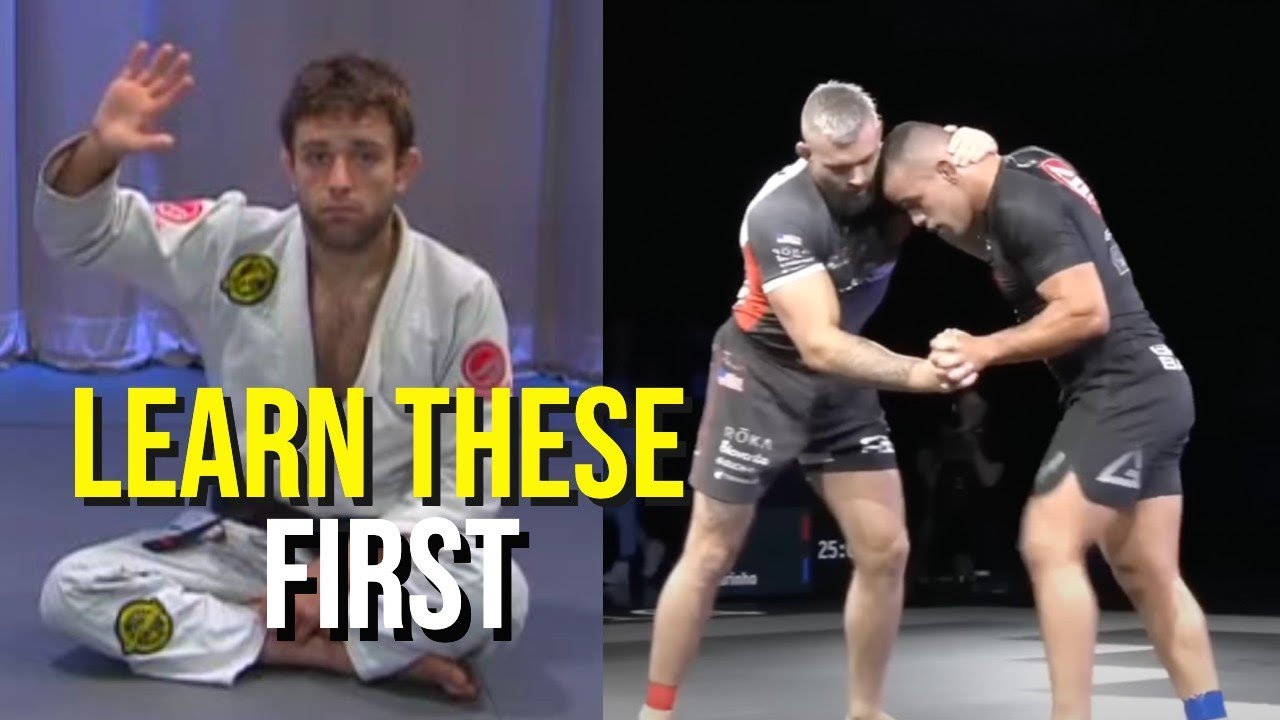
Getting Started with BJJ
- Mindset is Key: Everyone starts as a white belt. Embrace the learning process and don’t be afraid to ask questions.
- Focus on Fundamentals: Before worrying about fancy submissions, master basic positions like the guard, mount, and side control. These are the building blocks of the entire art.
- Be Consistent: Aim for 2-3 classes per week. Consistent mat time is the single most important factor for progress.
- Invest in a Gi: Purchase a proper uniform (gi) and practice good hygiene to ensure a safe training environment for yourself and your partners.
If you’re in the Lindenhurst area or within a 10-mile radius, a trial period is the best way to see if BJJ is right for you. Korfhage BJJ offers a $99 Unlimited Trial, giving you a chance to experience the classes, meet the instructors, and join the community. To get a deeper look into the beginner’s journey, you can learn more about how to get started in Brazilian Jiu-Jitsu.
2. Muay Thai
Known as “the art of eight limbs,” Muay Thai is a powerful striking discipline originating from Thailand. It teaches practitioners to use their fists, elbows, knees, and shins as weapons, creating a complete and formidable striking system. Muay Thai blends the footwork of boxing with devastating kicks and clinch work, where opponents are controlled at close range to deliver powerful knee and elbow strikes. This makes it one of the best martial arts for beginners who want intense physical conditioning and practical stand-up self-defense.

The art’s effectiveness is proven on the world stage, with legendary fighters like Buakaw and champions in promotions like ONE Championship demonstrating its power. However, its true value lies in how it builds confidence, discipline, and physical toughness. While it is a formidable striking art, it doesn’t offer the ground-based control that is central to BJJ. A smaller person using BJJ can effectively neutralize a larger, stronger striker by taking the fight to the ground, a scenario where Muay Thai is less prepared.
Why Muay Thai is a Great First Martial Art
A major benefit of Muay Thai is its incredible fitness conditioning. The training, which includes pad work, heavy bag drills, and conditioning exercises, provides a full-body workout that improves cardiovascular health, endurance, and power. This makes it a popular choice for fitness enthusiasts looking for more than just a typical gym routine.
While striking arts are effective, a good instructor is essential to ensure safety and proper technique. Unlike the systematic, problem-solving approach of BJJ masters like Caio Terra, Muay Thai instruction can sometimes prioritize intensity over technical detail. For beginners in Lindenhurst and the surrounding areas seeking a safe and structured environment with a proven methodology for self-defense, the controlled, grappling-based training at Korfhage BJJ provides a more foundational and less injury-prone start.
Getting Started with Muay Thai
- Protect Your Tools: Invest in quality hand wraps, gloves (16 oz is standard for training), and shin guards to protect your hands, wrists, and legs.
- Build Your Foundation: Focus on mastering the basic stance, footwork, and fundamental strikes like the jab, cross, and roundhouse kick before moving to complex techniques.
- Train Consistently: Start with 2-3 classes per week. Repetition in drilling and pad work is the key to building muscle memory and proper form.
- Listen to Your Body: Muay Thai training is demanding. Allow for adequate recovery time between sessions to prevent overuse injuries.
3. Boxing
Known as “the sweet science,” boxing is a time-tested striking art focused exclusively on powerful and precise hand techniques. Rooted in centuries of combat and formalized in 18th-century England, it teaches practitioners to manage distance, master timing, and employ evasive head movement. Unlike arts that include kicks or grappling, boxing’s singular focus on punches allows beginners to build a strong offensive and defensive foundation quickly.

This intense focus makes boxing an excellent choice for anyone seeking a high-energy workout with direct self-defense applications. Legends like Muhammad Ali and Floyd Mayweather Jr. have demonstrated its effectiveness, showcasing how refined footwork and defensive skill can control a fight. This simplicity in tools, combined with deep technical complexity, makes it one of the best martial arts for beginners to start their journey.
Why Boxing is a Great First Martial Art
Boxing provides immediate fitness benefits, including improved cardiovascular health, stamina, and coordination. The training, which involves heavy bag work, mitt drills, and shadowboxing, is structured to build skills progressively. While it is an effective striking art, it operates within a limited range and lacks a solution for ground-based encounters, a gap that arts like Brazilian Jiu-Jitsu are specifically designed to fill.
Many people start with boxing for fitness and later add grappling to become more well-rounded. At Korfhage BJJ in Lindenhurst, we see many students who have a striking background but want to learn the ground-fighting principles taught by world champions like Caio Terra. This combination creates a truly complete martial artist.
Getting Started with Boxing
- Focus on Footwork: Your power and defense originate from your feet. Master your stance and basic movement before worrying about throwing hard punches.
- Master the Jab: The jab is your most important tool. It controls distance, sets up combinations, and serves as your primary defense.
- Invest in Quality Gear: Purchase properly fitted gloves, quality hand wraps, and a mouthguard. Always use headgear during any live sparring to protect yourself.
- Be Consistent: Aim to train 3-4 times per week to build muscle memory and conditioning.
- Find a Certified Coach: Work with an experienced trainer to ensure you develop correct form from the start, which prevents bad habits and reduces the risk of injury.
4. Wrestling
Wrestling is one of the world’s oldest combat sports, a raw and powerful grappling art centered on takedowns, throws, and controlling an opponent on the ground. Unlike many martial arts, it involves no striking. Instead, it teaches you to use explosive power, leverage, and superior positioning to bring a fight to the mat and dominate it. Styles like folkstyle (common in American high schools), freestyle, and Greco-Roman each have unique rules, but all share a core focus on physical conditioning and positional control.
Its reputation as one of the best martial arts for beginners is built on its direct, no-nonsense approach to stand-up grappling. Many of the most successful MMA and BJJ competitors, like Khabib Nurmagomedov and Henry Cejudo, built their careers on a wrestling foundation. This proves that mastering takedowns and top control is essential for any well-rounded fighter, creating a direct path from fundamental wrestling skills to high-level grappling.
Why Wrestling is a Great First Martial Art
Wrestling provides an incredible base for physical fitness, building exceptional strength, endurance, and mental toughness. The constant drilling of takedowns and live sparring creates an explosive athlete who understands how to manage distance and close in on an opponent effectively. This skill is invaluable because most self-defense situations and BJJ matches start on the feet.
However, while wrestling is fantastic for takedowns, it traditionally stops once an opponent is pinned. For true self-defense, you need to know what to do next. This is where combining wrestling with a submission art like Brazilian Jiu-Jitsu creates a complete system. An instructor with a deep understanding of both, like Caio Terra, recognizes how wrestling’s aggressive top game perfectly complements BJJ’s submission-focused ground game. At Korfhage BJJ in Lindenhurst, we integrate wrestling concepts to ensure our students are comfortable and effective in every phase of a confrontation.
Getting Started with Wrestling
- Master the Stance: A strong, balanced stance is your foundation. Work on your footwork and level changes before attempting complex takedowns.
- Drill the Fundamentals: Focus on high-percentage takedowns like the double leg and single leg. Repetition builds muscle memory and confidence.
- Build Explosive Power: Incorporate exercises like squats, lunges, and sprints to develop the leg drive necessary for powerful takedowns.
- Cross-Train with BJJ: To become a complete grappler, it is critical to add submissions to your arsenal. Wrestling gets you to the ground; BJJ teaches you how to finish the fight there.
Combining wrestling’s takedown dominance with BJJ’s submission expertise is the gold standard for modern grappling. If you’re on Long Island and want to build this complete skill set, Korfhage BJJ offers a $99 Unlimited Trial to get you started. You can also learn more about how to get started in Brazilian Jiu-Jitsu and see how we blend these arts for maximum effectiveness.
5. Karate
Karate, a renowned Japanese striking art, translates to “empty hand.” It focuses on using punches, kicks, knee strikes, and open-hand techniques for self-defense. Originating in Okinawa, modern Karate is built on a foundation of kata (pre-arranged forms), kumite (sparring), and kihon (fundamental techniques). Its structured progression through a belt ranking system provides clear goals, making it a popular choice for beginners seeking discipline and physical conditioning.
The art gained global fame through figures like Gichin Funakoshi, founder of Shotokan, and was further popularized by films like The Karate Kid. Its inclusion in the Olympics highlighted the high level of athleticism and precision required at its peak. For beginners, Karate offers a balanced blend of physical fitness, mental focus, and practical striking skills in a controlled learning environment.
Why Karate is a Great First Martial Art
Karate excels in building a strong foundation of discipline, respect, and physical coordination. Training sessions are highly structured, teaching students to execute powerful movements with precision and control. Unlike purely grappling-based arts, Karate gives you a strong understanding of striking distance and timing, which are critical components of self-defense.
However, a pure striking art has limitations in a real-world confrontation, which often ends up on the ground. This is where combining Karate’s striking with a grappling art like Brazilian Jiu-Jitsu creates a truly well-rounded practitioner. A great BJJ instructor, such as Caio Terra, builds on the discipline learned in arts like Karate by teaching technical problem-solving for ground-based scenarios. This combined approach is what gives students at Korfhage BJJ in Lindenhurst a complete self-defense system.
Getting Started with Karate
- Focus on the Foundation: Pay close attention to your stances and basic blocks. A strong foundation is essential for generating power and maintaining balance.
- Practice Kata: Regularly practicing forms builds muscle memory, improves coordination, and reinforces the core principles of your movements.
- Be Patient with Ranks: Belt progression takes time. Concentrate on mastering the techniques for your current level rather than rushing to the next one.
- Combine Your Skills: To be truly prepared, supplement your striking with grappling. A trial class in BJJ is a great way to experience how grappling can fill the gaps in a striking-focused art.
For those in the Lindenhurst area looking to build a comprehensive skill set, consider complementing your training. Korfhage BJJ offers a $99 Unlimited Trial, allowing you to see firsthand how grappling completes your martial arts journey. You can learn more about our beginner BJJ programs to understand how these arts work together.
6. Judo
Translated as “the gentle way,” Judo is a modern Japanese martial art founded by Jigoro Kano in 1882. Its core principle is to use an opponent’s own momentum against them, emphasizing leverage and balance to execute powerful throws. Unlike striking arts, Judo focuses on grappling, teaching practitioners how to take a fight to the ground, control an opponent, and secure a submission through pins or joint locks.

This focus on off-balancing and throwing makes it a formidable component of self-defense. Judo’s effectiveness is highlighted by its adoption in law enforcement and its success in mixed martial arts, with athletes like Ronda Rousey showing its power on the world stage. It’s an excellent choice for beginners looking to build a strong base in takedowns and positional awareness.
Why Judo is a Great First Martial Art
A significant advantage of Judo is its structured approach to safety, particularly the emphasis on ukemi, or the art of falling correctly. This skill is taught from day one and dramatically reduces the risk of injury, building a beginner’s confidence. While Judo provides a great foundation, its ground-fighting techniques are limited compared to BJJ. Many judoka supplement their training with BJJ to develop a more complete grappling game.
At Korfhage BJJ in Lindenhurst, we see the benefits of this combination firsthand. Our program, built on the methodology of 12-time World Champion Caio Terra, emphasizes problem-solving and technical detail that perfectly complements the takedown skills learned in Judo. This approach ensures that whether you are on your feet or on the ground, you have the skills to control the situation.
Getting Started with Judo
- Master the Fall: Dedicate your initial training to learning ukemi. Proper falling technique is non-negotiable for long-term practice and safety.
- Focus on Fundamentals: Start with a basic throw like Osoto Gari (Major Outer Reap) to understand balance, timing, and grip-breaking.
- Be Consistent: Attending class 2-3 times per week is essential for developing the muscle memory and timing required for effective throws.
- Combine Your Training: While Judo is powerful for takedowns, adding BJJ creates a complete grappling skill set. Judo teaches you how to get to the ground, and BJJ teaches you how to dominate once you are there.
If you are near Lindenhurst, Long Island, and want to build a truly well-rounded skill set, a trial at Korfhage BJJ is a perfect next step. We offer a $99 Unlimited Trial to experience our Caio Terra-affiliated classes. To understand how these skills fit into a larger defensive strategy, you can explore some essential self-defense techniques for beginners.
7. Taekwondo
Known for its incredible athleticism and dynamic high kicks, Taekwondo is a Korean martial art that has become one of the most practiced styles in the world. Its name translates to “the way of the hand and foot,” and it places a strong emphasis on speed, agility, and powerful kicking techniques. For beginners, Taekwondo offers a highly structured path to improving flexibility, leg strength, and cardiovascular endurance, all within a disciplined and traditional framework.
Modern Taekwondo, popularized by its inclusion in the Olympic Games, focuses heavily on point-based sparring where athletes score by landing precise strikes. This competitive aspect provides clear goals and a strong athletic drive. While its powerful kicks are visually impressive, a common critique is its limited focus on hand techniques and a near-total absence of grappling, which can leave practitioners vulnerable in a close-quarters self-defense situation.
Why Taekwondo is a Great First Martial Art
A major benefit of Taekwondo is its structured curriculum, which uses a colored belt system to mark progress and keep students motivated. The training builds impressive physical attributes, especially explosive power and flexibility in the lower body. This focus on kicking is excellent for developing balance and coordination, making it a popular choice for kids’ martial arts programs across Long Island.
However, for those seeking well-rounded self-defense, Taekwondo’s sport-oriented rules create defensive gaps. A great instructor is key, but even the best Taekwondo school may not prepare you for a real-world fight that goes to the ground. This is why many martial artists, including those at Korfhage BJJ in Lindenhurst, believe in cross-training. Complementing a striking art with a grappling system like Brazilian Jiu-Jitsu, which is built on the proven methods of champions like Caio Terra, creates a complete and effective skill set.
Getting Started with Taekwondo
- Prioritize Flexibility: Dedicate 10-15 minutes daily to stretching. Hamstring and hip flexibility are essential for executing proper kicks safely.
- Build Your Foundation: Before attempting high or spinning kicks, master basic stances and low roundhouse kicks. A strong base is required for power and balance.
- Be Consistent: Attend class 2-3 times per week to build the muscle memory, strength, and flexibility needed to progress.
- Don’t Neglect Your Hands: While known for kicks, practice hand strikes to become a more balanced practitioner.
- Consider Your Goals: If your primary goal is practical self-defense, supplement your training with a grappling art like BJJ to address ground-based threats.
If you’re near Lindenhurst and want to build a truly functional self-defense game, consider how grappling can fill the gaps left by striking arts. Korfhage BJJ offers a $99 Unlimited Trial to experience how effective ground control can be. Learn more about how to get started in Brazilian Jiu-Jitsu and see why it’s a critical component for any serious martial artist.
8. Kickboxing
Kickboxing combines the powerful hand techniques of boxing with the dynamic leg strikes of traditional martial arts, creating a formidable and well-rounded striking system. Modern kickboxing, largely developed in the Netherlands during the 1960s, merges crisp boxing footwork and hand combinations with punishing leg kicks. This blend makes it one of the best martial arts for beginners who want to build cardiovascular endurance, develop practical self-defense skills, and learn a fun, high-energy combat sport.
The core principle of kickboxing is to overwhelm an opponent with a diverse arsenal of strikes from both the hands and feet. Its effectiveness is showcased regularly in combat sports like the UFC, where fighters use kickboxing to control distance and inflict damage. Unlike purely grappling arts, kickboxing focuses entirely on stand-up fighting, which appeals to those looking for a fast-paced, fitness-oriented discipline.
Why Kickboxing is a Great First Martial Art
A primary advantage of kickboxing is its rapid skill development and immediate fitness benefits. The training, which heavily involves heavy bag work and pad drills, provides an incredible full-body workout. This allows you to burn calories and build functional strength while simultaneously learning how to defend yourself. The structure of a kickboxing class is often energetic and easy for newcomers to follow.
However, a pure striking art like kickboxing leaves a significant gap in a real-world self-defense scenario: ground fighting. As 12-time IBJJF World Champion Caio Terra’s methodology proves, most fights end up on the ground, where a striker without grappling skills is vulnerable. This is why many experienced kickboxers cross-train in Brazilian Jiu-Jitsu to become complete martial artists. For those in the Lindenhurst area, a foundation in BJJ at a school like Korfhage BJJ provides the essential ground skills that kickboxing lacks.
Getting Started with Kickboxing
- Protect Your Tools: Invest in quality hand wraps, gloves, and shin guards to prevent injury during training.
- Build from the Ground Up: Master basic boxing punches and footwork before incorporating complex kicking combinations.
- Drill Consistently: Aim for 3-4 sessions per week on the heavy bag and pads to build muscle memory and conditioning.
- Focus on Technique: Learn proper kicking mechanics from a qualified coach to maximize power and prevent knee injuries.
While kickboxing is an excellent striking base, true self-defense requires a plan for the ground. To build a complete skill set, consider adding BJJ to your training. At Korfhage BJJ, we offer a $99 Unlimited Trial, giving you the perfect opportunity to learn the grappling techniques needed to complement your striking and become a truly well-rounded martial artist.
9. Kung Fu
Kung Fu is not a single martial art but a broad term encompassing hundreds of traditional Chinese fighting systems. Unified by shared philosophical principles of harmony and balance, these arts range from the acrobatic forms of the Shaolin Temple to the close-range efficiency of Wing Chun. For beginners, Kung Fu offers a path that blends flowing physical movements, meditative practices, and a foundation in self-defense rooted in ancient traditions.
The art was brought to global prominence by cultural icons like Bruce Lee and Ip Man, who demonstrated its depth and practicality. Styles vary dramatically, from the soft, internal focus of Tai Chi, which is excellent for balance and mobility, to harder, more direct external styles. This diversity allows prospective students to find a system that aligns with their personal goals, making it a potentially strong choice for those starting their martial arts journey.
Why Kung Fu Can Be a Good First Martial Art
A primary benefit of many Kung Fu systems is the emphasis on forms (or taolu), which are choreographed sequences of movements. These forms help beginners develop coordination, balance, flexibility, and muscle memory in a structured, solo-practice environment. This focus on body mechanics and principles provides a solid athletic base before engaging in more dynamic partner drills or sparring.
However, the effectiveness of Kung Fu for self-defense is heavily dependent on the specific school and instructor. While forms are essential, they are only one part of the equation. To be practical, this training must be supplemented with live application. This is a key difference from arts like Brazilian Jiu-Jitsu, where sparring against a resisting opponent is central from day one. In BJJ, every technique is tested under pressure, ensuring it works. A proven methodology, like that developed by 12-time IBJJF World Champion Caio Terra and taught at Korfhage BJJ, prioritizes this reality-based approach to ensure skills are functional.
Getting Started with Kung Fu
- Research the Style: With hundreds of systems, investigate which one fits your goals. Do you want the health benefits of Tai Chi or the directness of Wing Chun?
- Find a Balanced Instructor: Look for a teacher who has experience in both forms and practical application, including sparring.
- Practice Forms Consistently: Daily practice of forms is key to embedding the movements and principles into your muscle memory.
- Bridge the Gap to Application: While Kung Fu offers a strong foundation, consider cross-training in a grappling art like BJJ to develop a complete self-defense skill set, as it addresses the ground-fighting scenarios that striking arts often neglect.
10. MMA (Mixed Martial Arts)
Mixed Martial Arts (MMA) is the ultimate synthesis of combat disciplines, combining the striking of arts like Boxing and Muay Thai with the grappling of Wrestling and Brazilian Jiu-Jitsu. Popularized by the UFC, MMA prepares fighters for any scenario, whether standing or on the ground. For beginners, it offers a path to becoming a well-rounded martial artist, but its complexity often means it’s best pursued after building a base in a core discipline.
Modern MMA was born from the need to answer which martial art was most effective. The answer was a blend of them all. Fighters like Georges St-Pierre and Khabib Nurmagomedov proved that mastery across multiple ranges of combat is superior to specializing in just one. This makes MMA one of the most practical systems for real-world application, but also one of the most demanding to learn from scratch.
Why MMA is a Great Martial Art
A key benefit of MMA training is its realism. By integrating different styles, you learn how to transition from striking to takedowns and ground control seamlessly. However, this complexity requires a solid foundation. Many top coaches, including those influenced by the problem-solving approach of 12-time BJJ world champion Caio Terra, recommend building a strong base in a grappling art first.
This is because ground control is a great neutralizer. At Korfhage BJJ in Lindenhurst, Long Island, we see how a strong BJJ foundation gives students the confidence and skill to manage a fight where it’s safest. This BJJ-first approach, focusing on Caio Terra’s technical methods, allows a beginner to add striking skills later from a position of control and safety, making the MMA journey more manageable and effective.
Getting Started with MMA
- Build Your Base First: Focus on a single grappling art like BJJ or wrestling for 6-12 months before diving into full MMA training. This creates a strong defensive foundation.
- Prioritize Safety: Invest in proper protective gear, including quality gloves, shin guards, and eventually headgear. Do not rush into live sparring.
- Find a Qualified Gym: Look for a gym with experienced coaches in each core discipline (BJJ, striking, wrestling), not just one that labels itself “MMA.”
- Cross-Train Intelligently: Supplement your MMA classes with dedicated training at a specialized school. For residents near Lindenhurst, training at Korfhage BJJ provides the deep technical Jiu-Jitsu knowledge essential for a successful MMA game.
For those interested in a complete fighting system, MMA is a fantastic goal. If you want to understand how BJJ provides the critical groundwork for this path, consider a trial period to experience it firsthand. You can explore a detailed comparison by reading more about the best martial arts for self-defense.
Top 10 Beginner Martial Arts Comparison
| Martial Art | 🔄 Implementation Complexity | ⚡ Resource & Time | 📊 Expected Outcomes | ⭐ Ideal Use Cases | 💡 Key Advantages |
|---|---|---|---|---|---|
| Brazilian Jiu-Jitsu (BJJ) | Moderate — technical ground system, partner drilling | Mats, partners, gi optional; consistent 2–3×/wk | Strong grappling/self‑defense, fitness; foundational skills 6–12mo | Self‑defense, law enforcement, longevity training | Leverage-based control, safe rolling, clear belt progression |
| Muay Thai | Moderate — striking mechanics and clinch work | Gloves, pads, heavy bag; high impact; 2–3×/wk | Powerful striking, cardio, fast practical gains (weeks–months) | Striking-focused fitness, MMA striking, self‑defense at range | Explosive conditioning, versatile striking (elbows/knees/clinching) |
| Boxing | Low–Moderate — hand techniques, footwork, timing | Gloves, bag, mitts; widely available; 3–4×/wk | Rapid improvement in hand speed, footwork, cardio | Fitness, striking fundamentals, cross‑training for other arts | Fast learning curve, excellent conditioning, accessibility |
| Wrestling | Moderate — takedowns and live positional drilling | Mats, frequent partners; regular intensive practice | Explosive takedowns, leg strength, positional control | Youth/competitive programs, BJJ/MMA transition, takedown focus | Superior takedown base, conditioning, low equipment cost |
| Karate | Low — structured kata/kumite progression | Minimal gear; formal classes; frequent belt testing | Discipline, basic striking, coordinated movement | Children, structured/traditional training, discipline development | Clear ranking system, safe controlled contact, accessible |
| Judo | Moderate — throws, ukemi, and gripping mechanics | Gi (judogi), mats, partners; 2–3×/wk | Effective throws, balance, fall‑safety; good BJJ transfer | Takedown foundation, police/control techniques, BJJ prep | Emphasis on ukemi, hip power, Olympic standardized curriculum |
| Taekwondo | Low — kicking emphasis and forms | Minimal gear; flexibility training; 2–3×/wk | High kicks, flexibility, point‑fighting skills | Youth programs, athletic flexibility goals, Olympic sport | Rapid early progression, explosive leg development, youth friendly |
| Kickboxing | Moderate — integrates boxing and kicks | Gloves, shin guards, bag; 3×/wk typical | Well‑rounded striking, cardio, fat loss | General striking fitness, MMA striking prep, group classes | Diverse striking options, strong calorie burn, widely available |
| Kung Fu | Varies — forms, internal work; style dependent | Minimal gear; quality highly dependent on school | Improved balance, flexibility, movement quality; slower combat gains | Traditional practitioners, meditative/technical training, seniors | Broad style choice, low‑impact options, philosophical depth |
| MMA (Mixed Martial Arts) | High — multi‑discipline integration and transitions | Multiple coaches, diverse gear, high time & cost | Comprehensive fighting ability; longer timeline, higher injury risk | Competitive fighters, those wanting full‑spectrum combat training | Most complete system; addresses gaps across single disciplines |
Take the First Step: Why Brazilian Jiu-Jitsu at Korfhage BJJ is Your Best Choice in Lindenhurst
We’ve explored a wide array of martial arts, from the powerful strikes of Muay Thai to the disciplined forms of Karate and the dynamic throws of Judo. Each discipline offers a unique path toward self-improvement, fitness, and self-defense. However, as you stand at this crossroads, ready to choose your first step, one art consistently rises to the top for practical, real-world application for beginners: Brazilian Jiu-Jitsu.
BJJ is often called “the gentle art,” not because it is soft, but because it relies on leverage and technique over raw strength and aggression. This makes it an ideal starting point for anyone, regardless of age, size, or current fitness level. Unlike striking arts that require a degree of athletic explosiveness, BJJ meets you where you are. It’s a physical chess match that engages your mind as much as your body, teaching you to solve problems under pressure in a controlled, safe environment. This focus on grappling is what makes it one of the best martial arts for beginners seeking genuine self-defense skills, as most real confrontations end up on the ground.
The Decisive Factor: A World-Class Instructor
Choosing the right art is only half the battle; the quality of your instructor determines everything. A great coach doesn’t just show you a series of moves. They teach you the underlying principles and concepts, empowering you to adapt and think for yourself. This is the foundation of our philosophy at Korfhage BJJ, an officially certified Caio Terra Academy located right here in Lindenhurst.
Our curriculum is built upon the problem-solving methods of the legendary Caio Terra, a 12-time IBJJF World Champion renowned for his highly technical and conceptual approach. Caio Terra’s system emphasizes understanding why a technique works, not just how to execute it.
“I don’t believe in having a specific game. If I have an A-game, I have a B-game, and that means I have a ‘not so good’ game. My goal is to have one game, and that is jiu-jitsu.” – Caio Terra
This philosophy is perfect for beginners. Instead of memorizing countless techniques, you learn a framework for control and leverage that you can apply in any situation. This makes your learning process more efficient and your jiu-jitsu more effective from day one. You build a strong, technical foundation that will serve you for your entire martial arts journey.
Since opening our doors in 2007, we have been a pillar of the martial arts community for residents in Lindenhurst, Amityville, Babylon, Copiague, and the surrounding areas. We pride ourselves on maintaining an exceptionally clean, safe, and welcoming environment where every student feels supported. Our experienced instructors are dedicated to your personal growth, providing a structured path for you to achieve your goals, whether they are:
- Improving your physical fitness and mental resilience.
- Building real, functional self-defense skills.
- Finding a supportive community and a new hobby.
- Training to compete at the highest levels.
The journey of a thousand miles begins with a single step. You’ve done the research and explored the options. Now it is time to act. Choosing a martial art is a significant decision, but experiencing it firsthand is the only way to know if it’s right for you. We invite you to discover the difference that a world-class curriculum and a dedicated community can make.
Your journey into the best martial arts for beginners starts here in Lindenhurst. Stop wondering and start training at Korfhage BJJ | Caio Terra Academy Long Island, where we provide a clear, structured, and supportive path for absolute beginners. Click here to claim our $99 unlimited trial offer and experience firsthand why our conceptual approach to BJJ is the perfect fit for your fitness and self-defense goals.